Where Mars Hides Its Water ✛
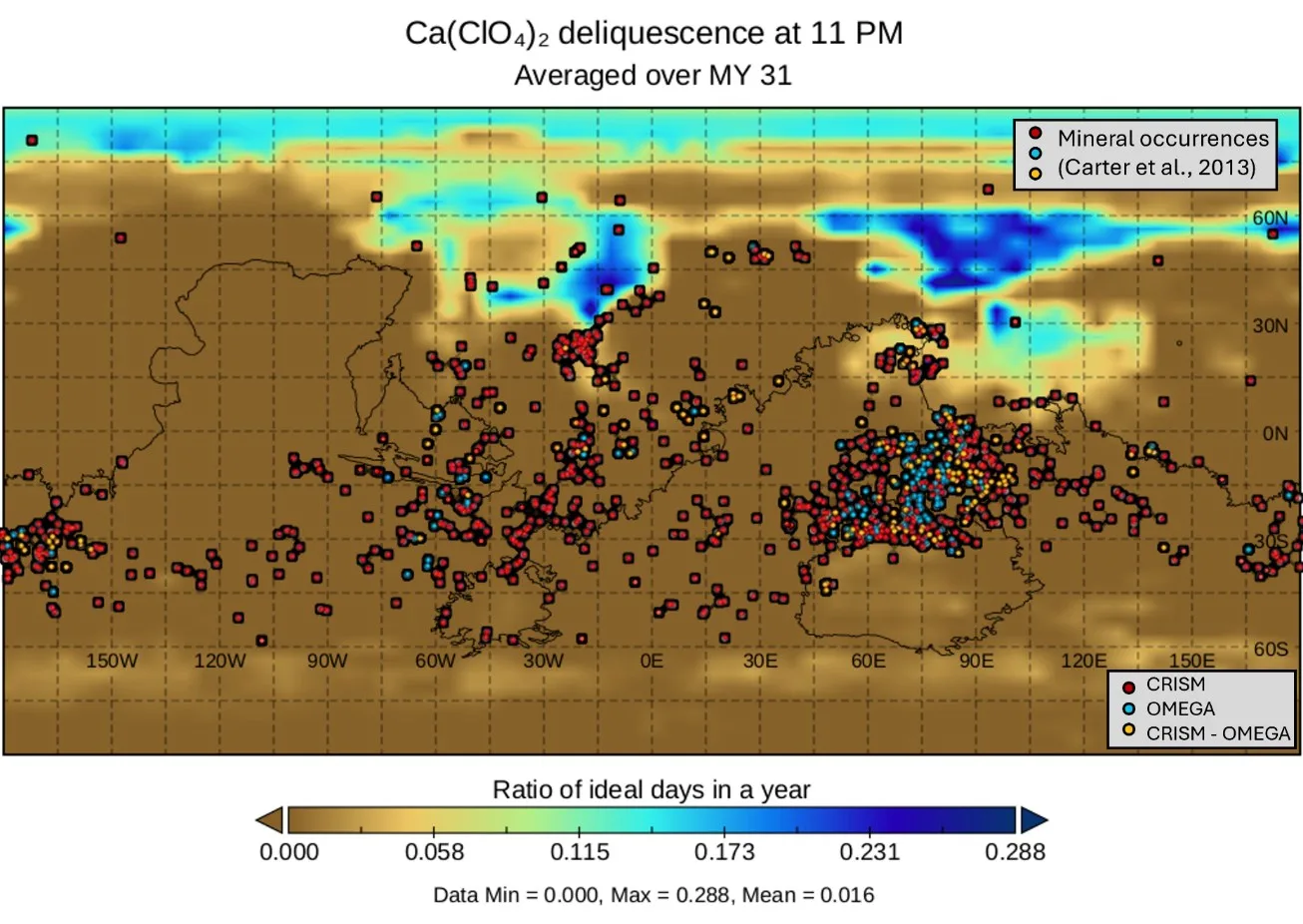
Mars has salt lying right on its surface. At night, when the air becomes humid, the salt soaks up water like a sponge. By day, when the sun heats the surface, the salt expands slightly and its cracks close up. The water remains trapped inside, like in a tiny thermos.
The scientists calculated that salt can expand enough to seal its cracks. For instance, ordinary table salt, when heated from −123 to +27 degrees, increases in volume by about 1.6%. That is like an ice cube growing slightly larger and blocking the gap through which water had poured in. Such expansion could indeed hold water inside.
The most suitable spot on Mars for this is the southern part of the Acidalia Plain. There, for about 100–130 days each year, conditions align so that salt can absorb water at night and retain it during the day. For now, this is only theoretical, but if it holds up, such salt crystals would be a promising place to look for signs of life.
In the Atacama Desert, one of the driest places on Earth, cyanobacteria live inside halite crystals and obtain moisture precisely through salt deliquescence at night, when air humidity rises.