Habitability refers to the potential of a planet or moon to support life, typically requiring liquid water, a source of energy, and essential chemical elements. While traditionally focused on water and carbon, recent research emphasizes the role of elements like sulfur in shaping habitable conditions. Sulfur compounds can serve as energy sources for microbial life, influence atmospheric chemistry, and affect the greenhouse effect, thereby expanding the range of environments considered potentially habitable.
History
The concept of a habitable zone was introduced in the 1950s by Harlow Shapley and later formalized by Stephen Dole in 1964. The role of sulfur in habitability has been explored since the 1970s, particularly in the context of early Earth and volcanic environments.
How it works
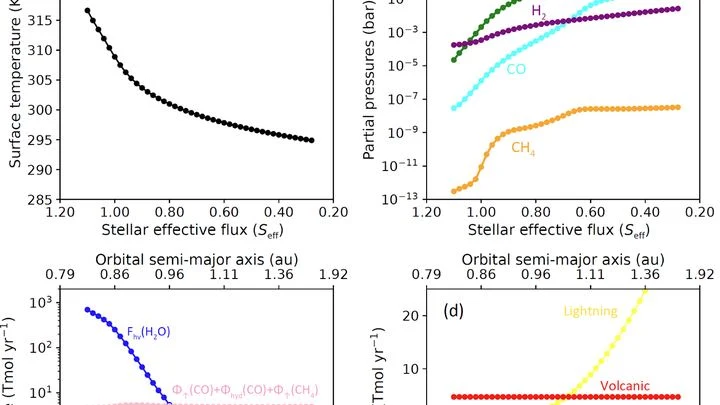
Habitability is assessed by evaluating a planet's position in the circumstellar habitable zone, its atmospheric composition, and its geological activity. Sulfur, for instance, can be released by volcanic activity, forming compounds like sulfur dioxide that contribute to greenhouse warming or sulfate aerosols that cool the planet. On a planet's surface, sulfur can be metabolized by chemosynthetic organisms, providing an alternative energy pathway to photosynthesis. The presence of sulfur in a planet's interior also affects its thermal evolution and outgassing, influencing long-term climate stability.
In practice
Habitability assessments guide the selection of targets for exoplanet atmosphericcharacterization, such as with the James Webb Space Telescope, and inform the search for biosignatures in sulfur-containing molecules.
Fun fact
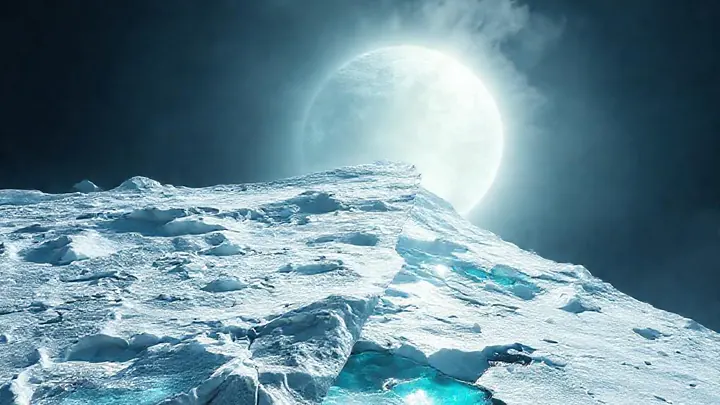
On Jupiter's moon Io, sulfur compounds create a colorful volcanic landscape, but the extreme conditions make it uninhabitable—yet sulfur-based life is hypothesized for other, more temperate icy moons.
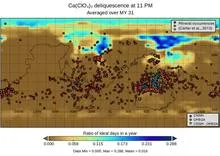
Every Martian night, salt crystals on the planet's surface soak up moisture from the thin air, much like a sponge draws water from a damp cloth. By morning, a microscopic brine accumulates inside them, and during the day, as temperatures rise, that brine finds itself trapped in tiny cavities.
Twelve stars have received X-ray passports. Now, for each of them, we know the exact radiation dose received by a planet in the habitable zone, the region where liquid water is possible.
A planet in the habitable zone is no guarantee of life. Like a conductor leading an orchestra, a star dictates the tempo and character of planetary atmosphere evolution over billions of years.
When the JWST telescope breaks the light of a distant exoplanet into a spectrum, it reads a chemical chronicle. But this chronicle is not a monolithic truth; it's an atmosphere constantly rewritten by the star's radiation.
Imagine a packed subway car at rush hour. Passengers don't just stand there: they breathe, release moisture, squeeze toward exits, and sometimes get stuck in doors, blocking movement. Now imagine these passengers can remodel the car's walls, add handrails, or turn the floor into gel.
The search for life beyond Earth is like tuning an old radio: we listen to the chemical whisper of distant exoplanets' atmospheres, trying to pick up signs of biological activity.
Every civilization is born with a gravitational debt. The home planet's mass determines the loan amount, and the Tsiolkovsky equation is the interest rate applied to each kilogram of payload. To send a probe to the stars, you have to pay with fuel, and the debt grows exponentially.
A sub-Neptune is a planet that falls between Earth and Neptune in size. These worlds are abundant in our galaxy, but their internal structure has been hotly debated. New research shows that in their youth, these planets behave like a sponge soaked with water.
The Martian surface is a place where anything alive quickly dies. Cosmic rays and ubiquitous oxidizers sterilize the top layer of soil. But dig a little deeper, and the picture changes. There, beyond the reach of ultraviolet light, a zone suitable for life may lurk.
This zone runs on a strange fuel — radiation.
In 5 billion years, the Sun, having exhausted its fuel, will start to swell, turning into a red giant. Like a balloon losing air, the star will weaken its gravitational grip, and Earth — a grain of sand on an invisible thread — will drift to a more distant orbit.
Life is a constant dance between order and chaos. Back in the mid-20th century, Erwin Schrödinger noted that living things feed not so much on matter as on "negative entropy"—the ability to maintain their own order by increasing disorder around them.
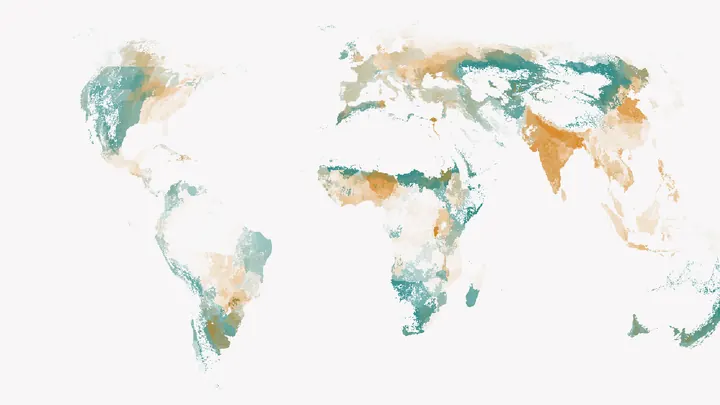
Every year, the food we eat costs humanity tens of millions of years of life due to unhealthy diets. At the same time, a third of all greenhouse gases warming the planet are produced along the journey from farm to plate. It seems obvious: switch to healthier eating, and we'll save the climate and improve our health. But new research shows these two goals don't always go hand in hand.
A planet the size of Neptune, but glowing white-hot. Beneath the clouds lies an ocean of magma capable of absorbing an entire hydrogen atmosphere. The new SEAMIST model is the first to trace how such dissolution changes a planet's fate from birth to old age.
The big surprise is the mechanism of catastrophic boiling.
When astronomers peer at distant worlds, they often don't see crisp lines of water vapor or methane, but a blurry silhouette, as if the planet has thrown on a thick veil. This veil, a haze of organic particles, behaves like a temperamental photographic plate: it darkens under harsh ultraviolet light, revealing hidden chemical patterns.
In the orchestra of interstellar life search, every note counts. And the score here is dictated not by man, but by a distant star. For the planet TRAPPIST-1 e, one of seven in the system of an ultracool red dwarf, the conductor's baton is harsh ultraviolet light.
A tightrope walker inches across a chasm. As long as they keep their balance and avoid sudden moves, they're safe. But one overcorrection, and a fall is inevitable. Life works much the same way at every level — from proteins inside a cell to entire ecosystems.
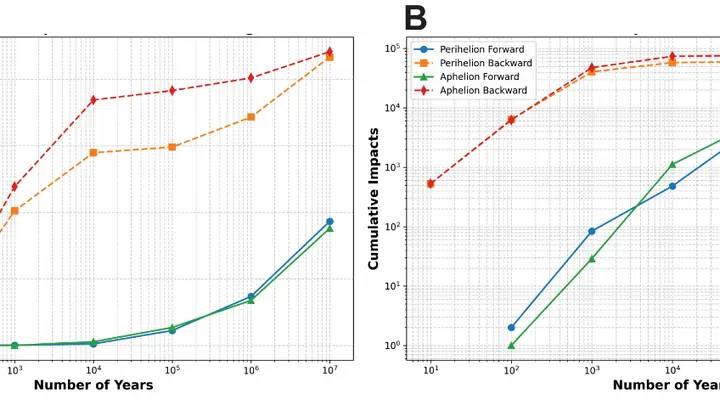
The idea of extraterrestrial origin of life has long excited minds. Fred Hoyle believed bacteria travel between stars. A new study tested a similar but closer route: from Mars to Earth. In ancient times, Mars had water, and asteroid impacts knocked rocks with microbes into space.
The search for extraterrestrial life is like a detective investigation: from tiny clues, you must distinguish traces of life from random imprints of non-living nature. On Saturn's moon Enceladus, the investigators are lucky — geysers burst from cracks in the icy crust, ejecting water from the subsurface ocean straight into space.
The Red Planet is surrounded by the rubble of failed worlds — rocky boulders stuffed with metal. Shipping a kilogram of steel from Earth to Mars costs as much as several cars. It's far cheaper to pick up space junk right in orbit.
A baker adds more sugar to the dough, and the pie turns out different. So it is with a star: the composition of its "dough"—the cloud of gas and dust from which planets are born — determines what worlds will form around it.
A rock knocked off one planet by an asteroid impact hurtles through space and lands on another. If microbial spores are hiding inside, they might survive the cold, the radiation, and the rough landing. That's panspermia — the idea that life travels between worlds. But imagining such a journey is one thing; calculating every step is quite another.
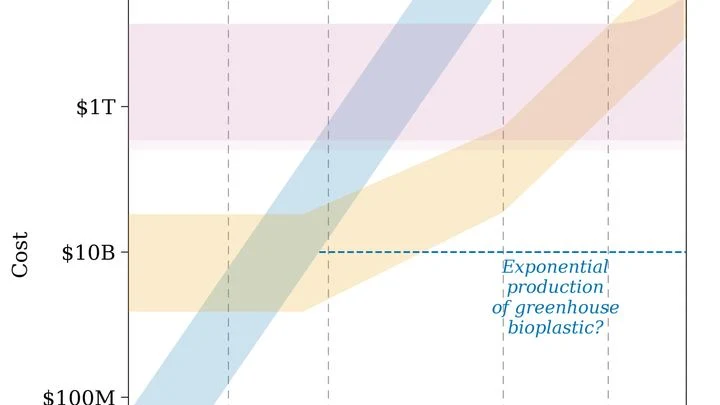
Mars is an icy desert with an average temperature of minus 60. To warm it without biology, scientists propose three approaches with a single idea: create a thick heat-trapping blanket.
First, deploy transparent film-blankets over bases. They let sunlight in but keep heat from escaping, allowing us to harvest water from the soil and grow plants.
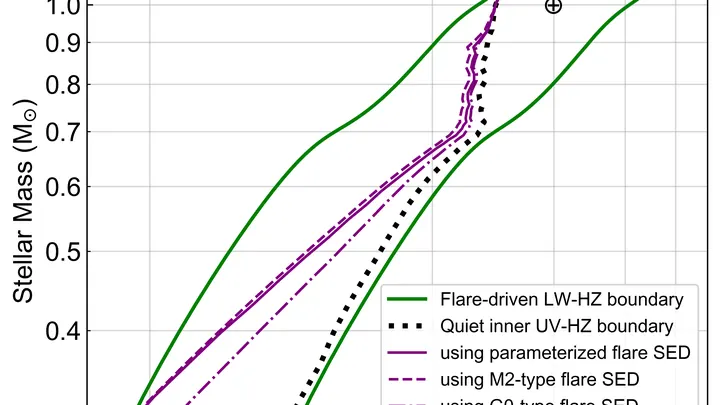
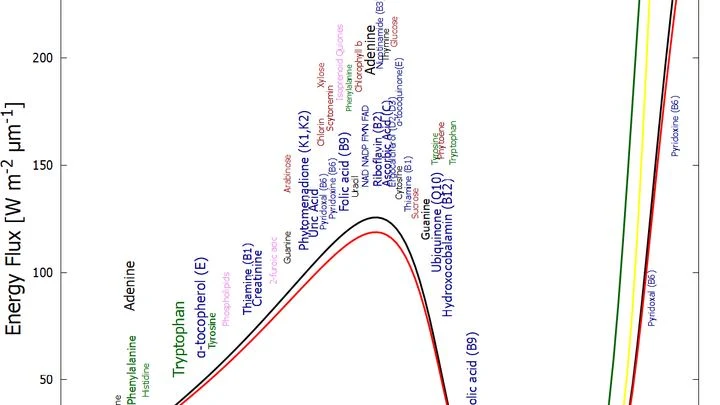
Water isn't the only thing life needs. To assemble the first RNA-like chains from simple molecules, you need ultraviolet light, like the sunlight that helps plants, but harsher and with shorter wavelengths. Big stars like the Sun emit plenty of this light. Small, dim stars, however, have almost none: they shine mostly in red and infrared, like a glowing ember.
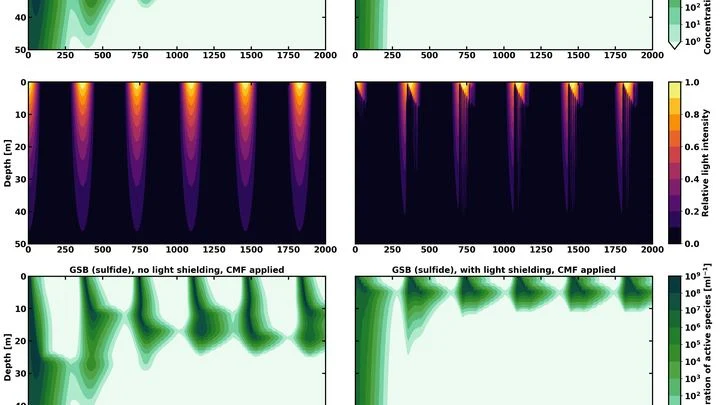
Simple equations that describe fox and rabbit cycles have been turned to bacteria on distant exoplanets, like K2-18 b. These worlds hold deep oceans under thick hydrogen skies. Like duckweed on a pond, light-eating microbes cover the sunlit water surface, stealing light from those below.
At the dawn of Earth, about four billion years ago, the planet was a harsh place: a dim sun, frequent asteroid impacts, and air without oxygen. Under such conditions, the first steps of life seem almost impossible.
A telescope stares at a planet 124 light-years away and sees gases in its atmosphere that on Earth are produced by microbes. The immediate thought: life. But it's not that simple.
Planet K2-18b is a sphere wrapped in a thick layer of hydrogen. In such a layer, like in a giant chemical flask, reactions take place.
Today's Martian surface is a cold, nearly airless home. Many dream of a full renovation: warming the planet, filling it with air from carbon dioxide and nitrogen.
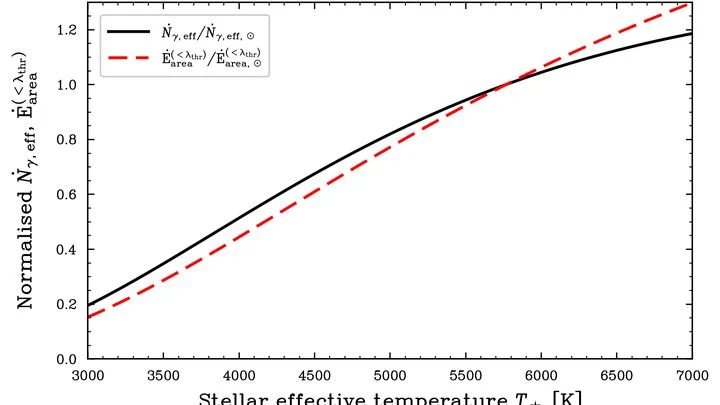
Oxygenic photosynthesis requires splitting water. It's kind of like a water wheel: to make it spin, you need a strong current. Light acts as the current, and light particles are the streams. For red dwarfs, the most common stars, the light is "cool" and weak — the streams barely move the wheel.
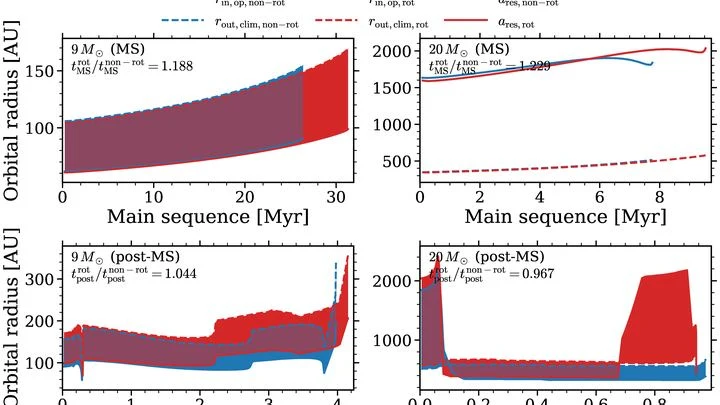
A star nine times heavier than the Sun ignites a zone around it where liquid water could slosh on a planet's surface. But this zone is like a narrow strip of beach at low tide: it will vanish in 30 million years. Such stars live bright and die young, leaving life no time for the long journey from microbes to complex beings.
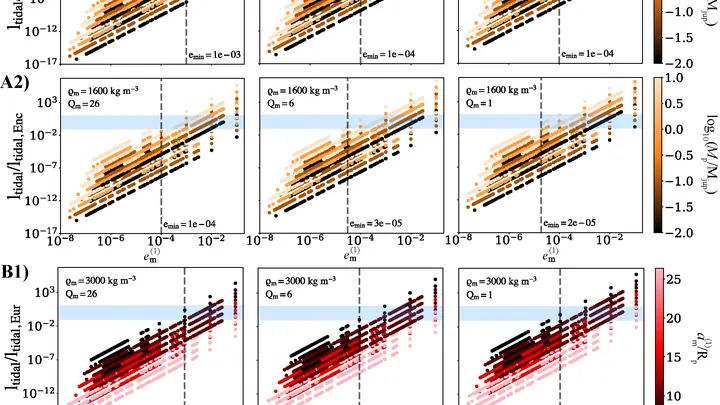
Rogue planets, ejected from star systems, may harbor life on their moons. A moon of such a planet can preserve heat and liquid water for billions of years. The whole secret lies in a reliable "blanket" and an internal "stove."
The stove is tidal forces: they squeeze and stretch the moon's interior, heating it up like kneading clay.
Scientists built a model of Earth with all living organisms removed — from bacteria to trees. Over billions of years, this 'empty house' didn't turn into an icy desert. Volcanoes, like a furnace, release carbon dioxide, and rock weathering, like a thermostat, absorbs it.
Earth is like dough mixed to a precise recipe: two parts water to one part land. Too much water, and the planet becomes a vast ocean where intelligence has nothing to grasp onto. Too much land, and water retreats deep, leaving a desert. Scientists put this culinary analogy to the test with statistics.
In the cloud of gas and dust where planets are born, sulfur is like a chef tasting a dish at different stages of cooking. At first, it's almost entirely in gas, like steam rising from a pot. Then, as the temperature drops, sulfur settles onto dust grains and turns into solid particles, just as steam condenses on a lid.
A young planet grows like a snowball rolling down a slope: countless small pebbles from the surrounding gas disk stick to it. The larger it gets, the stronger it pulls in gas — hydrogen and helium. A dense, hot envelope forms around it. Pebbles falling through it heat up from friction and their own weight, like grains of sand falling into thick honey.
To spot life on other planets, you don't necessarily need to search for oxygen in the air. Living beings paint the surfaces of their worlds: Earth's plants in green, bacteria in purple. The future HWO space telescope will capture these "paints of life" on exoplanets.
The Sun is slowly brightening, and in hundreds of millions of years its heat would become lethal for Earth. Fortunately, the built-in planetary thermostat — the carbon cycle — when overheating triggers rocks to absorb carbon dioxide faster, cooling the climate.
Life began with molecules akin to natural sunscreen — based on carbon, they soaked up the mild ultraviolet of the young Sun and turned it into heat. This way of dissipating energy wasn’t just heating: it made molecules self-organize, like chefs kneading structured dough out of a chaos of ingredients. But ultraviolet is a finicky tool.
The planet's gravity rhythmically squeezes and kneads the moon like dough: from this constant 'kneading', the interior heats up, and oceans of water can persist under the icy crust for ages.
In the Galaxy, there are plenty of rogue planets, thrown out by supernova explosions.
After the Moon's birth, Earth resembled a sizzling lump of dough: a continuous liquid magma and a dense shroud of gases. The Moon acted like a giant spoon, constantly kneading this lump with its gravity. Friction generated heat, delaying cooling.