A heat shield is a protective layer on a spacecraft that dissipates the intense heat generated during high-speed entry into an atmosphere or during close flybys of hot celestial bodies. When a vehicle travels at hypersonic speeds, the air in front compresses and heats to thousands of degrees, enough to melt most materials. Heat shields are engineered to absorb, reflect, or ablate this heat, ensuring the spacecraft's interior remains at safe temperatures. They are critical for missions like Mars rovers, crewed capsules, and probes that dip into planetary atmospheres.
History
The concept dates back to the early space age, with the first practical heat shields developed for ballistic missiles in the 1950s. The Apollo missions used ablative shields, and the technology has evolved with materials like PICA (Phenolic Impregnated Carbon Ablator) for modern Mars missions.
How it works
Heat shields work through two main mechanisms: ablative cooling and radiative cooling. Ablative shields are made of materials that char and vaporize, carrying heat away as they erode—like a sacrificial layer. Radiative shields, often used on reusable spacecraft like the Space Shuttle, reflect heat using ceramic tiles with low thermal conductivity, preventing heat from penetrating. The choice depends on the heat flux and mission profile; ablative shields handle higher heat loads but are single-use.
In practice
Used in every atmospheric entry mission, including crewed capsules (e.g., SpaceX Dragon), Mars landers (Curiosity, Perseverance), and probes like the Galileo spacecraft that entered Jupiter's atmosphere.
Fun fact
The heat shield on the Apollo command module reached temperatures of about 2,800°C (5,000°F) during reentry—hotter than the surface of the Sun—yet the cabin stayed cool enough for astronauts.
Every Martian night, salt crystals on the planet's surface soak up moisture from the thin air, much like a sponge draws water from a damp cloth. By morning, a microscopic brine accumulates inside them, and during the day, as temperatures rise, that brine finds itself trapped in tiny cavities.
A sub-Neptune is a planet that falls between Earth and Neptune in size. These worlds are abundant in our galaxy, but their internal structure has been hotly debated. New research shows that in their youth, these planets behave like a sponge soaked with water.
The Martian surface is a place where anything alive quickly dies. Cosmic rays and ubiquitous oxidizers sterilize the top layer of soil. But dig a little deeper, and the picture changes. There, beyond the reach of ultraviolet light, a zone suitable for life may lurk.
This zone runs on a strange fuel — radiation.
Two white sheets lie in the sun — one rough, one smooth. Which one heats up less? The rough one scatters light more strongly, so it seems it would stay cooler. But if the coating is made of many transparent glass beads, the logic changes. Light wanders through it like in a thick fog, and at some point it stops noticing individual droplets.
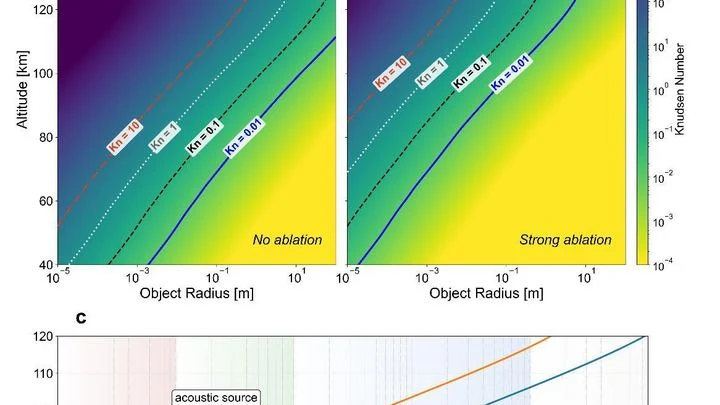
A pebble the size of a grape enters the atmosphere almost tangentially and skims across the sky without falling. That's exactly what happened to a meteoroid weighing about 45 grams. It came in at such a shallow angle that it traveled 164 kilometers at an altitude of 92 kilometers — where the air is a million times thinner than at the surface.
When a planet slips behind the edge of its star, the star backlights the planet's atmosphere, just as a setting sun illuminates clouds on the horizon. This brief moment, lasting only minutes, carries the imprint of the gases through which the starlight has passed.
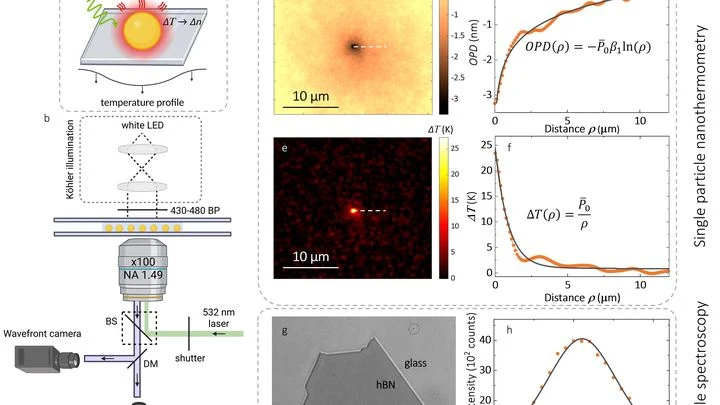
A gold speck the size of a hundred atoms catches a beam of light, and heats up. In everyday life, that's no big deal, but in the world of nanotechnology, this tiny heat can ruin a biosensor or fry a microchip. You can't just put a fan on it: at these scales, heat gets trapped like in a thick winter coat.
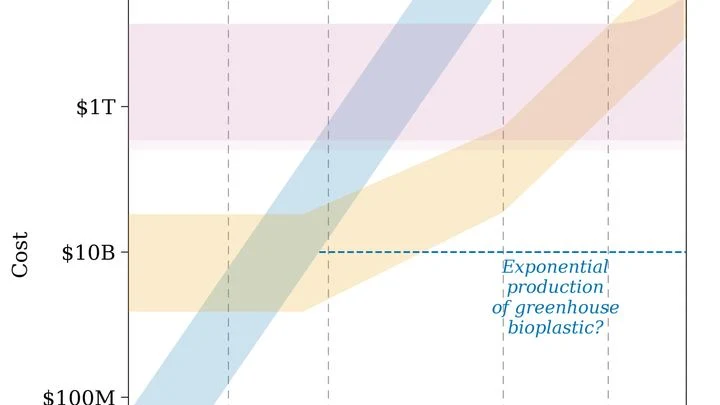
Mars is an icy desert with an average temperature of minus 60. To warm it without biology, scientists propose three approaches with a single idea: create a thick heat-trapping blanket.
First, deploy transparent film-blankets over bases. They let sunlight in but keep heat from escaping, allowing us to harvest water from the soil and grow plants.
Planet HIP 67522 b is quite young: it's only 17 million years old, compared to Earth's 4.5 billion. It's a hot Jupiter — a gas giant that orbits very close to its star, so its atmosphere is heated and puffed up.
Hot Jupiters, exoplanets giants snuggled up to their stars, are mysteriously puffed up. Their radii often exceed standard models by 50–100%. New models, based on transiting data (transit method), flip our understanding: heat doesn't come from the interior but from the upper atmosphere.
Planet WASP-121b orbits so near its star that the fierce heat boils its atmosphere away, streaming like a comet's tails. With the James Webb Space Telescope, astronomers continuously watched this process for the first time.