How to Hear a Semiconductor Beneath a Metal Film ✛
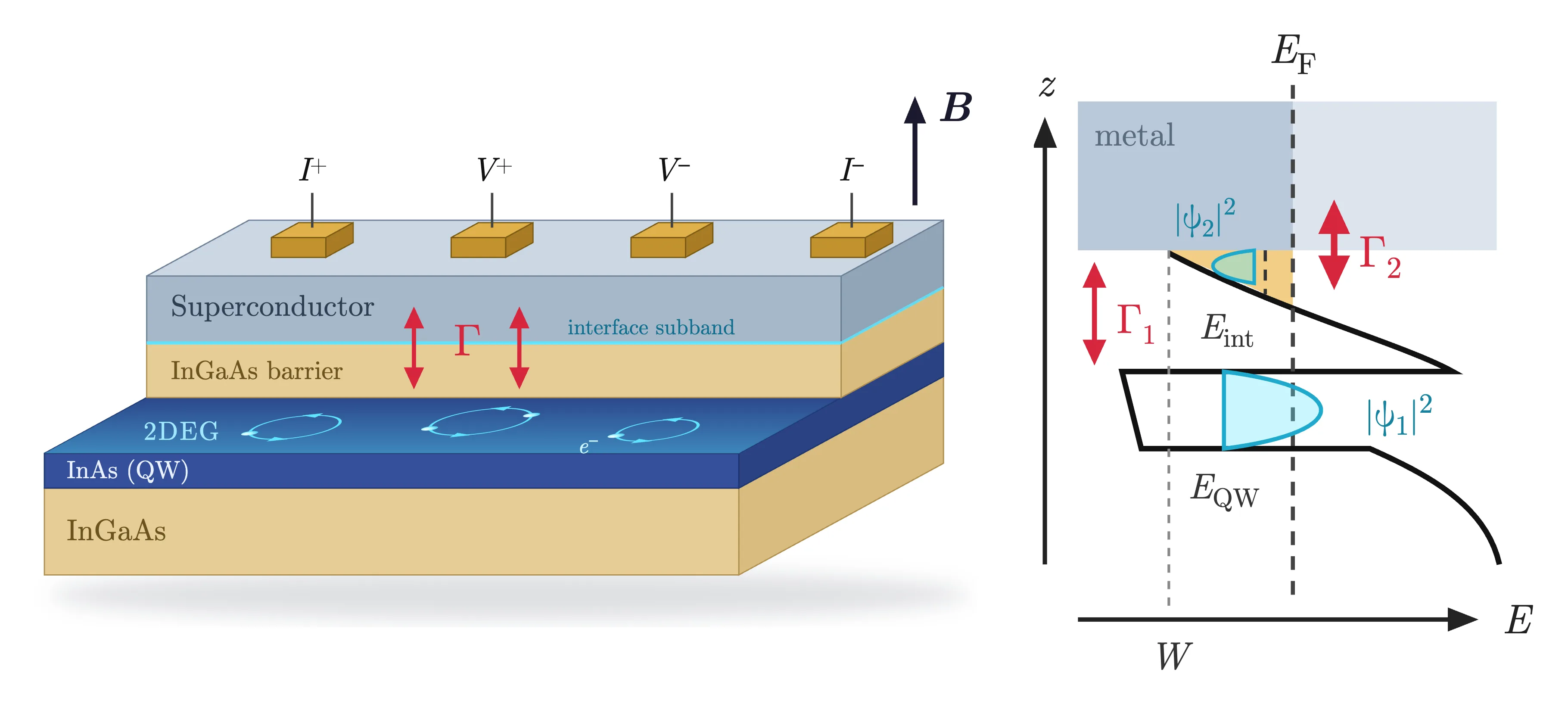
Imagine a thin semiconductor layer capped with a metal film. In such a device, current takes the path of least resistance, so almost all of it runs through the metal. The semiconductor stays silent, and ordinary instruments can't hear it. But if you switch on a strong magnetic field, quantum oscillations appear in the hidden layer: rhythmic resistance swings, like breathing. That faint signal is what the scientists caught.
They deposited six different metals onto the semiconductor: aluminum, tin, vanadium, niobium, tantalum, and rhenium. Then they placed the samples in a magnetic field and measured resistance. Even when current mostly flowed through the metal, oscillations from the semiconductor leaked out. To extract the numbers they needed, they had to account for the fraction of current the metal carried away.
It turned out that the metal film barely alters the semiconductor's properties. The electron mass and the g-factor—a number describing the electron's magnetic properties—deviated by no more than 10%. And the quantum lifetime, that is, how long an electron keeps its state, even increased under aluminum and tin. Previously, such measurements were impossible because the metal got in the way. Now scientists know the parameters of the semiconductor beneath the superconductor, which will help build quantum computers.
An aluminum film just 2.3 nm thick (only 10 atomic layers) not only fails to damage the quantum well, but increases its quantum lifetime by 60% compared to the uncovered sample.