Superfluidity is a macroscopic quantum effect where a fluid moves without dissipation, has zero viscosity, and can flow through capillaries without resistance. It is observed in liquid helium-4 (bosons) at 2.17 K and in helium-3 (fermions) at about 2.6 mK.
History
In 1937, Pyotr Kapitsa in Cambridge discovered almost complete disappearance of viscosity in helium-4 below 2.17 K. Simultaneously, John Allen and Don Misener observed the fountain effect. In 1941, Lev Landau built a theoretical model, introducing the concepts of superfluid and normal components. The idea of connection with Bose-Einstein condensation, predicted by Satyendra Nath Bose and Albert Einstein, was proposed by Fritz London (not in the list). Superfluidity of He-3 was discovered in 1972 by Douglas Osheroff, Robert Richardson, and David Lee, and explained via Cooper pairing with anisotropy.
How it works
Superfluidity of helium-4 is due to the bosonic nature of atoms. At low temperatures, a macroscopic fraction of atoms occupies a single quantum state — a Bose-Einstein condensate forms. Elementary excitations — phonons and rotons — define the spectrum. According to Nöther's theorem, spontaneous breaking of gauge symmetry leads to a gapless mode of oscillations, providing superfluidity. The superfluid component flows without viscosity until the velocity exceeds a critical value determined by Landau's criterion. Superfluidity in helium-3 is more complex: atoms are fermions, they form Cooper pairs, turning into bosons, which then condense. This is analogous to superconductivity but with p-wave pairing, leading to anisotropic properties.
In practice
Superfluidity helps study quantum effects in the macroscopic world and cool superconducting magnets.
Fun fact
Superfluid helium-4 creates a fountain up to 40 cm high at the slightest thermal disturbance — this thermomechanical effect looks like a sudden geyser in a laboratory vessel.
In 1934 Jean Leray proved that the Navier–Stokes equations always have solutions "in a generalized sense". Whether a solution stays smooth or can break down into a singularity he could not tell, and nobody could for ninety years. In 2000 the Clay Institute made the question one of its seven Millennium Prize problems.
In a Paris laboratory, light was made to flow around an obstacle the way water flows around a rock in a stream. But this water is special: it feels no friction.
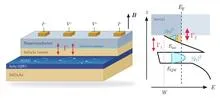
A thin layer of indium arsenide lies hidden under a superconducting film, like a voice beneath the noise of a crowd. In such a hybrid, current takes the path of least resistance and flows almost entirely through the metal, leaving the semiconductor inaudible to standard probes.
In the depths of sub-Neptunes, the most common type of planet in the Galaxy, though not one you could stand on, silicate magma and hydrogen mix into a single supercritical cocktail. Previously, it was thought that beneath the dense hydrogen atmosphere lay a sharp boundary with molten silicate, like oil on water.
Deep inside a sub-Neptune, where pressures reach a hundred thousand bars and temperatures hit four thousand degrees, rock behaves like boiling soup. Heavy vapors of silicon and magnesium rise, cool, and fall back as a rain of solid particles.
A superconductor is a material in which electricity flows without loss, like water through a perfectly smooth pipe. But if you squeeze it slightly, like a spring, its properties change. Scientists have long wanted to measure how much heat such a compressed material absorbs, but instruments couldn't fit into the cramped setup. Now they've devised a way around this obstacle.
An ordinary wire heats up when current flows through it — some energy is wasted. A superconductor lacks this flaw: electricity flows through it without loss, like water through a perfectly smooth pipe. The trouble is that most superconductors require either very low temperatures or colossal pressures, like those found in the depths of planets.
A water pipe: the wider it is, the more water flows through. In superconducting contacts — Josephson junctions (bridges through which current flows without resistance)—it's usually the same: the better the material conducts in its normal state, the larger the superconducting current that flows through it.
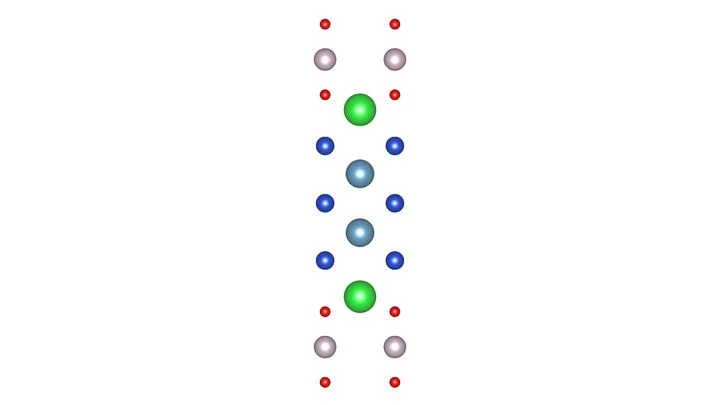
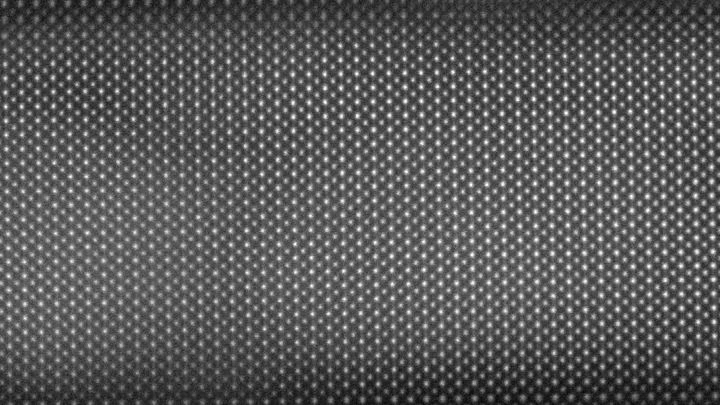
A tiny sandwich of oxides, grown layer by layer, becomes perfectly conducting at about minus 200 degrees Celsius. This is not a magic trick but a new chapter in the search for high-temperature superconductors.
At low temperatures, many materials become superconductors — current flows without resistance. But how exactly does this happen if electrons were initially trapped in an insulator? Half a century ago, Philip Anderson suggested that the answer lies in a special quantum dance of particles.
Many materials behave like finicky ice: at one pressure they melt, at another they turn harder. Superconductors in the cuprate family are no exception. Their ability to carry current without loss depends on how tightly the crystal lattice is squeezed. In a new study, physicists traced this dependence for the compound Bi-2223.
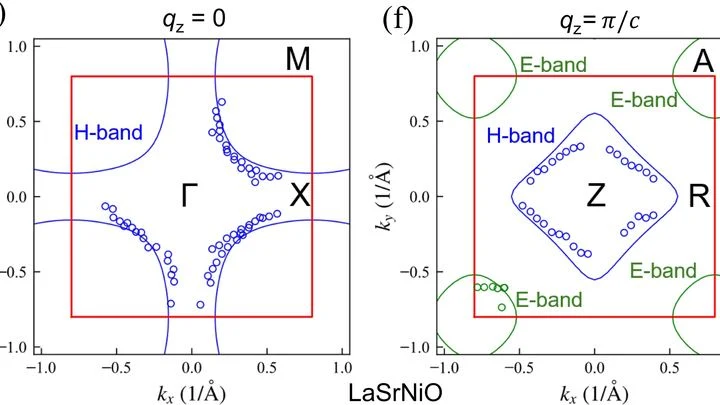
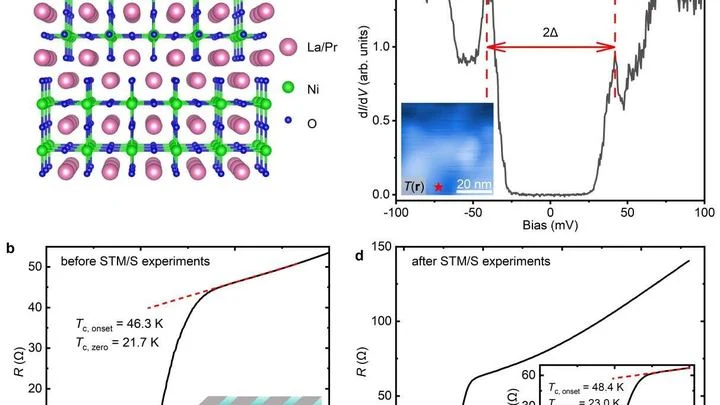
Lossless current is the dream of energy technology. Some materials become superconductors, but usually only at extreme cold. Recently, in the family of nickelates, compounds based on nickel, candidates were found that work at higher temperatures.
A piece of metal is cooled to minus two hundred degrees, and electric current begins to flow through it without the slightest friction, like water in a pipe flowing without touching the walls. This behavior is called superconductivity.
Imagine trying to overhear a whisper between two people in a noisy hall. That's roughly the challenge physicists face when they want to understand how electrons pair up inside a superconductor. And if the "hall" is also squeezed by a giant press to pressures of hundreds of thousands of atmospheres, the task seems impossible.
The authors of the new study found an ingenious solution.
A superfluid flows without friction, like water that never stops. But when you spin it, it doesn't just rotate: each tiny vortex remembers exactly how it was spun. This 'trace' is not a metaphor but a real geometric imprint, which physicists call the Berry phase (the phase acquired by a wave as it travels along a closed path).
In accelerators like the Large Hadron Collider, heavy nuclei collide at enormous speeds. For an instant, quark-gluon plasma (QGP) is born — a state of matter where quarks and gluons float freely, just like in the first microseconds after the birth of the universe.
This plasma is not just hot.
In the conventional Heisenberg picture, spins at low temperatures are supposed to line up in a strict pattern. But there are crystals — like pyrochlore — where geometry has its own way. Each ion sits at a vertex of a tetrahedron, and the main interaction enforces a rule: two spins point inward, two outward.
Graphene, a two-dimensional carbon crystal, has long tantalized physicists with the hope of high-temperature superconductivity. Its electrons obey the relativistic equation of Paul Dirac, racing at tremendous speed, barely noticing each other.
When physicists drive electrons through an ultrapure gallium arsenide channel at helium temperatures, they expect to see a well-behaved, almost ideal fluid.
Imagine: superfluid helium-3 in a thin film receives a sudden heat shock. In that instant, a whole orchestra of collective oscillations awakens within it — like striking an invisible drum produces a multi-voiced chord. The Kibble–Zurek mechanism, familiar from the cracking of ice during rapid freezing, here acquires a quantum elegance.
In a pool, water usually spreads in circles from a thrown stone. But if you direct the flow strictly along the rim, it will run only along the edge. Something similar has been noticed in pieces of the superconducting crystal FeTe0.55Se0.45.
In the crystal CsV3Sb5-xSnx, which becomes a superconductor at low temperatures, current does not flow as a uniform stream but along narrow, winding paths. A scanning microscope with a sensitive magnetic field sensor helped reveal these paths: it picks up the faintest currents, much like a sonar probes the seafloor.
A superconductor is like an ideal highway with no traffic lights: electrons race along without hindrance. But apply a voltage, and the picture changes. In a new experiment, physicists found that an electric field penetrates the superconductor and creates a mixed regime inside.
A well-coordinated orchestra of electrons in a superconductor is easily thrown off rhythm. Thermal jolts destroy the fragile order, and resistance returns. For decades, scientists have sought ways to strengthen this ensemble — mostly by changing the material's composition or compressing it to unimaginable pressures.
A thin film of yttrium barium copper oxide warms under a stream of infrared light, and suddenly stops dissipating energy. That's superconductivity: electrons pair up and move as a single quantum swarm. But in underdoped samples, the harmony breaks long before the pairs fall apart. The pairs are there, but the collective rhythm isn't.
A hot liquid flows easily: molecules dart around, collide, and quickly find new spots. But cool it below its freezing point, and everything changes. Motion nearly freezes, and viscosity skyrockets. The key question isn't that particles are lazy, but where they can even go.
The authors combined two established ideas.
Superconductors conduct current without loss, but usually require extreme cold. Hg1223 — a mixture of mercury, barium, calcium, copper and oxygen — breaks the rule: it stops resisting current already at –139°C. The secret is that the strong electrical repulsion between electrons forces them to pair up.
A stone falls into a pond, and ripples spread across the water. Long waves and short ones travel at the same speed: that's how ordinary sound behaves in almost any medium. But in quantum liquids, things can be different.
Physicists considered a superfluid where particles move along a "flat" energy band.
Three floats on water bob chaotically. But three helium atoms cooled to near absolute zero behave differently, as if obeying an invisible law of similarity. Their mutual attraction is so weak that the atoms form a loose cloud.
Imagine a sandwich where the bread is made of copper oxide layers and the filling is a thin layer of strontium ions. That's the infinite-layer cuprate, the simplest version of superconducting ceramics, conceived nearly 40 years ago.
An ordinary diode in electronics works like a one-way street: current flows in only one direction. In superconductors, where electricity flows without resistance, such behavior has long been elusive — current is usually symmetric.
The authors of the new work found a way to create a perfect superconducting diode using light.
A superconductor carries current without resistance, like water running through a pipe without friction. The secret lies in electron pairs: two electrons stick together as one, even though they normally repel. In an ordinary superconductor, the spins of the electrons in a pair point in opposite directions: this is the singlet state.
Ordinary water freezes as expected. But sometimes hot water turns to ice faster than cold — the Mpemba effect. Recently, a similar rule-breaking was found in quantum entanglement — the invisible link between particles discovered by Erwin Schrödinger.
A translator gets distracted by every rustle in the hall, and a one-hour meeting stretches into two. That's roughly how ordinary quantum mechanics works: a particle evolves in time, while space serves as the stage. But what if we swapped their roles? Then the particle 'moves' through space, and time becomes a static backdrop.
Sound travels through a medium at a certain speed. If the medium moves faster, the sound gets swept along by the flow — like a wood chip pulled into a whirlpool. In superfluid helium — a frictionless liquid — rapid rotation spawns vortex funnels. Inside them, an acoustic black hole forms: a region from which sound cannot return.
A packed stadium: fans mill about chaotically, creating jostling and resistance. That's how electrons behave in an ordinary conductor. In superconductivity, they pair up and move in sync, like spectators holding hands and calmly leaving the stands, without losing energy.