A brane, short for membrane, is a fundamental object in string theory and related frameworks that generalizes the concept of a point particle to higher dimensions. A 0-brane is a point, a 1-brane is a string, a 2-brane is a membrane, and so on. In many models, our observable universe is thought to be a 3-brane—a three-dimensional surface embedded in a higher-dimensional spacetime. Particles and forces except gravity are confined to this brane, while gravity can propagate into the extra dimensions. This idea offers explanations for why gravity appears so weak compared to other forces, and it provides a framework for addressing the hierarchy problem in particle physics.
History
The concept of branes emerged from string theory in the 1980s and 1990s, with key developments by Joseph Polchinski, who showed in 1995 that D-branes (where open strings can end) are essential to the theory. The brane-world scenario was popularized by Lisa Randall and Raman Sundrum in 1999.
How it works
In brane-world scenarios, the Standard Model fields are open strings whose endpoints are attached to the brane, so they cannot leave it. Gravitational interactions, however, are mediated by closed strings that can travel through the bulk—the higher-dimensional space beyond the brane. This means that gravity can 'leak' into extra dimensions, diluting its strength on our brane. The presence of extra dimensions could also manifest as modifications to gravitational laws at small scales or as signals in gravitational wave detectors, such as the stochastic background or echoes in black hole mergers.
In practice
Brane models are used in theoretical cosmology to explain the weakness of gravity, the nature of dark matter (e.g., as particles living on other branes), and to generate predictions for gravitational wave observatories and particle colliders.
Fun fact
In some brane-world models, the Big Bang is interpreted as a collision between two branes, which could have left a detectable imprint in the cosmic microwave background.
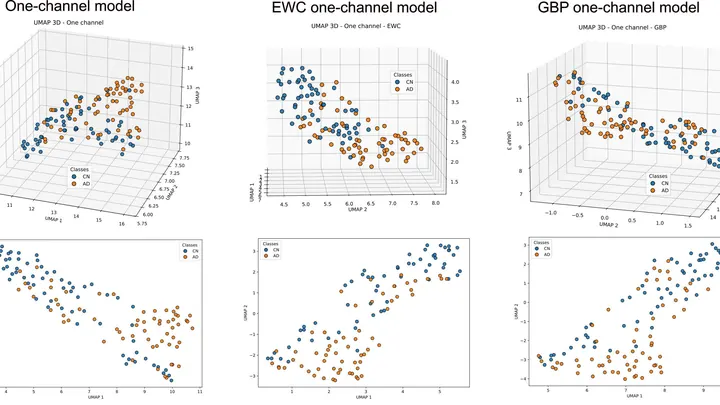
A doctor spends years learning to recognize diseases from brain scans. First, they excel at spotting signs of aging, then they master tumors, and suddenly they start confusing what they knew before. Many neural networks behave much the same way: new knowledge overwrites the old.
The void is not as empty as it seems. In the quantum world, even in a perfect vacuum, pairs of particles constantly pop in and out of existence, like ripples on a pond's surface, invisible to the eye but measurable. If you place a thin partition in this ripple, it alters the wave pattern.
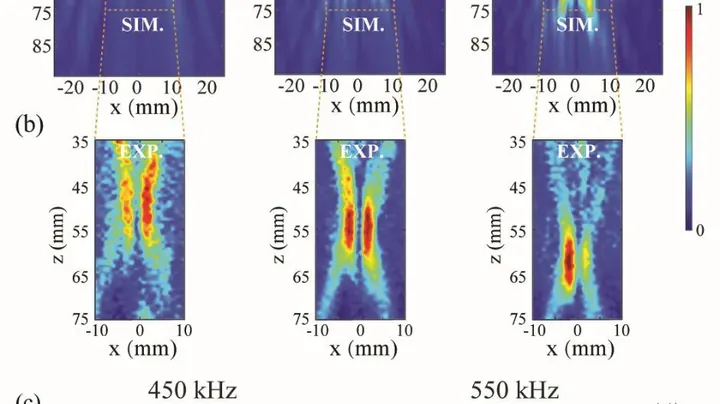
Sound can do more than be heard: it can push. An ultrasound vortex is a sound wave twisted like a whirlpool in a shell: silence at the center, rotating pressure at the edges. Such a whirlpool can grab tiny particles and carry them without a touch.