Sound Beam Passes Through the Skull and Twists express
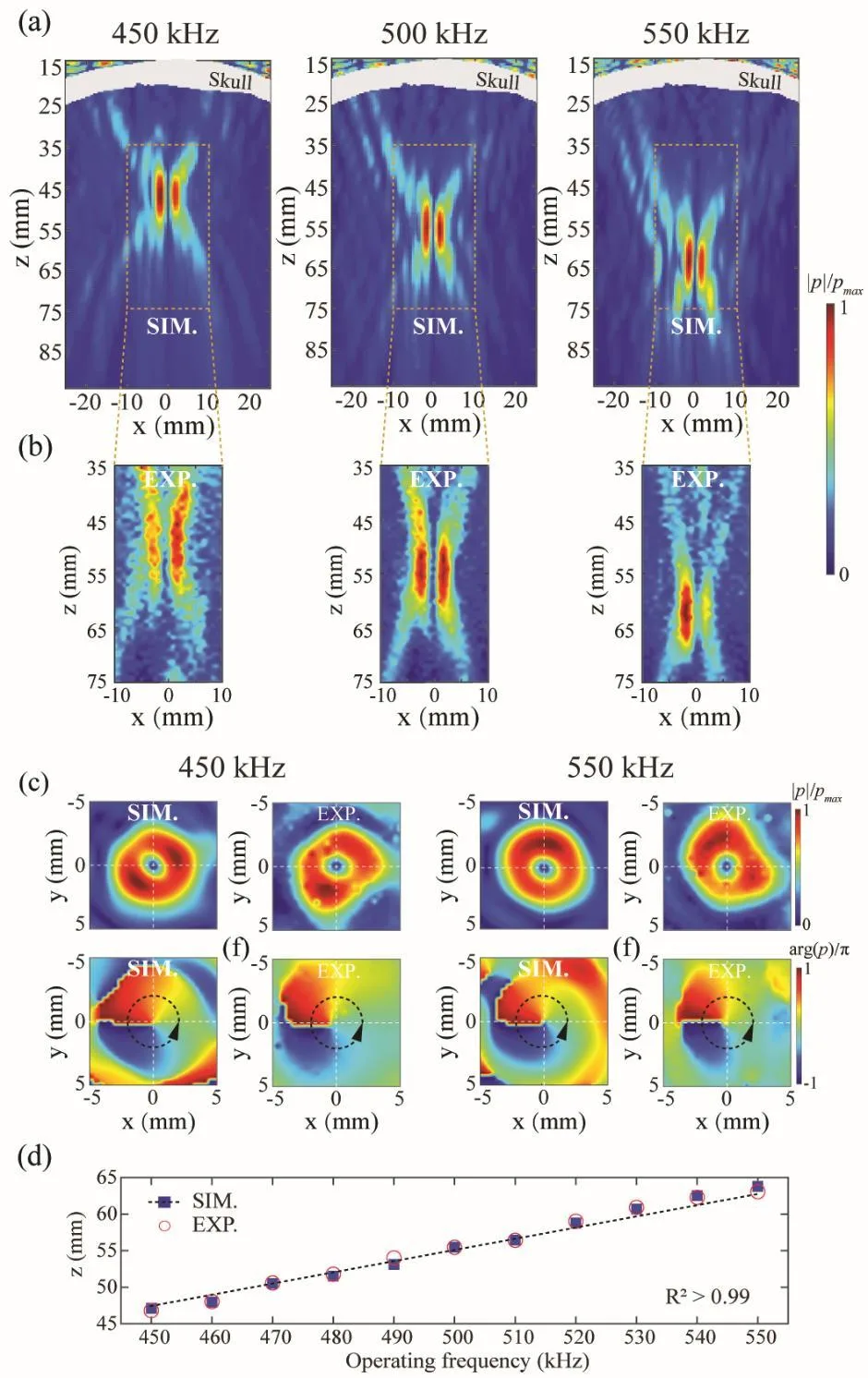
Sound can do more than be heard: it can push. An ultrasound vortex is a sound wave twisted like a whirlpool in a shell: silence at the center, rotating pressure at the edges. Such a whirlpool can grab tiny particles and carry them without a touch. But if bone lies between the sound source and the target, the vortex breaks: the bone refracts waves unevenly, like ripples on water breaking on a rock.
Scientists found a way to send a sound whirlpool through the human skull. They 3D-printed a thin plate, just eight-tenths of a wavelength thick, covered with microscopic steps. Each step delays part of the wave just enough so that after passing through the bone, all the pieces of sound come together into a neat whirlpool. The plate acts like a smart lens that corrects the bone's distortions and simultaneously twists the sound.
Such a sound whirlpool could grab blood clots and move them without cutting tissue. Or it could hold drug particles in place until they take effect. The plate is cheap to print, and frequency control is a simple engineering task. This is a step toward tools that work inside the body without a scalpel.
Original abstract
as written by the authors arXiv:2601.12437
Ultrasound vortices have rapidly expanded their applications to areas like particle trapping, contactless manipulation, acoustic communications. In ultrasonic imaging and therapy involving bone tissues, these vortex beams offer intriguing possibilities but transmitting them through bone (especially the skull) poses challenges. Traditional acoustic lenses were engineered to rectify skull-induced beam aberration, and their capacity was limited to generating only static ultrasound fields within the brain. To overcome this constraint, our study presents a novel method for transcranially steering focused ultrasound vortex using 3D printed binary acoustic metasurfaces (BAMs) with a thickness of 0.8 {\lambda}. We tackled the challenge of skull-induced phase aberration by computing the phase distribution via a time reversal technique, which concurrently enabled the generation of a steerable focused vortex inside an ex vivo human skull by adjusting the operating frequency. Both numerical and simulations experiments were conducted to validate the capabilities of BAMs. Furthermore, we explored the generation of higher-order topological charge acoustic vortices within the brain utilizing the BAM. This development paves the way for designing cost-effective particle-trapping systems, facilitating clot manipulation, and applying acoustic-radiation forces and torques within or across bone structures, thus presenting a new frontier for potential biomedical applications.
The plate is less than a millimeter thick for typical medical ultrasound, and its pattern looks like a tiny staircase carved by a laser.