Brane world gravity is a theoretical framework in which our observable universe is a three-dimensional 'brane' (short for membrane) embedded in a higher-dimensional space, often called the 'bulk'. In this model, the particles and forces of the Standard Model are confined to the brane, while gravity can propagate into the extra dimensions. This setup modifies the behavior of gravity at large distances or small scales, potentially explaining why gravity is so much weaker than the other fundamental forces—the so-called hierarchy problem.
History
The brane world concept emerged from string theory in the late 1990s, with influential papers by Petr Hořava and Edward Witten (1996), and later by Lisa Randall and Raman Sundrum (1999), who proposed two specific models that made the idea testable.
How it works
In the simplest brane world model, proposed by Randall and Sundrum, the extra dimension is warped, meaning the geometry of the bulk causes gravitational effects to be concentrated near the brane. At short distances, gravity behaves as expected in three dimensions, but at larger scales, the influence of the extra dimension can alter the gravitational force law. This can lead to observable signatures, such as deviations from Newton's inverse-square law at sub-millimeter scales or modifications to the expansion history of the universe.
In practice
Brane world models are used in theoretical cosmology to explore alternatives to the standard Big Bang scenario, such as the ekpyrotic model, and to investigate the nature of dark matter and dark energy.
Fun fact
The Randall-Sundrum model was originally proposed to solve the hierarchy problem, but it also predicts that gravitational waves could 'leak' into the extra dimension, potentially leaving detectable signatures in future observatories.
Cosmologists are like cartographers — only instead of mountains and rivers, they map invisible forces. Dark energy, which drives the accelerating expansion of the universe, remains a mystery. One idea is the 'kinetic gravity braiding' (KGB) model. In it, dark energy interlocks with gravity. The celestial map's paper becomes elastic. It alters the path of light rays.
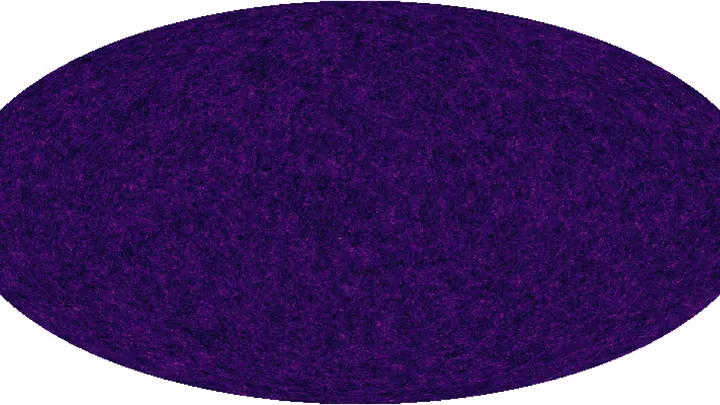
Light from the very beginning of the cosmos has been traveling toward us for 13.8 billion years. During that time, its polarization, the direction of its oscillations, might have been twisted, like a compass needle that someone quietly nudged. Physicists call this phenomenon cosmic birefringence.
For a long time, the event horizon behaved like a cosmic dictator: everything that crossed its boundary vanished irretrievably from our Universe. But quantum mechanics, like a dissident's voice, whispered: information cannot simply disappear.
The universe as painted in Einstein’s textbooks is a smooth four-dimensional canvas. But string theory adds a frame of extra dimensions — invisible, yet tangible to gravity. Imagine our universe as a membrane that trembles under the pressure of hidden layers.
Two particles separated by kilometers change their states in concert, as if there were no distance between them. This is called quantum entanglement, and since its discovery it has baffled physicists: no known carrier can travel faster than light, yet correlations appear instantaneously.
The fifth coordinate, curled into a tiny loop, could be hiding right under our noses. In such a universe, everything we see would be stuck to a four-dimensional film, the brane, like water droplets on a window pane. But why doesn't matter slip into the fifth dimension? The answer may lie in the twisting of spacetime itself.
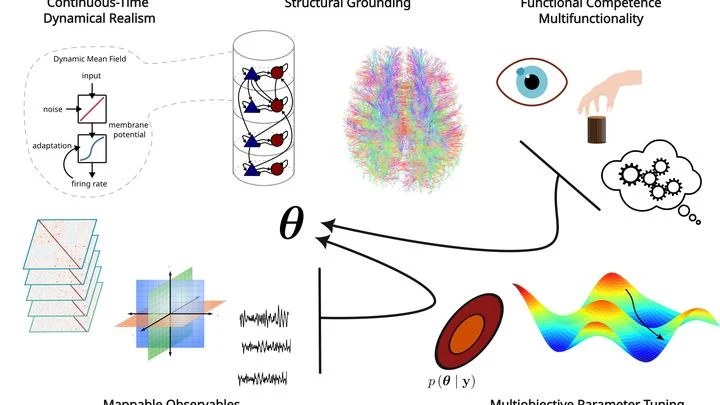
Engineers are building a car. Some assemble an exact replica of the engine, every piston and spark plug, but the car doesn't move: there's no steering wheel or wheels. Others build a fast self-driving go-kart, but its engine is made of playdough and doesn't resemble a real one. This is roughly the situation in brain science.
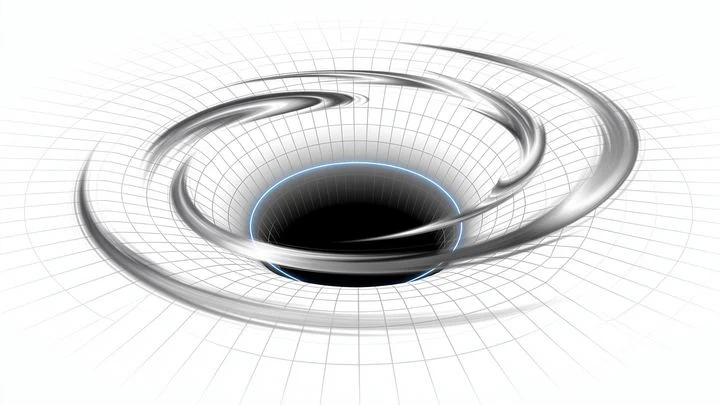
Our Universe behaves like a stretched elastic sheet: massive bodies dent it, creating spacetime curvature — gravity. In brane-world theory, a hidden dimension is added, and this sheet becomes just a surface in a higher-dimensional space. The brane tension determines how much the sheet dents: the weaker the tension, the weaker the gravity.
Gravitational wave detectors work like sensitive microphones, picking up the trembling of space from distant cosmic catastrophes. When two black holes merge into one, the newborn object rings like a bell, and that ringing is a unique 'voice' of gravity.
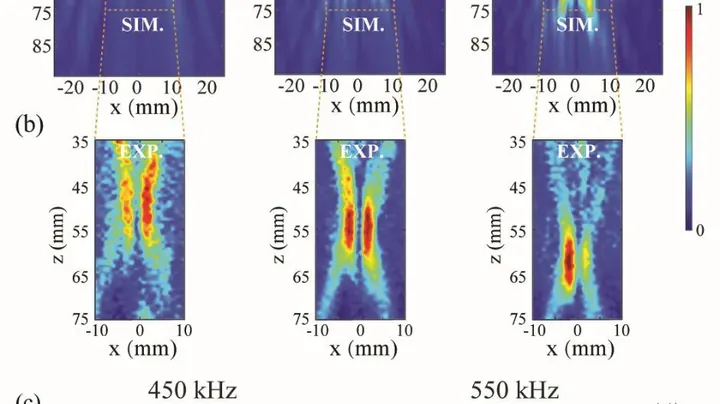
Sound can do more than be heard: it can push. An ultrasound vortex is a sound wave twisted like a whirlpool in a shell: silence at the center, rotating pressure at the edges. Such a whirlpool can grab tiny particles and carry them without a touch.
In the familiar world, we have three spatial dimensions. However, theoretical physics allows for additional, hidden directions — compactified, that is, curled up to microscopic sizes.
According to one physical hypothesis, our voluminous world might be a projection from a flat surface. From such a Universe, tiny closed bubbles — baby universes — sometimes pinch off. For a long time, they were thought to be empty, devoid of internal diversity.
It turned out that the information inside them is scattered, like shards of a broken mirror.
Cosmic rays are charged particles that fly to us from the depths of the Galaxy. If you plot how many particles arrive at each energy, the line runs smooth, then suddenly drops sharply.