Brain MRI Learns Not to Forget express
A doctor spends years learning to recognize diseases from brain scans. First, they excel at spotting signs of aging, then they master tumors, and suddenly they start confusing what they knew before. Many neural networks behave much the same way: new knowledge overwrites the old.
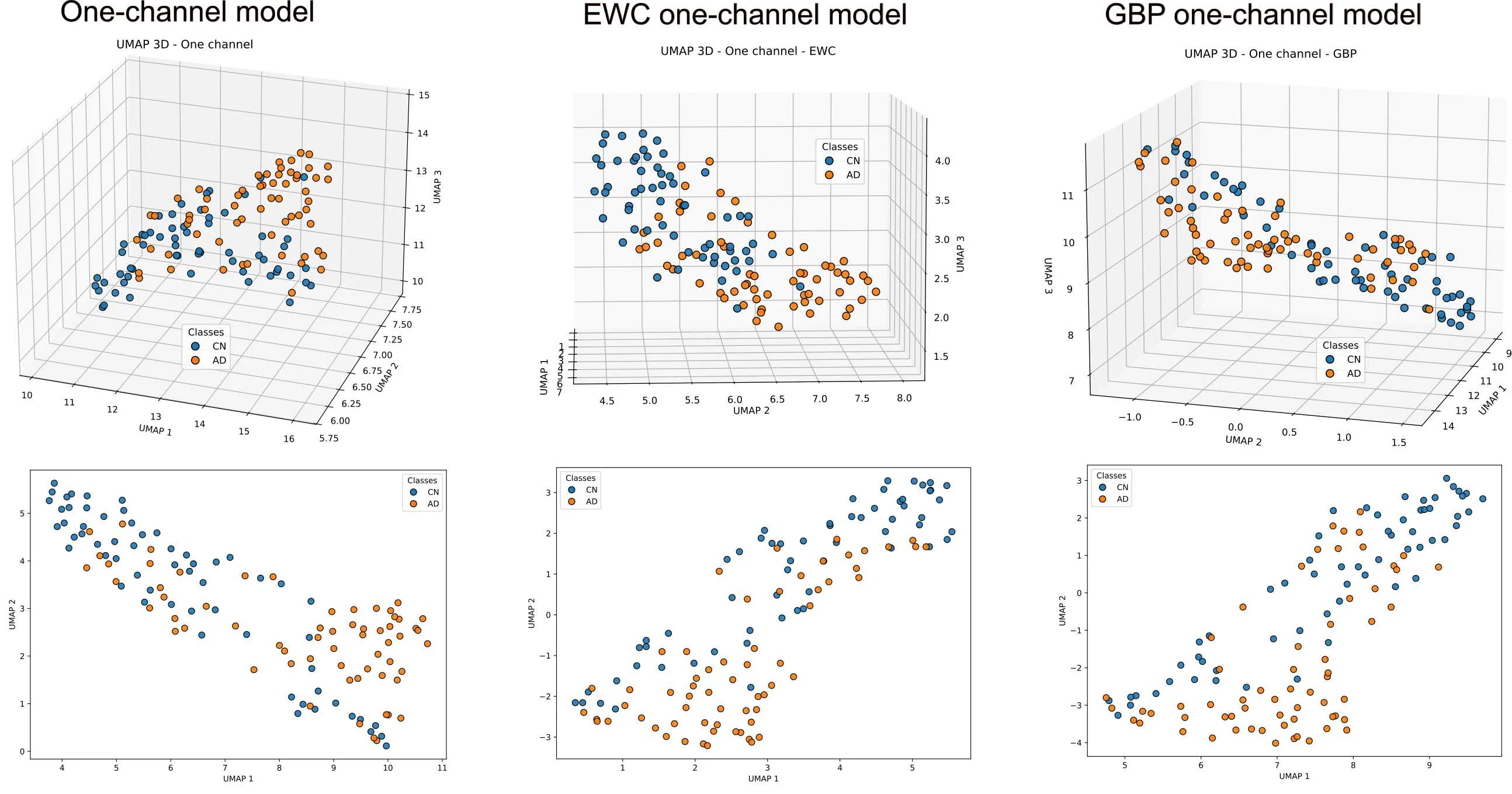
The new model Alcmaeon tackles this problem with an approach reminiscent of margin notes in a textbook. The Graph-Blueprint Pruning method identifies "anchor summaries" in the network — groups of connections critical for already learned diseases. These summaries are frozen, while the rest of the network freely learns from new data. The model was tested on four areas: healthy aging, neurodegeneration, brain development, and tumors. When transitioning to tumors, old skills were preserved best — the network did not unlearn what it had seen before.
Interestingly, the "summaries" turned out to be different for different tasks. For disease classification, certain network layers worked better; for survival prediction, others. No universal recipe was found, but the approach itself offers hope for creating truly durable medical assistants. After all, unlike a computer, the brain can learn throughout life without erasing old memories, and Alcmaeon takes a step in that direction.
The Graph-Blueprint Pruning method works like "protected notes" in a notebook: you can't accidentally erase important formulas, but on blank pages you can write anything.