The disjunction effect is a cognitive bias in which people avoid making a definite choice when the outcome depends on one of uncertain, mutually exclusive events. Formally, it is a violation of Leonard Savage's 'sure-thing principle': if in each possible situation the same option is preferred, then it should also be preferred in the absence of information about which situation has occurred. The effect is especially strong under conditions of prospective (future) uncertainty.
History
The sure-thing principle dates back to Leonard Savage's (1954) work on the foundations of statistics. The disjunction effect was experimentally identified by Amos Tversky and Eldar Shafir in their 1992 paper 'The Disjunction Effect in Choice Under Uncertainty'. They conducted a series of surveys, including the Hawaii problem (vacation after an exam) and the betting problem (gambling after a coin toss). Later, the effect was replicated in neuroeconomic studies, and in the 2000s, quantum-like models of decision-making emerged, where superposition of states explains violations of classical probability laws.
How it works
Standard expected utility theory prescribes acting based on weightedprobabilities of outcomes. In a disjunction, the agent faces an event space {A, ¬A}. If under both A and ¬A action X dominates, then in a state of ignorance the choice of X should remain. The observed refusal of X is explained by several mechanisms: the hypothesis of considering unconsidered scenarios (people imagine the worst-case development), emotional anticipation (regret over a decision made when the outcome is unknown), or quantum-like superposition of mental states, where utility evaluation interferes and leads to non-classical choice probabilities.
In practice
It explains why people don't buy insurance without knowing the exact probability of risks, or why investors wait for clarity even if it means missed profit. It is taken into account in economics, marketing, and political science.
Fun fact
In an experiment by Tversky and Shafir, students who knew they had either passed or failed an exam preferred to buy a vacation trip more often than those who had not yet been told the result. Knowledge freed them from choice paralysis.
Two people agree to meet, but each has their own things to do. One hesitates: what if the other doesn't come? And decides not to go. The other thinks the same. The meeting doesn't happen. That's the simple mechanism the authors dissect: a joint endeavor requires everyone to invest time, but the payoff depends on whether the partner participates.
In the model, each person keeps a to-do list ordered by importance.
A person flips a coin to make a decision. They stand still — the coin lands heads. They take a few steps, and flip again. It would seem walking shouldn't affect the coin. But what if the walk itself changes how often they decide to simply repeat the previous toss?
That's exactly what researchers tested.
Hot water sometimes freezes faster than warm water: this odd fact is known as the Mpemba effect. Now something similar has been found in the quantum world: a state with weak entanglement (a special quantum connection between particles) can beat a more entangled one to the finish line.
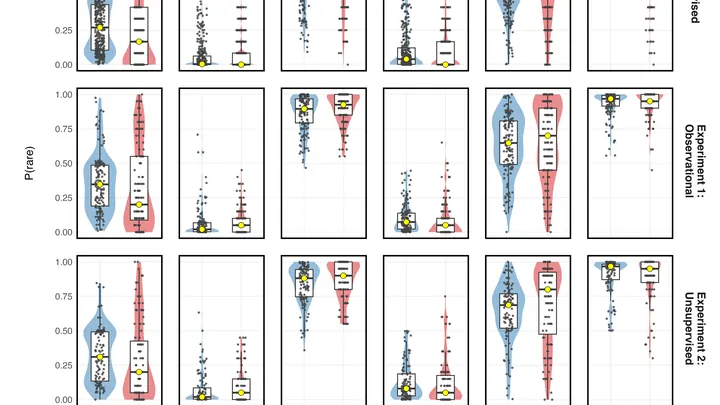
In a warehouse, there are boxes of apples and pears. There are many apples and few pears. But when the stock clerk says "a fruit with smooth skin," we are somehow more likely to recall the rare pear than the common apple. This is the inverse base-rate effect — a persistent glitch in how the brain resolves ambiguity between categories.
In a warehouse, there are boxes of apples and pears. There are many apples and few pears. But when the stock clerk says "a fruit with smooth skin," we are somehow more likely to recall the rare pear than the common apple. This is the inverse base-rate effect — a persistent glitch in how the brain resolves ambiguity between categories.
In any city project, residents' behavior is a invisible force that determines success. One skeptical neighbor can slow down solar panel installation across an entire block: their caution triggers a rise in disorder.
Imagine a ball in an unfamiliar hall: two guests start from opposite corners. Their movements are not a smooth waltz but chaotic improvisation in search of rare treasures. Contrary to intuition, the outcome hinges not on tempo but on the geometry of the floor.
We're used to thinking that noticing only confirmations of our guesses is a mistake. But recent calculations, inspired by wave behavior, flip that view. It turns out that the habit of seeking the familiar is the best way to reduce information noise (scientists call it entropy).
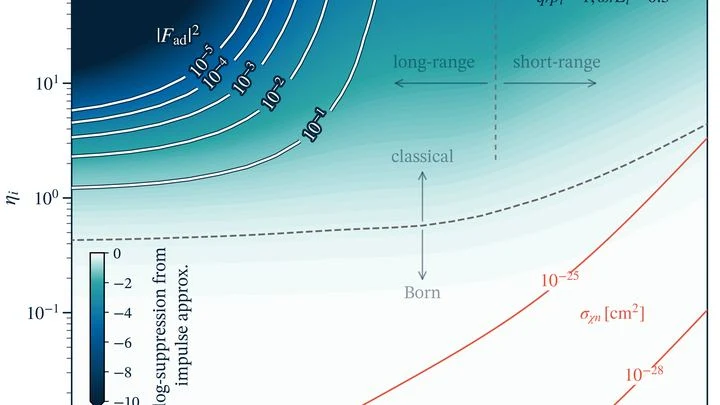
A billiard ball slams into another. Impact, and the balls scatter. But if the push is not sharp but very gentle, the balls just roll together without bouncing. An atom behaves much the same way when hit by a dark matter particle.
Every morning you pick up the same mug, but the coffee tastes either bitter or just right. It's not about the coffee, and not about your character. Inside us, an invisible panel with dozens of sliders is constantly shifting: fatigue, hunger, anxiety, hormone levels.
A person looks at a door lock and sees a keyhole. They know that a key is inserted and turned. But if instead of a keyhole there's a touch panel, the familiar frame breaks. The person doesn't just make a mistake: they realize that the usual approach won't work and can say, "There's no place for a key here; a different approach is needed."
Such an honest stop with an explanation is rare for machines.
If you accelerate one of four entangled particles to enormous speed, their quantum entanglement doesn't just melt away: it first weakens, then strengthens again. Physicists discovered this unexpected twist while studying the behavior of a special state called the Dicke state in a world governed by the laws of relativity.
Two accomplices are interrogated separately: betray or stay silent? If neither knows what the other will do, their choice breaks the classical rule of probability. It’s like riding an old bicycle over bumps — the hard seat jolts you off. The textbook rule, the classical model, fails. The authors of a new study found a simple fix: the cyclist needs a soft saddle.
A particle wanders through a medium scattered with obstacles. Sometimes it pushes them aside like a snowplow, and it was thought that this pushing is what eventually stops the motion. But in three-dimensional space, that mechanism doesn't work.
It turns out that stopping arises from rare events: every so often, a particle randomly finds itself in a trap, and all exits close, as if doors slam shut.
Schrödinger's cat, according to quantum rules, can be both alive and dead at once. But a table can't pull that off. When a massive object tries to be in two places, its mass curves spacetime so drastically that instead of two points, a single deep depression forms, and the object rolls into it.
A crystal that inside resembles a sponge with a labyrinth of pores turns out to be capable of performing computations. The material, named DUT-8, consists of metal nodes and organic linkers forming an intricate lattice. Under the influence of different gases, this lattice slightly changes shape, like a house of cards that rearranges with a gentle breath.
A neural network can be compared to a dormitory where each resident gets their own room. Usually, each feature in the data occupies a separate neuron, and learning proceeds sequentially: first one feature, then another. This is slow and depends on which data you happen to get.
But if you allow several features to share a room, overlap them, the picture changes.
Shake a jar of sand and marbles, and you'll see large objects float or sink depending on their size. But if you shake it cleverly, you can make the marbles gather into pairs and chains, as if glued together. It's this kind of 'invisible glue' that physicists from India and Germany have now caught and measured for the first time.
An infection is spreading through a city, and residents are watching each other: some have already been vaccinated, others are hesitant. Every day, they update their decisions — whether to imitate neighbors or friends who support vaccination.
An orchestra of a hundred musicians plays without a conductor. As long as the score is familiar, each player confidently follows their part, and together they sound harmonious. But when the composer changes the rhythm, discord creeps in: some instruments keep playing the old tune, others try to adapt, and a few fall silent.