Лазер рисует тонкие каналы для воды экспресс
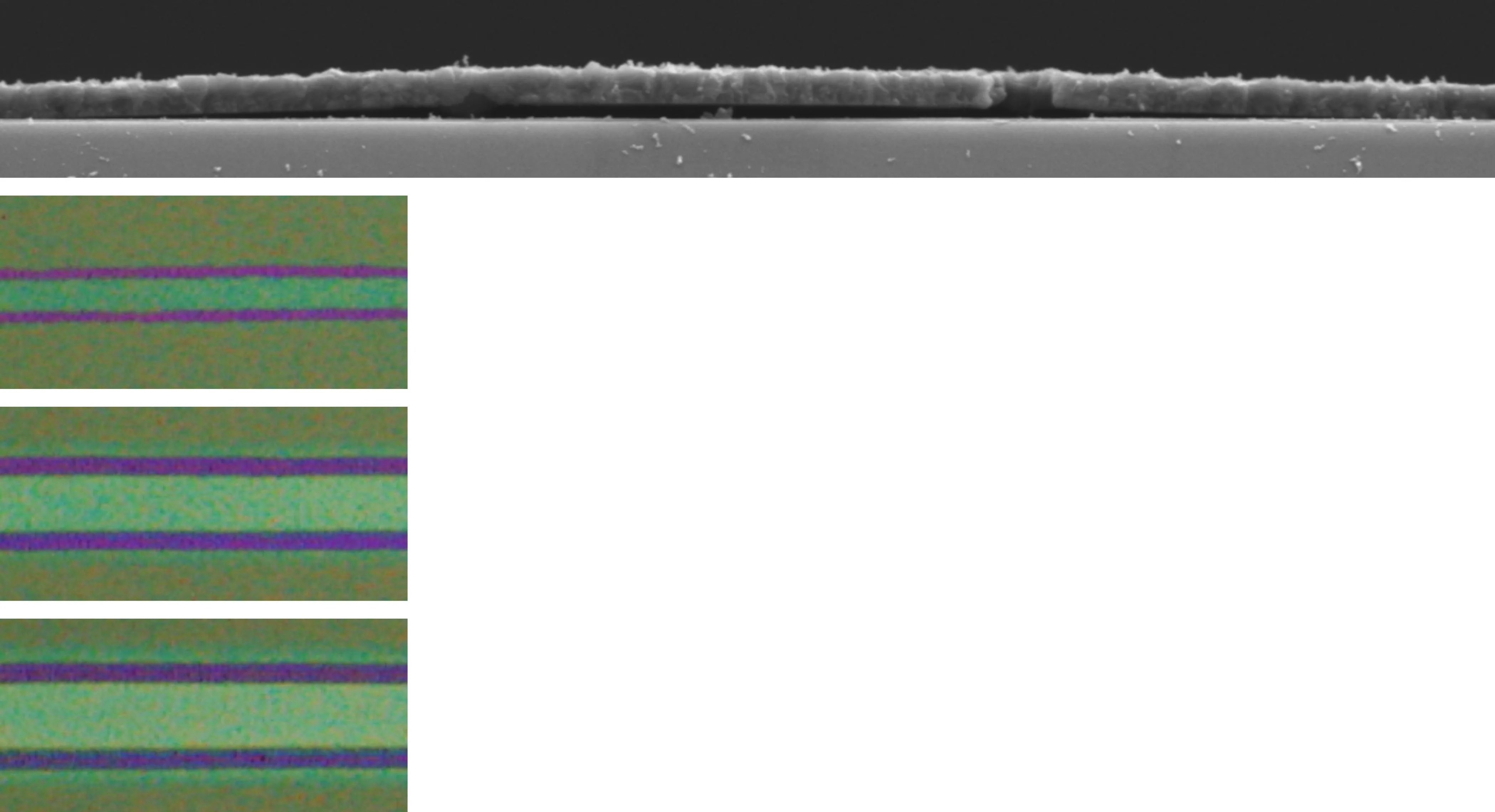
Луч лазера проходит сквозь стекло и касается тонкой алмазной плёнки. В месте касания плёнка превращается в узкую полоску, которая слегка приподнимается. Рядом кладём вторую такую полоску — и между ними остаётся пустой коридор. Это и есть канал: ширина его может быть в пятьдесят раз больше высоты, как лист бумаги, лежащий на столе.
Вода затекает в канал сама, как в промокашку. Никакого насоса не нужно — жидкость ползёт по щели за счёт притяжения к стенкам. Канал при этом не разрушается, даже когда полностью заполнен. Через прозрачное стекло видно, как вода движется внутри: свет отражается от заполненных и пустых участков по-разному.
Такой способ — как рисование лазером по стеклу. Две линии — и между ними готов канал. Никакой сложной сборки, никаких склеек. Это открывает дорогу к дешёвым и надёжным устройствам, где жидкости текут по тончайшим плоским щелям.
Оригинальная аннотация
как её написали авторы, на английском arXiv:2602.06316
Nanochannels with high width-to-height aspect ratios are desirable for many applications, particularly those requiring optical access, but remain challenging to fabricate. In this work, the direct laser writing of such channels between diamond films and glass substrates is introduced. As previously reported, laser light can transform a portion of diamond film into a nanostrip. The strip induces delamination of the surrounding film, causing the formation of two nanochannels with triangular cross-sections. Here, it is demonstrated that nanochannels with rectangular cross-sections and width-to-height aspect ratios exceeding fifty can form between pairs of nanostrips. With atomic force microscopy, the maximum strip spacing that produces these nanochannels is investigated, and it is demonstrated that the reflectance of the channels can be measured by microspectrophotometry. The microstructure of the nanochannels, including nanostrips, and processes that occur during laser writing are inferred from transmission electron microscopy and electron energy loss spectroscopy. By fabricating a nanofluidic device and using microspectrophotometry, it is found that the nanochannels fill with water through capillary action, are resistant to clogging, and are mechanically stable against water filling. A versatile platform for producing high-aspect-ratio nanochannels that are optically accessible and fluidically functional is presented, thereby expanding opportunities for advanced applications.
Вода затекает в такой канал сама, без насоса — как в сухую губку, если её опустить в лужу.