A Spectral Hybrid: How Bayesian Analysis Combines the Precision of Parametrics with the Flexibility of Nonparametrics
Context
In time series analysis, parametric models such as vector autoregression (VAR) are efficient when the model is correctly specified, but lose accuracy when misspecified. Nonparametric methods, on the other hand, are flexible but often yield overly smooth spectral estimates, blurring sharp peaks. This work sits at the intersection of these approaches, alongside research on multivariate Whittle likelihood and Bayesian nonparametric methods. Neighboring works use gamma processes for spectral matrices or variational inference for fast estimation, but they do not address the trade-off between efficiency and robustness.
Methods
The authors start with a parametric VAR model for the data in the time domain. Then, in the frequency domain, they introduce a nonparametric correction: a correction matrix that multiplies the Fourier coefficients to adjust for potential misspecification. The correction matrix is constructed as the ratio of square roots of the true spectral density and the spectral density of the parametric model. A Bernstein–Hpd–Gamma prior is placed on the correction matrix, which is a multivariate generalization of the Dirichlet process. For sampling from the posterior, they use a Metropolis-within-Gibbs algorithm with a truncated representation of the infinite series for the random measure. The order of the VAR model is selected by the elbow criterion on the plot of negative log-likelihood.
Results
In a simulation study, the method was compared with a purely parametric VAR and a purely nonparametric approach based on the Whittle likelihood. For a correctly specified VAR(2) model, the L1 and L2 errors of the new method are close to the nonparametric, but the parametric method is more accurate. For a misspecified VMA(1) model, the new method outperforms both: at n=256, the L1 error is 0.081 versus 0.097 for the nonparametric and 0.156 for the parametric. The coverage of 90% confidence regions for the new method reaches 0.888, whereas the nonparametric achieves 0.594 and the parametric 0.980 (but with excessive width). On real data, the method clearly identifies the annual peak in the SOI spectrum and the diurnal peak in the wind data, which are smoothed over by other approaches.
Implications
This work differs from neighboring studies in that it is the first to combine a parametric model in the time domain with a nonparametric correction in the frequency domain for multivariate series. This allows preserving the efficiency of the parametric approach when correctly specified and gaining the robustness of the nonparametric when misspecified. The proven mutual contiguity opens the way to deriving posterior consistency of the estimates. The method fills a gap between purely parametric and purely nonparametric Bayesian methods for spectral analysis.
Future development
The topic could develop toward proving posterior consistency for the nonparametrically corrected likelihood in the case of non-Gaussian time series. Also promising is the extension to nonstationary processes and application to high-dimensional multivariate data. Computational algorithm optimization for large samples and multivariate series is possible.
Impact
The method could influence the analysis of multivariate time series in climatology, econometrics, neuroscience, and signal processing, where both accuracy and robustness to model misspecification are important.
Next steps
Next steps include proving posterior consistency for the nonparametrically corrected likelihood and extending to non-Gaussian time series. Also planned is adapting the method for nonstationary processes and high-dimensional data.
Key open problems
In time series statistics, the problem of choosing between parametric and nonparametric models remains open when the true data structure is unknown. This work offers a compromise, but questions remain about selecting the order of the parametric model and the method's behavior under strong deviations from Gaussianity.
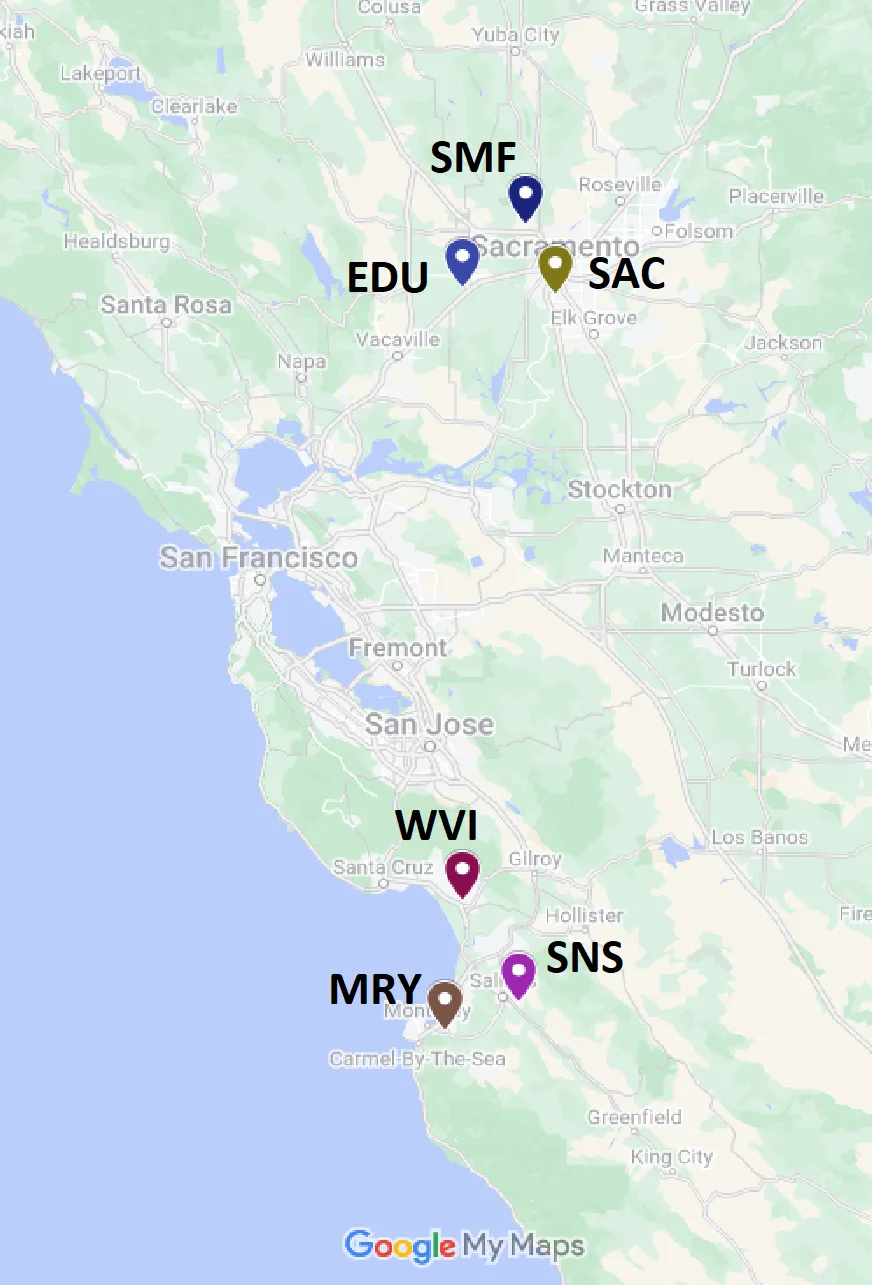
The method was applied to wind speed data from six California airports and detected a diurnal peak at a frequency of about 0.524 radians, corresponding to a period of 12 hours, that is, a semidiurnal cycle, which had been smoothed over by other methods. This shows how important it is to preserve sharp spectral features.
Key numbers
- L1 error for VMA(1) at n=256: 0.081 (new method) vs 0.097 (nonparametric) and 0.156 (parametric)
- coverage of 90% confidence regions for VMA(1): 0.888 (new method) vs 0.594 (nonparametric) and 0.980 (parametric)
- frequency of diurnal peak in wind data: about 0.524 radians (period 12 hours)
- length of SOI time series: 453 months (1950-1987)
- number of MCMC iterations: 80000 (30000 discarded as burn-in)