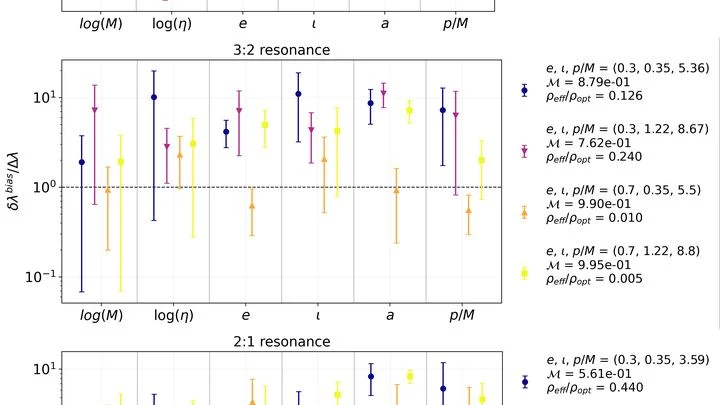
In statistical inference, you often care about one parameter (say, the mass of a particle) but must also account for other 'nuisance' parameters (like detector calibration) that you don't care about but that affect your data. The profile likelihood is a way to focus on the parameter of interest: for each possible value of that parameter, you find the best-fit values of all nuisance parameters by maximizing the likelihood, then record only the maximum likelihood value. This yields a 'profile' of the likelihood as a function of the parameter of interest, which you can use to construct confidence intervals or test hypotheses.
History
The concept was introduced by statisticians in the mid-20th century, notably by Jerzy Neyman and later formalized by others; the term 'profile likelihood' became standard in the 1970s.
How it works
Imagine a likelihood function that depends on both the parameter of interest θ and nuisance parameters ν. For a fixed θ, you maximize over ν, obtaining L_profile(θ) = max_ν L(θ, ν). Repeating this for many θ values gives a one-dimensional curve. The ratio of this profile to its maximum follows an approximate chi-squared distribution (Wilks' theorem) under certain regularity conditions, allowing you to derive confidence intervals. This is computationally efficient because you don't have to integrate over nuisance parameters, just optimize.
In practice
Widely used in particle physics (e.g., Higgs boson mass and signal strength measurements) and in cosmology for parameter estimation from CMB data.
Fun fact
Profile likelihood can give misleadingly narrow intervals when the nuisance parameters are poorly constrained, a phenomenon known as the 'profile likelihood problem'.
A protein engineer is like a chef trying to make a dish that is tasty, healthy, and cheap all at once. Change one ingredient, and you risk ruining another. In the past, computer assistants could only evaluate protein properties one at a time, missing how they are connected.
Gravity isn't just the force that keeps us on the floor. On cosmic scales, it conducts galaxies, bends light rays, and decides the fate of everything. A century ago, Einstein described it as the curvature of space and time.
When a radio wave encounters a building in its path, it doesn't just reflect or get absorbed: it bends around it, much like ocean waves flowing around a rock, leaving calm water behind. In radiophysics, this phenomenon creates a radio shadow — a complex pattern of zones where the signal is amplified or attenuated, which scientists call a radio portrait.
Imagine an experienced chef during rush hour: suddenly a stove fails or a key ingredient runs out. Instead of panicking, he instantly reworks the recipes — speeding up some dishes, slowing down others, reallocating resources on the fly. This principle of dynamic adaptation underpins a new generation of ultra-reliable networks.
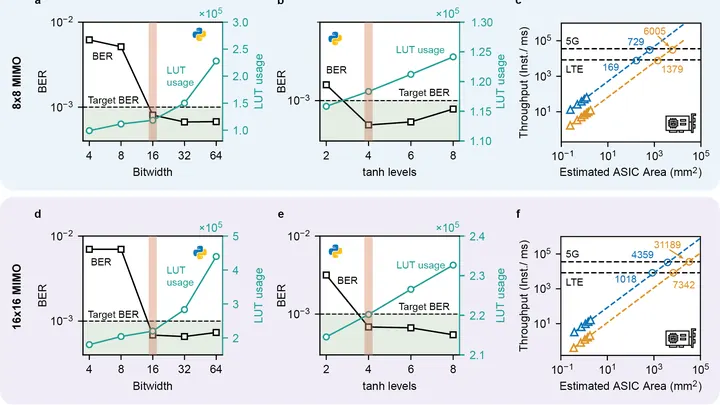
Neurochips work differently from conventional computers, which are built according to the blueprints of von Neumann with separate memory and processor. At the core of these chips is a network of simple cells, similar to neurons, and, like water that evenly fills containers of any shape, they easily find a solution without unnecessary steps.
Light flows like an invisible river. If you place an obstacle in the stream, the water whirls into eddies. Likewise, specially designed surfaces create light 'whirlpools' that catch nanoparticles like wood chips.
Gold doesn't lie on the surface: it's hidden in tons of barren rock. To extract a gram of precious metal, prospectors sift through cubic meters of dirt.
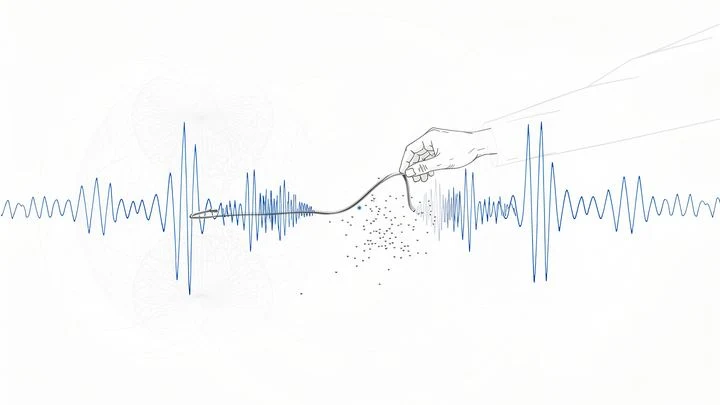
Statistical models are an attempt to stretch a perfect mathematical web over the uneven landscape of data. When a model resists, it emits tension, but we've grown accustomed to ignoring it. Researchers spend hours staring at residual plots, trying to guess where the model is 'coming apart at the seams.' Squealer translates this resistance into sound.
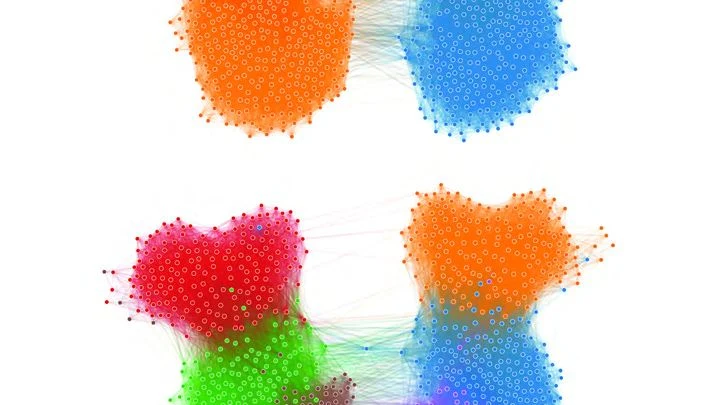
A social network is like a city: there are giant neighborhoods and tiny alleys. When an algorithm looks for tight-knit groups, it often picks out a couple of huge clusters and many small fragments. But the client (say, a municipality) needs districts of roughly equal size to distribute clinics or schools evenly.
A figure skater glides across the ice, gradually moving toward the center. Their trajectory isn't a perfect spiral: sometimes they catch the rhythm of the music and add an extra turn, slightly changing their speed. That's roughly how a small black hole behaves when it falls into a supermassive one.
An orchestra where each musician plays their own part but hears only the neighbor. One wrong note, and a wave of errors rolls through the hall. That's how Ising machines work — special devices for solving problems where you need to find the best option among many.
An optical tweezer is a beam of light that holds and moves tiny objects like bacteria or dust grains. If you need to carry a particle from point A to point B, you could simply pull it straight there. But that would consume more energy than a cleverly chosen detour.
An active particle is a microscopic object that propels itself forward, like a tiny swimmer.
To tell one protein from another, you need to describe its shape and composition. There are dozens of such descriptions: molecular length, charge, solubility. But not all are equally useful. A method called Differentiable Information Imbalance (DII) can pick out the most informative features while discarding the rest.
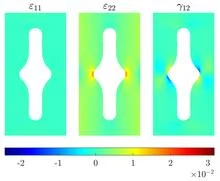
A mechanical testing lab is like a kitchen where a chef tastes a dish to guess the recipe. For an anisotropic material, one that is stiffer along its fibers than across them, a single taste is not enough. You need three or more separate tests, each with its own specimen. Engineers have spent years refining specimen shapes by hand, relying on intuition and experience.
A rough sketch of a portrait: a few confident lines define the shape, but the details are not yet refined. That is how a parametric model, such as vector autoregression (VAR), describes a time series: it captures the main structure, but if the real data deviate from its assumptions, the portrait comes out distorted.
The puppet master pulls the strings, and the marionette dances. In forecasting the future from time series, the puppet masters are the few variables that truly control the system. The rest merely echo their movements, creating an illusion of complexity. The challenge is to find these puppet masters and watch only their fingers, not the whole stage.