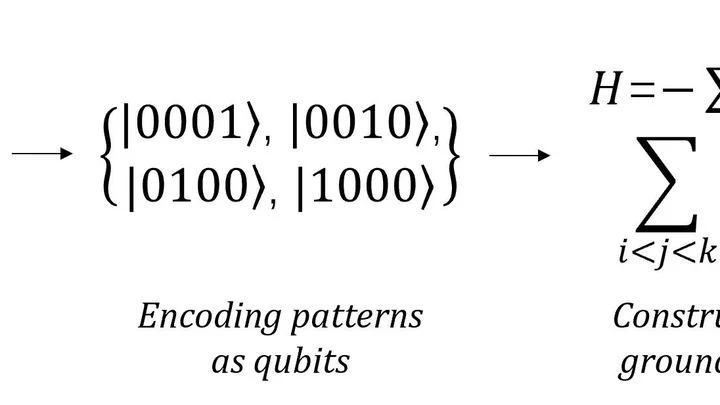
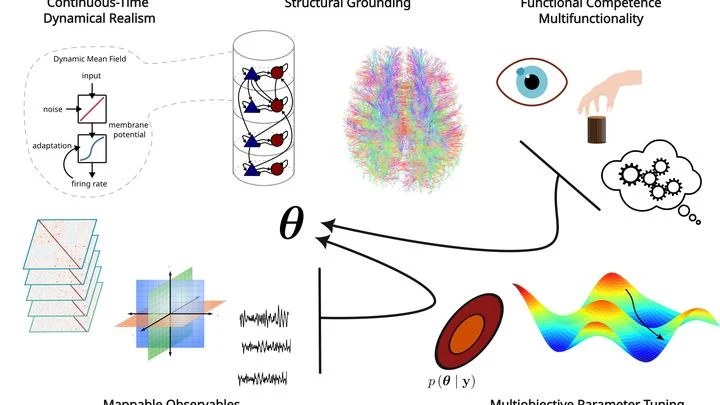
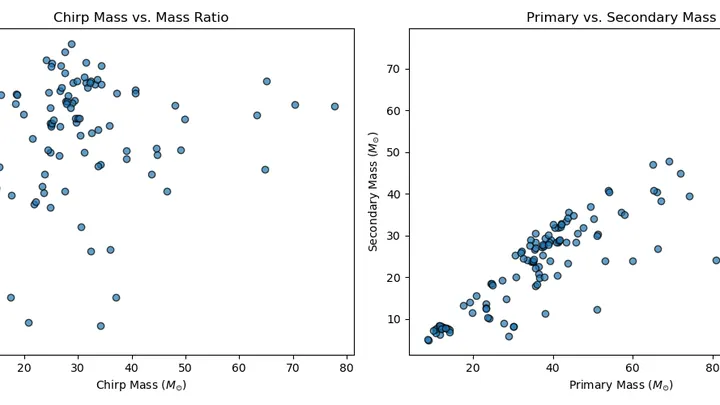
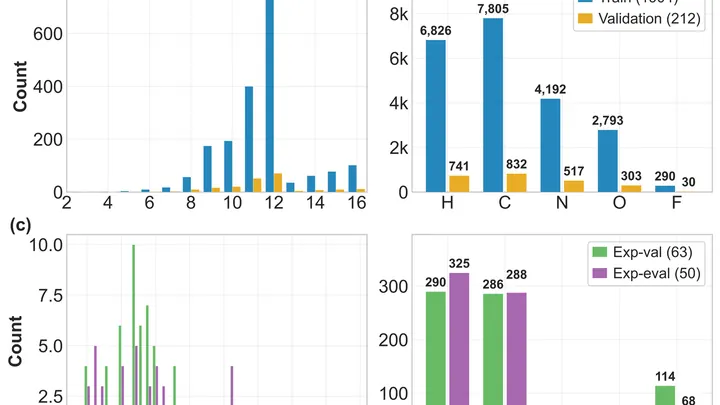
Generalization is the ability of a model — whether a neural network or a biological brain — to perform well on new, unseen data, rather than merely memorizing the training examples it was shown. It is the core goal of any learning system: a model that only works on its training set has not truly learned the underlying pattern, but has instead overfit to noise or specific quirks of the data. In physics and machine learning, generalization is what allows a network trained on a limited set of measurements to predict outcomes for entirely new conditions, such as mapping dark matter distributions from gravitational lensing or predicting the behavior of quantum states of light.
History
The concept was formalized in the 1960s and 1970s within statisticallearning theory, notably by Vladimir Vapnik and Alexey Chervonenkis, who introduced the Vapnik-Chervonenkis (VC) dimension to quantify a model's capacity to generalize.
How it works
Generalization emerges when a model captures the underlying regularities of the data rather than its superficial details. This is achieved through techniques like regularization, cross-validation, and training on diverse datasets that force the model to find compact, reusable representations. In the brain, generalization is thought to rely on the formation of abstract maps or schemas that can be flexibly applied to new situations, as seen in studies of how the brain transfers past experiences to novel contexts. The key is that the model learns features that are genuinely predictive across a range of inputs, not just those that happen to fit the training examples.
In practice
Generalization is what makes neural networks useful in physics, from predicting gravitational lensing maps to classifying quantum states of light, and in medicine, where models trained on incomplete data must still make accurate predictions for new patients.
Fun fact
A model that perfectly memorizes its training data will almost always perform worse on new data than a simpler model that makes some errors on the training set — a phenomenon known as the bias-variance tradeoff.
Imagine an interferometer as a giant ear listening to the radio whisper of a distant galaxy. Three antennas spread across continents capture the signal, and the difference in their phases combines into a quantity that is immune to atmospheric jitter. This quantity is called the closure phase.
A protein engineer is like a chef trying to make a dish that is tasty, healthy, and cheap all at once. Change one ingredient, and you risk ruining another. In the past, computer assistants could only evaluate protein properties one at a time, missing how they are connected.
An interpreter gets distracted by every rustle in the hall, and a one-hour meeting stretches into two. Similarly, molecular foundation models learn the language of molecules from vast corpora, but each new conversation requires fine-tuning. Monroe changes the rules: it doesn't learn a new language but instantly finds common meaning from a few examples.
Predicting the yield of a chemical reaction is a bit like trying to guess the harvest knowing only the soil composition. Traditionally, chemists have relied on long columns of numbers, quantum descriptors, that describe electron energies but say nothing about molecular shape.
In 2019, the LIGO facility recorded a gravitational waves, a ripple in the fabric of spacetime, whose time-frequency map resembled a strange comb. Each such signal from a black hole merger leaves a unique pattern, like a fingerprint.
Radio signals in a room act just like sound in a concert hall: bouncing off walls and objects, they create a unique pattern — a silent melody for every location. Your phone, like a keen ear, catches this melody amid noise and distortion. It remembers which chord matches the corner of the couch, and which one fits the doorway.
The brain communicates in short electrical clicks. Previously, to learn this language, thousands of examples with translations from the experimenter were needed. MOJO takes a different path: like learning a language through immersion, it first listens to the 'stream of consciousness' without any hints and finds recurring patterns on its own.
Data on gene activity usually looks like a long string of numbers, like a rainbow stripe (spectrum) with no visible connections. In the scVision model, these numbers are turned into a meaningful picture — not a list of ingredients, but a photo of a finished dish.
Neutron stars are the last clumps of visible matter before collapsing into a black hole. In their interiors, matter is squeezed to trillion-fold densities. Here, nuclear forces and gravity weave into an exotic substance inaccessible to any earthly particle accelerator.
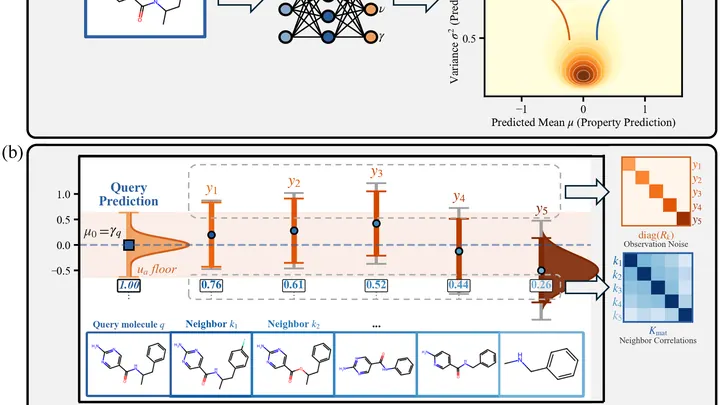
Predicting the properties of a new molecule is like guessing the flavor of an unfamiliar dish. The program works like an experienced chef: it “tastes” similar molecules whose properties are already known, and based on their “flavor,” it refines its guess.
A large neural network like Whisper masters hundreds of languages and resembles the standard model of the universe: everything is balanced. But training on a rare language disrupts this equilibrium — it turns into a black hole, pulling in all training resources. The network starts forgetting the other languages.
Machine learning has long ceased to be just a tool — it is becoming an investigator, independently fishing out the laws of nature from data. But how does a silicon mind come to understand?
A snowflake grows, an oil slick spreads, a crowd moves — each case has its own equations. But the end result is often the same: shape, speed, and pattern follow a simple scheme that repeats across scales. This is universality — when a common law hides behind the details.
Gravitational signals from dying massive stars are whispers reaching us from the most violent laboratories in the Universe. Einstein predicted these gravitational waves over a century ago, but only today, with detectors like LIGO, are we beginning to hear them.
The classical neuron is a chamber musician, drawing only one note from each string: it takes a weighted sum of inputs, adds a bias, and passes it through a nonlinearity.
Ever since Einstein predicted gravitational lensing, and gravitational waves were first heard by LIGO detectors, physicists have dreamed of catching the lensed echo — a repeating signal from one merger, multiplied by the gravity of a massive body.
Almost a century after Фриц Цвикки suspected something was amiss in the motion of galaxies in the Coma cluster, and Вера Рубин measured stellar velocities in spiral arms, the nature of тёмной материи remains one of the most vexing mysteries.
60 mice, 1,980 samples, 234 lung cancer patients. Behind each number lie thousands of genes. Their activity is measured to understand the disease. But the data aren’t uniform: for one patient, you assess a protein level (a continuous number), make a diagnosis (yes/no), and determine the tumor subtype (a category).
Once Richard Feynman saw in quantum systems a challenge for classical computers. Now we face the inverse problem: understanding what exactly the quantum processor has simulated. Among the states it births are veritable 'black boxes'—topological phases of matter.
Ordinary neural networks learn from examples, like a person memorizing tunes by ear. But networks with physical laws embedded from the start resemble a musician who knows notes and harmony: they can play a new piece from just a few chords. Instead of mindless memorization, they use equations like energy conservation or motion.
The immune system is like a tireless editor, revising antibody drafts to make them stickier to viruses and bacteria. This process is called antibody maturation: random typos (mutations) arise in the genes, and natural selection keeps those that improve target capture.
X-ray detectors work like honeycombs: particles flash here and there in hexagonal cells. Conventional algorithms stretch these combs onto a square grid, creating ghostly polarization artifacts. Scientists used a neural network that lives by the rules of the hive — it processes the hexagonal structure directly, preserving the natural pattern.
A handful of sand falls onto a table: each grain rolls down until it rests in a hollow. That's how a potential works: the table's surface tells the grains where to go. But in a river with whirlpools, there's no single basin everything flows into. Water swirls, returns, and meanders. For such systems, the usual map of 'pits and hills' doesn't apply.
Population growth from a distance looks like a train picking up speed: it crawls at first, then gains momentum. But look closely at the data, and the picture blurs. One measurement shows a dozen individuals, another a hundred. Classical models wipe away this scatter like annoying smudges on a lens. They assume the noise is uniform and simply ignore it.
A supermarket cashier at rush hour doesn't memorize every scanned item: they keep the running total in their head and watch the queue. The brain allocates its resources similarly: the expensive, precise cortex (responsible for deliberation) and the simpler, economical subcortical nuclei (where habits live) work in tandem.
Conventional neural networks learn from thousands of examples, burning hours and gigawatts. Physicists have found a quantum workaround. As early as Max Planck showed the discreteness of energy, today this allows generation without training.
Engineers are building a car. Some assemble an exact replica of the engine, every piston and spark plug, but the car doesn't move: there's no steering wheel or wheels. Others build a fast self-driving go-kart, but its engine is made of playdough and doesn't resemble a real one. This is roughly the situation in brain science.
At a party, guests don't just chat in pairs; they gather in circles of shared interests: three discussing movies, four debating sports. The usual acquaintance map, like a phone's contact list, can't capture that: it only sees one-on-one links.
The symphony plays, but a barely perceptible wrong note has crept into the score. This is roughly how physicists search for deviations from general relativity in the 'sounds' of the universe — gravitational waves from merging black holes.
Every carbon atom in a molecule carries a passport — the energy with which its deepest electrons sit in their orbitals. This energy is sensitive to neighbors: add an oxygen nearby or a double bond, and the number in the passport changes. Chemists have long measured such energies with X-rays, but calculating each new molecule takes hours of machine time.
Show the same photo of a cat to two different neural networks, and they often reach a similar conclusion: "cat." But ask them for more detail, and their answers may diverge. One model focuses on the whiskers, another on the coat color, a third on the pose. So even within the "visual" world of neural networks, there's no complete unity.
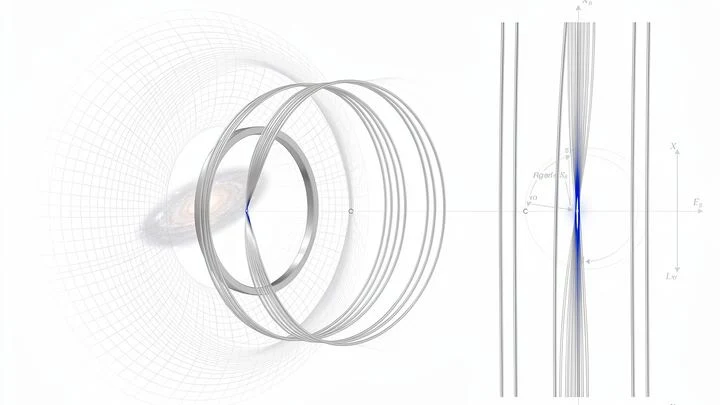
A pebble drops into a pond, and neat circles spread across the water. But the pond's bottom is strewn with invisible glass shards: each one slightly delays the wave, scatters it here, or alters its pace. That's roughly how gravitational waves, the trembling of space itself, pass through distant galaxies and dark clumps of matter.
A neural network trained on collisions of protons and electrons transferred its skills to a completely different experiment — catching neutrinos. Like a chef who learned French cuisine and then, without preparation, baked an excellent Uzbek plov.
Seismologists listen to the Earth the way a doctor listens to a heart. Surface waves from earthquakes travel across the planet, and their speed reveals what lies beneath our feet — solid rock, melt, or water. Usually, this requires building complex physical models.
A typical medical neural network sees a patient as a point on a map: there's height, blood pressure, a blood test, and the model places a single label: "healthy" or "sick." But in a real hospital, the map is always torn. One test is done on Monday, another a month later, and the CT scanner is a different brand altogether. A point on such a map is self-deception.
The brain of a person with Parkinson's disease works like an orchestra where the conductor either freezes or waves the baton off-beat. Medications don't help everyone, so doctors turn to stimulation — weak electrical pulses that restore the rhythm.
When a neutron or proton enters an atomic nucleus, it behaves like a ball hitting a rough wall: it can bounce off in different ways, depending on where it hits.
When a massive star dies and collapses into a supernova, a neutron star is born — a city-sized sphere with the Sun's mass. Its matter is so compressed that a teaspoon weighs more than Mount Everest. Physicists are trying to learn the "recipe" of this matter — the equation of state that explains how matter behaves under extreme pressure.
Deep inside every hard drive or flash drive lies a material that can 'remember' an electric field. Such a material is called a ferroelectric. When you apply a voltage, tiny regions inside the crystal (domains, like compass needles) flip. Flip the needle one way, you've written a one; flip it back, a zero. But what happens to the atoms at the moment of that flip?