How to Build an El Niño Model Without Adding Extra Stuff ✛
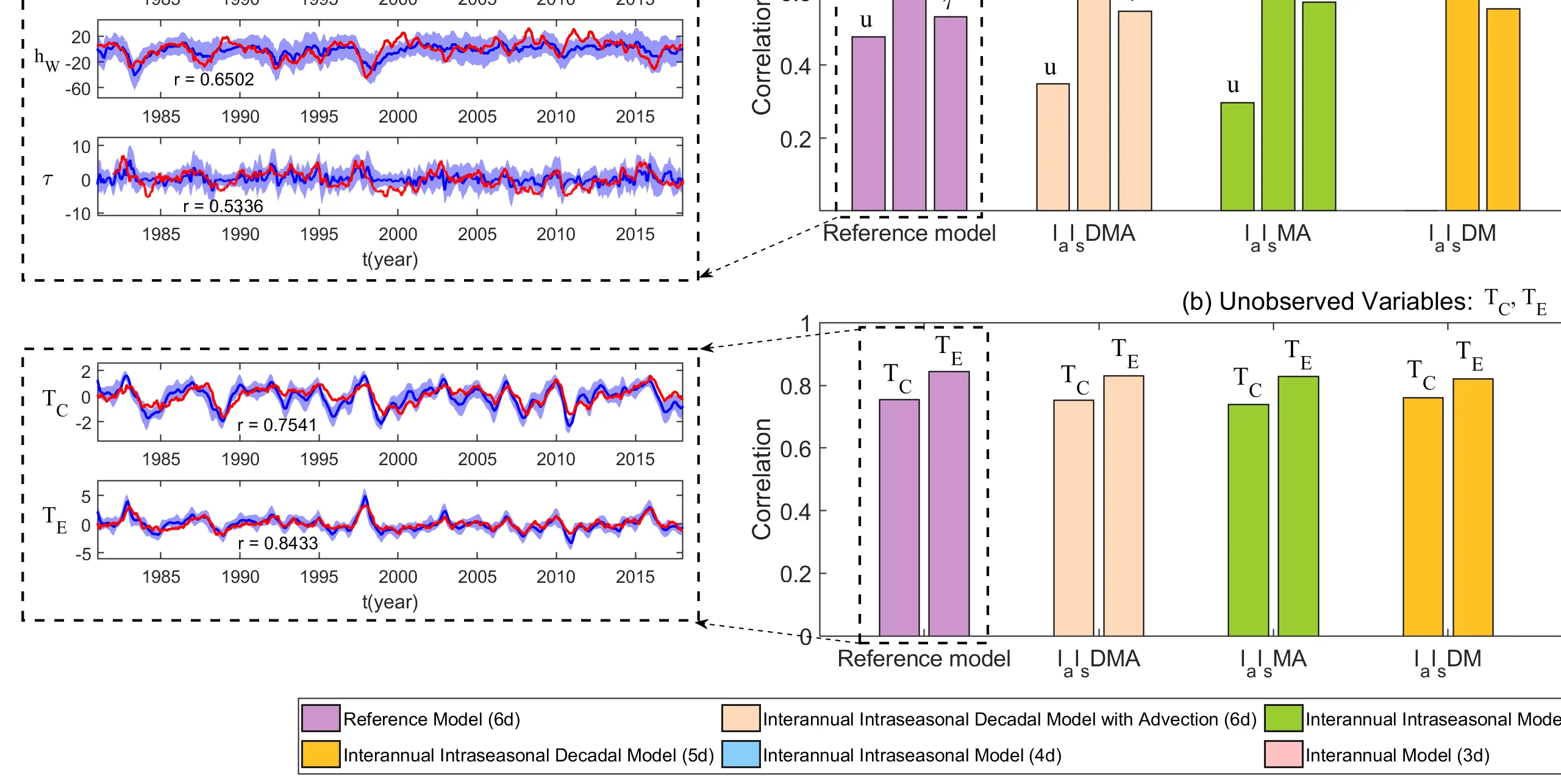
El Niño is when a huge pool of warm water in the Pacific Ocean shifts eastward. But each time it shifts differently: sometimes stronger, sometimes weaker, sometimes closer to one coast, sometimes to the other. Scientists want to build a simple model that captures all these variations.
The problem is that equations accumulate many terms, and it's unclear which ones matter. The new algorithm works like a sieve: it runs through all possible terms and keeps only those that actually help predict how the ocean will behave.
It turns out that to reproduce all El Niño variations, only four variables are needed. Three of them describe slow changes: the depth of the layer with a sharp temperature gradient in the western ocean and the surface temperature at two other points. The fourth variable is westerly wind bursts. Without it, the model becomes too predictable and misses strong El Niños.
The algorithm not only finds the model but also keeps it interpretable: each term in the equation has a meaning that can be explained in words.
The causal entropy used to select model terms is computed via analytical formulas thanks to the Gaussian approximation, making the entire autogeneration process computationally cheap: on a standard computer it takes minutes, not hours.