Dancing Particles in a Pipe: Which Model Is More Accurate? ✛
Inside a factory pipe, air thick with fine particles swirls like couples on a ballroom floor. Engineers use computer simulations to predict this swirling dance, saving time and materials when designing equipment.
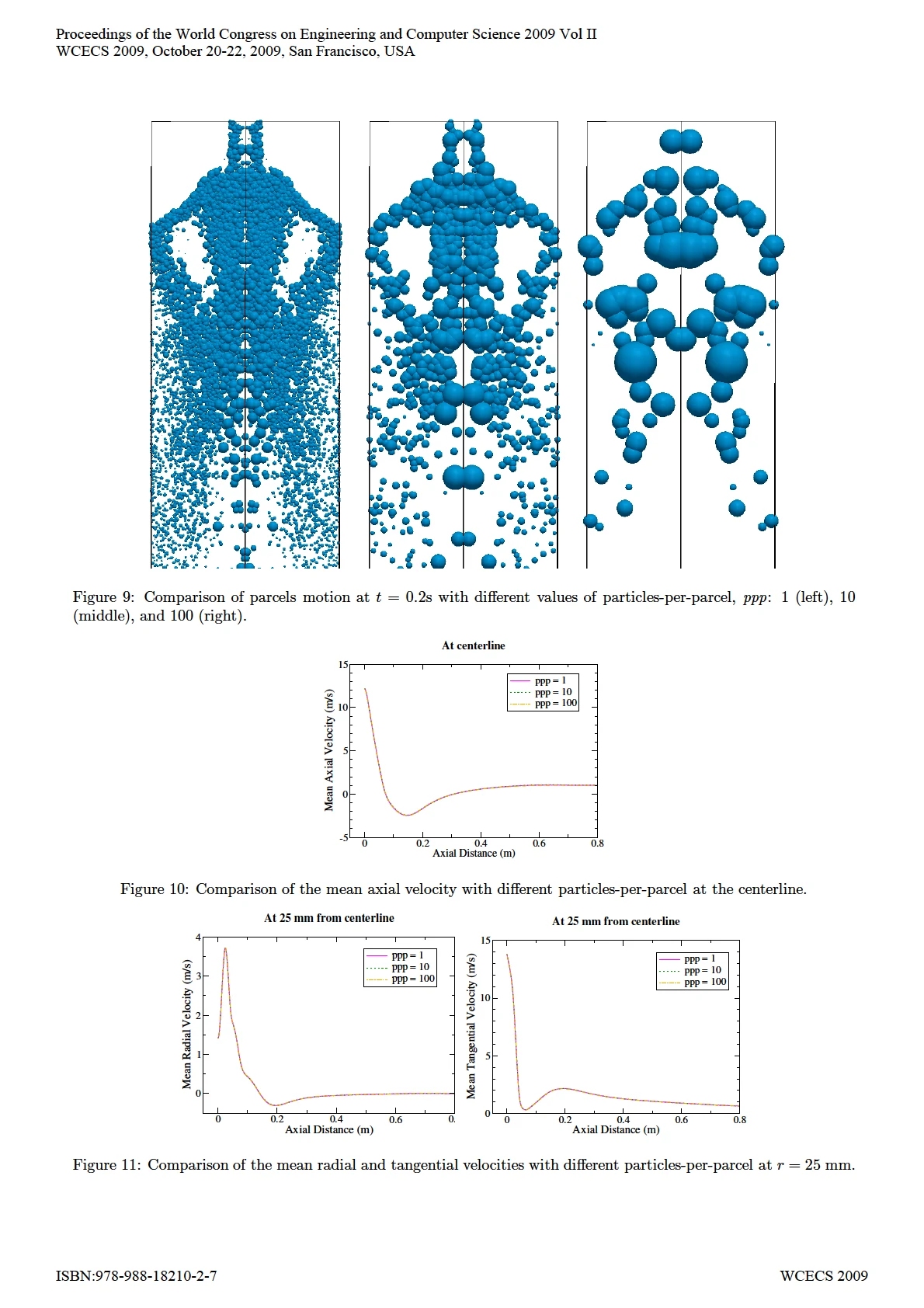
Researchers tested three models: the familiar standard one, RNG, and the 'realizable' model. The standard, like a seasoned choreographer, guided particles flawlessly along the right paths. RNG invented phantom reverse flows, while the newest model also took longer to compute and poorly predicted cross-flow motion. To speed things up, they bundled particles into 'parcels' — as if counting dance couples instead of individual dancers. Accuracy barely suffered.
A surprising twist: the vibration frequency inside this swirling funnel matches oscillations found in water and stellar plasma. From waterspouts to cosmic vortices, nature loves to repeat elegant patterns. And the simplicity of this proven model will now enable more precise design of filters that trap carbon-laden particles and dryers, bringing entropy — the measure of disorder — to a minimum in calculations.
Cyclone dust collectors, based on this principle, can separate particles just a few microns across — thinner than a human hair.