How to Hear Who Calls the Shots in a Complex System ✛
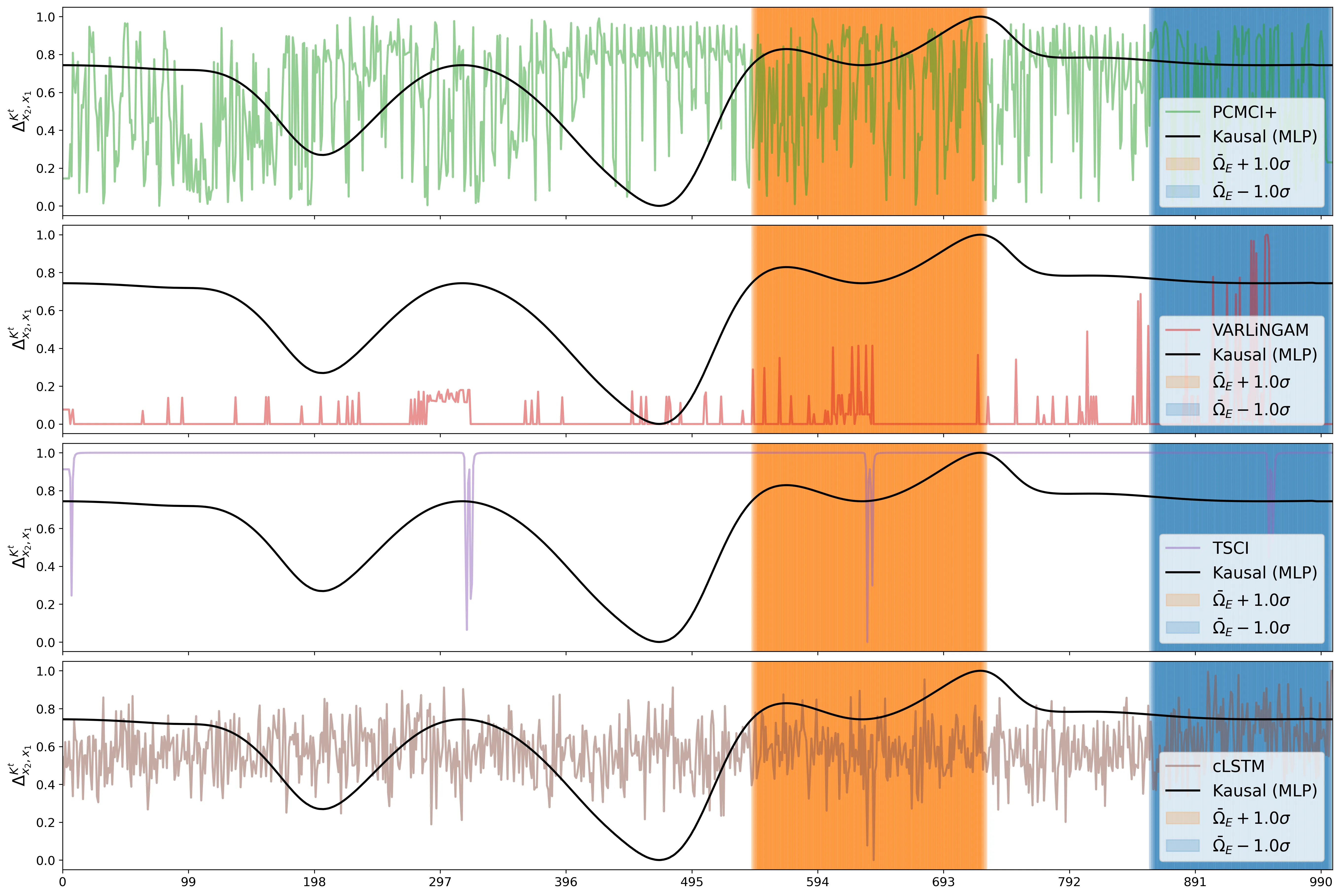
Imagine an interpreter at a meeting where everyone speaks an unfamiliar language. They don't know the words, but they notice that after one person speaks, everyone starts nodding. After a few meetings, they can tell who sets the tone. The Kausal algorithm does the same with data: it learns the system's language to find who influences whom.
Then the algorithm makes two forecasts: one based only on the history of the effect, and another that adds the suspected cause. If the second forecast is more accurate, the cause truly helps. On El Niño data, this approach caught major events that other methods missed. It's like the interpreter who now not only hears the words but understands who is dictating to whom.
The Koopman operator was proposed in 1931, but only with the advent of deep learning has it become possible to approximate it efficiently for real data.
The idea of lifting a system into a space where the complex becomes simple recalls the 'hyperspace' of science fiction, where ships bypass the constraints of ordinary space. Here, the role of hyperspace is played by an infinite-dimensional function space.