Evidential neural networks output Dirichlet distribution parameters for classification, representing belief masses. The model learns to provide high evidence for the correct class by minimizing a loss function consisting of expected mean squared error and Kullback–Leibler divergence, which penalizes evidence for other classes. This allows quantifying epistemic (model) and aleatoric (data noise) uncertainty and detecting anomalies.
History
Dempster (1967) and Shafer (1976) introduced belief functions. Denoeux (1995) proposed neural network models based on them. In 2018, Sensoy, Kaplan, and Kandemir extended the approach to deep learning with the Dirichlet distribution. Recent work addresses calibration, adversarial robustness, and applications in medicine and autonomous driving.
How it works
The output layer gives K nonnegative values e_k. Dirichlet concentrations α_k = e_k + a_k. Loss function: L_i(Θ) = ∫ ||y_i – p||² (1/B(α_i)) ∏ p_j^{α_{ij}-1} dp + λ_t D_KL( Dir(p; ilde{α}_i) || Dir(p; 1) ), where ilde{α}_i = y_i + (1 – y_i) ⊙ α_i. This is equivalent to minimizing expected loss and penalizing non-uniform Dirichlet for incorrect classes. Uncertainty is measured by Dirichlet entropy or the sum of evidence.
In practice
Safe medical diagnosis: in addition to detecting a tumor, the network indicates the confidence level, warning the doctor if the prediction is unreliable.
Fun fact
If an evidential network is shown a completely new type of image, it will honestly indicate high uncertainty, unlike a regular network that might confidently make a mistake.
A medical record is like a long diary: doctor visits, diagnoses, prescriptions, lab results. A human doctor reads it cover to cover to understand what's going on with the patient. Now, a machine reads this diary, and does it in seconds.
The developers created a model called Foresight-E. It was trained on de-identified records of about 61 million people: that's nearly the entire population of England.
If you pour honey into a colander with a hundred small holes, it will drip in thin streams, but each stream will swirl around the edge of the hole. Engineers need to understand such swirls: they affect how quickly water filters, how oil comes out of a reservoir, or how a drug seeps through tissues.
Imagine a quiet room where you need to pick out a single melody among many barely audible rustles. That's roughly what it's like to search for signals from extreme systems of two black holes — one huge, the other millions of times smaller.
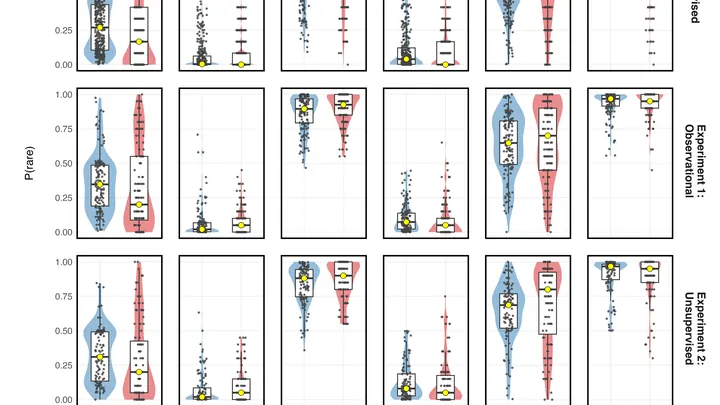
In a warehouse, there are boxes of apples and pears. There are many apples and few pears. But when the stock clerk says "a fruit with smooth skin," we are somehow more likely to recall the rare pear than the common apple. This is the inverse base-rate effect — a persistent glitch in how the brain resolves ambiguity between categories.
Predicting the yield of a chemical reaction is a bit like trying to guess the harvest knowing only the soil composition. Traditionally, chemists have relied on long columns of numbers, quantum descriptors, that describe electron energies but say nothing about molecular shape.
A neuron receives thousands of signals on its branching processes — the dendrites. Some signals push the cell toward firing (excitation), others hold it back (inhibition). For a long time, it was thought that the neuron simply adds up all the 'fors' and 'againsts.' But in real dendrites, inhibition works differently: it can not subtract but divide the excitatory signal.
A basin of wet sand. You press in one corner, and water starts moving. But how exactly? Instead of an even circle, it might spread in tongues, linger in some spots, and rush through others. Underground, the same thing happens: oil, water, or gas migrate through rocks not by the textbook, but following the chaos of fractures and heterogeneities.
4 610 universes — that's exactly how many cosmological models astrophysicists needed to show that the familiar Gaussian mask no longer works for next-generation data. Future sky surveys, such as the Euclid mission and the Vera C.
Every time a child with cerebral palsy is about to move their leg, a distinctive electrical blip appears in the brain — a slow voltage shift. Scientists call it a movement-related potential. A brain-computer interface (a system that reads intentions from brain signals) can pick up this blip and turn it into a command for a training device.
The Sun continuously scribbles magnetic fields across its surface. These patterns are not mere ripples but a handwriting in which nature has encoded warnings of flares. A flare is an explosion that releases the energy of billions of nuclear bombs in minutes, ejecting streams of plasma and radiation into space.
Imagine a vast library where every book is a precise instruction manual for assembling one protein molecule. AlphaFold2 read millions of such books and learned to instantly produce a ready-made 3D model. But inside this network, in its very 'brain,' something more remained — not just assembly rules, but an entire atlas of possible protein motions, its hidden life.
In combat, a pilot needs to instantly understand what an object is and what its intentions are. Conventional systems wait for complete radar data — like a goalkeeper who only reacts after the shot. The new algorithm works like an experienced goalkeeper: from the attacker's first moves, it predicts the target's maneuver.
Communicating with a satellite is like trying to hear a whisper in a storm: the signal drowns in noise. Engineers have created an AI algorithm that runs directly on the satellite and, with minimal power consumption, detects distortions more accurately than previous methods.
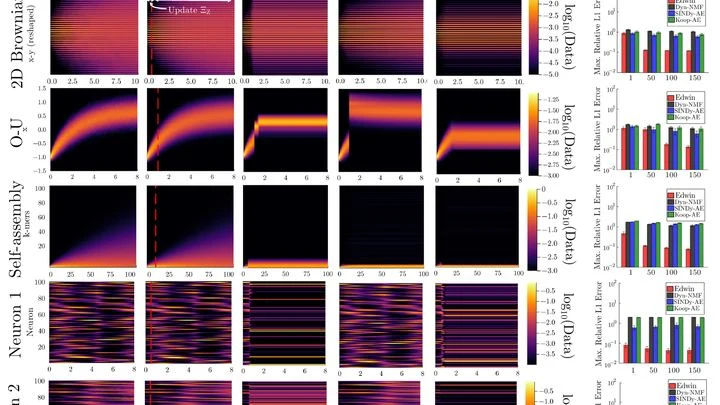
Many natural processes are described by differential equations, but scientists often have only fragmentary data — a sort of torn map. The new computational method works like a cartographer who reconstructs a complete map of the terrain from a few landmarks.
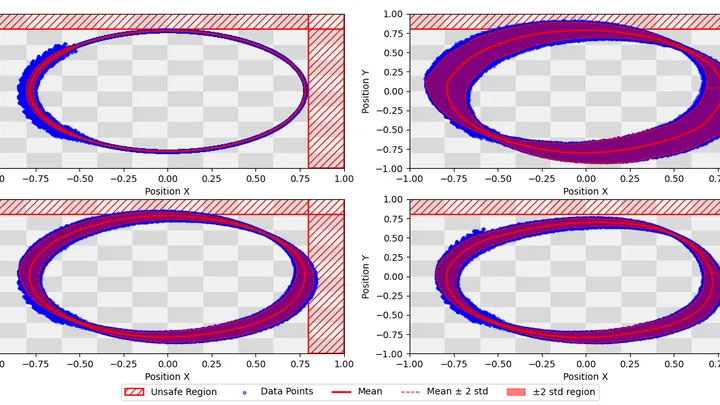
When an unmanned aerial vehicle learns from an experienced pilot, it memorizes not individual maneuvers but entire safe corridors — the trajectories along which the human mentor moved. This approach is called imitation learning: the machine mimics expert demonstrations.
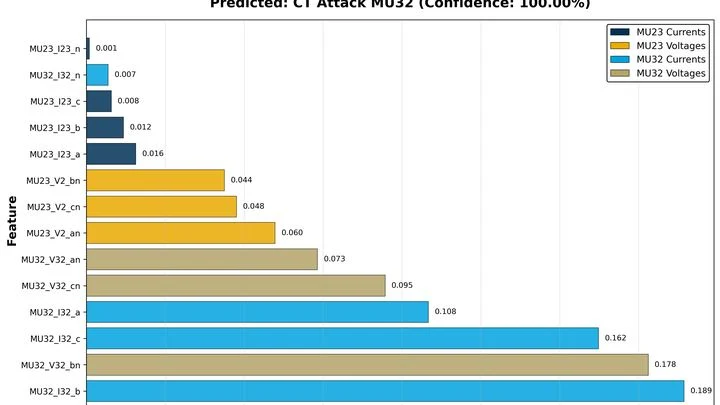
Solar panels and wind turbines, unlike old-school generators, connect through inverters, opening new loopholes for hackers: you can quietly falsify sensor readings or spoof GPS timestamps. To defend, engineers combined two approaches — an ultra-fast guardian and a thoughtful detective.
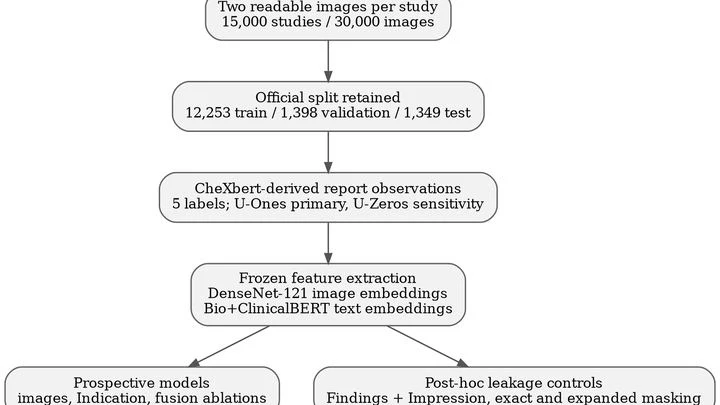
The AI diagnostician learns like a med student before an exam. You have an X-ray and patient complaints. But sometimes, a ready-made doctor's report pops up in the training materials — the full answer. Then the neural network memorizes it, and test accuracy jumps to 98%. However, that's cheating: real skill isn't developed.
In a kitchen with gas burners, each heats differently. If the cook moves the pots, food may burn. Just so in a wireless network: the antenna-burners and user-pots require precise placement. Ordinary neural networks don’t distinguish positions, treating all burners as identical. So they struggle to estimate signal quality or adjust transmission.
The power grid is a huge restaurant where thousands of 'dishes'—potential accidents — threaten to be served every minute. Checking every plate fully would take hours, and a quick glance sometimes misses danger, like invisible mold on cheese.
The railway overhead contact line resembles a galaxy: energy flows through it like gravity, with trains becoming planets. The more trains draw current simultaneously, the stronger the voltage fluctuations — gravitational waves ripple through the system, threatening blackouts.
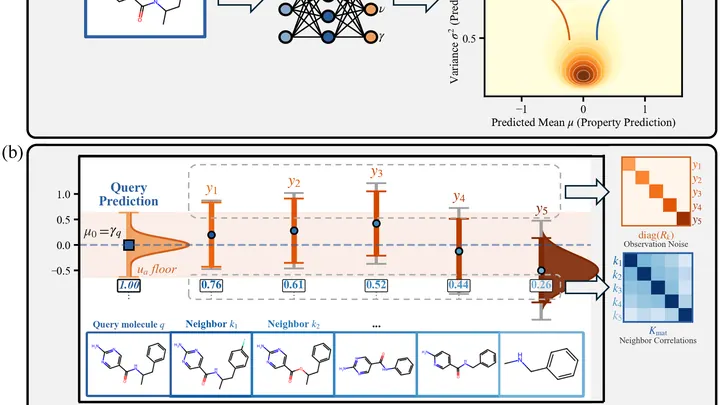
Predicting the properties of a new molecule is like guessing the flavor of an unfamiliar dish. The program works like an experienced chef: it “tastes” similar molecules whose properties are already known, and based on their “flavor,” it refines its guess.
The float in a toilet tank is an ideal controller: sensing the water level, it instantly brings the system into equilibrium without looking back at the past. Engineers applied this principle to neural networks.
X-ray magnetic circular dichroism is a precise tool that has long allowed the separation of spin and orbital magnetic moments. However, the classical approach resembles judging an orchestra by its volume: it relies on sum rules, reducing the entire fine structure of the spectrum to a couple of integrals.
In the courtroom, a string is presented as input. Twelve jurors (computation paths) examine it symbol by symbol. Each can render a 'guilty' (accept) or 'not guilty' verdict. For a conventional nondeterministic automaton (NFA), one 'yes' vote suffices.
At a weather station in Brazos County, Texas, rain is recorded on magnetic tape: every day, four years straight. Nine hundred millimeters in a good season, a hundred in a bad one. Then the tape falls silent. Drought creeps in without a sound — the slow fading of the earth's pulse. The standard SPI-3 index only catches on a month or two later, once the moisture is already gone.
A doctor scrolls through a patient's chart and sees a line: "The drug reduces risk." But how much can you trust that? Is the claim based on a couple of case reports or on tens of thousands of patients in a blinded trial? The answer determines the treatment.
A student who has spent years solving problems from other people's textbooks suddenly receives three notebooks with real ocean observations. There are few problems, but they have already seen hundreds of similar ones, and now a couple of examples suffice to catch the new teacher's style.
We're used to thinking that noticing only confirmations of our guesses is a mistake. But recent calculations, inspired by wave behavior, flip that view. It turns out that the habit of seeking the familiar is the best way to reduce information noise (scientists call it entropy).
Solar flares are powerful explosions on the Sun that can knock out satellites and blackout cities. Predicting them is complicated by the tangled magnetic fields in sunspots.
Ordinary neural networks learn from examples, like a person memorizing tunes by ear. But networks with physical laws embedded from the start resemble a musician who knows notes and harmony: they can play a new piece from just a few chords. Instead of mindless memorization, they use equations like energy conservation or motion.
A neural network, like a sheet of graph paper, receives homogeneous signals at its input, and draws its own coordinate grid. Initially, connections between inputs and network cells form a gentle hill: the response is strongest at the center and fades toward the edges.
Designing machines is like cooking: you need to know exactly where the 'dough' will tear. Old computer simulations check every point on a part for hours, like measuring the entire pot to make sure the handle doesn't fall off.
A lab sends a robot a list of a thousand candidate molecules for a new drug. The predictor robot, trained on old data, gives each one a 'fit or no fit' score. But when the list comes from an unfamiliar area, a different virus or a rare tumor, the robot starts to get confused. Its confidence stays high, while actual hits drop to zero.
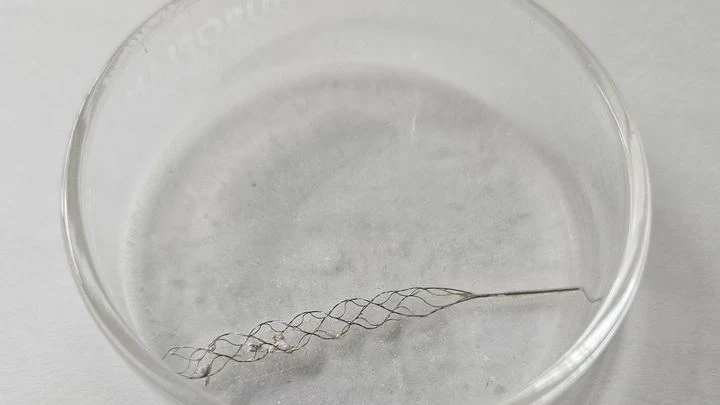
A plumber clears a clog in a narrow, winding pipe — by feel, without seeing inside. That's roughly how a surgeon feels during mechanical thrombectomy, the operation to remove a blood clot from a brain vessel. Time is short, and every move can either save a life or damage the vessel wall.
A voice recorder captures a city square. You hear the hum of a crowd, footsteps, snatches of conversation, the rumble of traffic. Somewhere in that sonic stew, a street musician plays a simple tune on a flute. Hearing it isn't easy: there's just too much mixed together.
You're trying a dish at a restaurant, but you haven't seen the menu. You ask the waiter questions — too salty? what spices?—and from the answers you try to guess what kind of chef prepared it.
Mold on bread: a spot today, half a loaf tomorrow. That's roughly how amyloid-beta spreads through the brain — a sticky protein that clumps up in Alzheimer's disease and disrupts neuron function.
Quantum calculations are a recipe with perfect ingredients, but nature-the-chef cooks in her own way. Machine-learned models of atoms memorize the recipe and predict material properties in seconds instead of weeks.
A doctor holds a stack of test results taken at different times. Each sheet on its own is just a snapshot of a single day, but what you want is a whole movie of how the disease unfolded. A neural network called Tempo learns to glue these scattered frames into a smooth reel.