An integral operator is a mathematical mapping that takes a function and produces another function by integrating it against a kernel. In physics, integral operators appear in many fundamental equations, such as the Schrödinger equation in its integral form, the Lippmann-Schwinger equation for scattering, and the Fredholm equations of the first and second kind. They are essential for describing non-local interactions, where the value of a field at one point depends on its values over a region.
History
Integral operators were systematically studied in the late 19th and early 20th centuries by Vito Volterra, Erik Ivar Fredholm, and David Hilbert, leading to the development of functional analysis. Their application to physics grew with quantum mechanics in the 1920s.
How it works
Given a kernel K(x, y) and a function f(y), the integral operator acts as (Tf)(x) = ∫ K(x, y) f(y) dy. The kernel encodes the interaction or propagation between points y and x. Solving equations with integral operators often involves discretizing the integral into a matrix problem, or using iterative methods like the Neumann series. The properties of the kernel (symmetry, positivity, decay) determine the operator's spectrum and the behavior of solutions.
In practice
Used in quantum scattering theory, electromagnetic field computations, and image reconstruction algorithms like those in CT scans.
Fun fact
The kernel of an integral operator in quantum mechanics is often the Green's function, which physically represents the probability amplitude for a particle to travel from one point to another.
The interpreter in the meeting room hears the shift in tone before it is spoken aloud. They catch subtle changes in breathing, pauses, and intonations, and already know that in a few minutes the conversation will turn heated.
A black hole is not just a dark spot in space. It has a temperature, and it radiates. It has entropy — a measure of hidden information encoded on its horizon's surface, like a pattern on a soap bubble.
In a noisy hall, an interpreter tries to catch every word, but rustles and echoes muddle the meaning. That's roughly how conventional computer methods handle complex quantum systems: the more particles and the stronger their correlations, the faster calculations drown in interference.
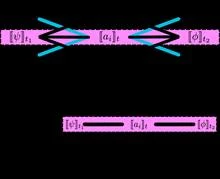
Quantum calculations often resemble assembling a complex mechanism: a physicist knows a part will fit, but can't always explain why. One favorite trick is to insert a 'unity' into the middle of a formula — not an ordinary one, but one built from an infinite set of all possible states of the system. This turns a cumbersome expression into a chain of simple integrals.
The early universe expanded at a breakneck pace: this phase is called inflation. But how exactly did it do it? Some models describe the expansion as a steep exponential surge, others as a more gentle power-law motion.
In quantum mechanics, everything is fuzzy: a particle is not at a single point but smeared across space, and an event does not happen at a single moment. Yet our everyday world is full of definiteness — the coin landed heads, the light bulb turned on, a note appeared in the notebook.
An orchestra plays out of tune, and the sound seems like chaos. But if you record all the notes and analyze them mathematically, you can reconstruct the shape of the concert hall — where the walls are, how high the ceiling is. Roughly in this way, physicists propose to derive gravity from quantum theory.
In everyday life, space and time are the stage on which events unfold.
An orchestra plays without a conductor, and you hear the tempo speeding up and slowing down. All you have is a recording of the sound, not the score. Can you tell from that recording which string to pluck to make the whole orchestra play more steadily?
Imagine the early Universe as a giant balloon, instantly inflated to incredible size. The tiny bumps on its surface are frozen quantum ripples that later became galaxy clusters. This rapid inflation left behind an ancient glow — a map of the sky that astronomers study.
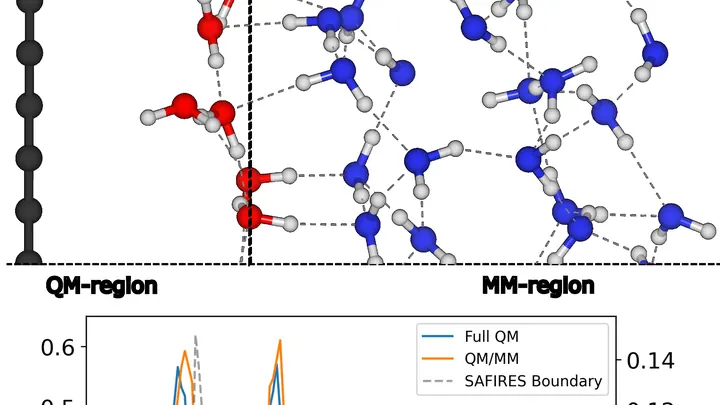
Imagine a huge swimming pool. In one corner, a chemical reaction is underway that needs to be calculated with jeweler-like precision. But the surrounding water is not just decoration: its molecules jostle, attract, and influence the reaction. How do you account for this endless dance of particles without drowning in calculations?
A black hole is like a giant whirlpool in a river — space and time swirl around it and get pulled inward. Mathematically, this whirlpool is described by the Kerr solution, but it has remained a mystery why perturbations on such a background split into independent parts.
In everyday life, time flows on its own, like a river past its banks. But in quantum gravity, things are different: time does not flow; it emerges from relations between objects, like a pattern in a carpet that is only visible when viewed from a certain spot.
Time in quantum mechanics is like a shadow on a wall: we see its motion, but we cannot grasp the shadow itself. The Schrödinger equation describes how a system's state changes, but time enters it as an external parameter that nothing measures.
Picture a translator at a meeting where everyone speaks an unfamiliar language. They don't know the words, but they notice: when one person raises their voice, another starts nodding a minute later. At first it seems like coincidence, but over time the translator learns to understand who influences whom.