Rain Waves: Why Some Are Strong and Others Aren't ✛
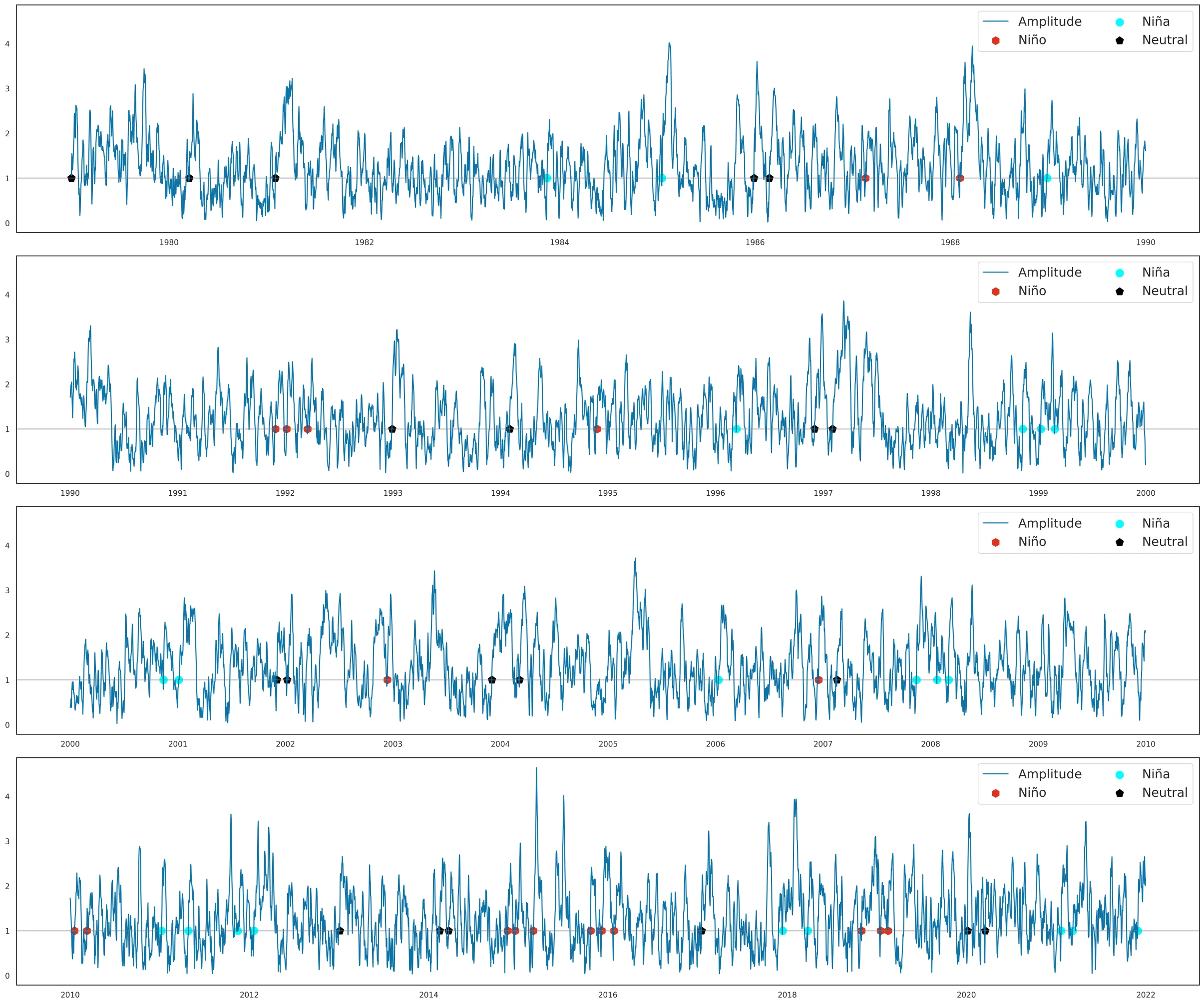
In the tropics, an invisible rain wave travels around the Earth from east to west. Most such waves are weak and quickly dissipate, but occasionally a strong wave emerges and crosses the entire Pacific Ocean.
Scientists identified 132 strong waves over 43 years. They tend to start over the Indian Ocean, where the water is warm. When the Pacific is cooler than average (a condition called La Niña), strong waves live longer, on average 40 days.
These waves affect rainfall in South America: if the north of the continent gets drenched, the south dries out, and vice versa. Strong waves make this seesaw more pronounced. Previously, forecasters couldn't tell a strong wave from a weak one at the outset. Now they look at where the wave was born and how quickly it gains strength. This helps warn of drought or flood in advance.
An extreme MJO event starting in phases 2–3 can pass through five consecutive phases before decaying, whereas a weak event often dies after just one or two phases. The longest extreme event in the sample lasted 32 days, comparable to a full MJO circuit around the globe.