Rain Relay: How Rare Runners Shape South American Weather ✛
An invisible relay race runs through Earth's tropics: a wave of heavy rain and winds, which meteorologists call the Madden–Julian Oscillation, travels eastward at about five meters per second. Most runners tire quickly, but rare marathoners carry the torch all the way across the Pacific.
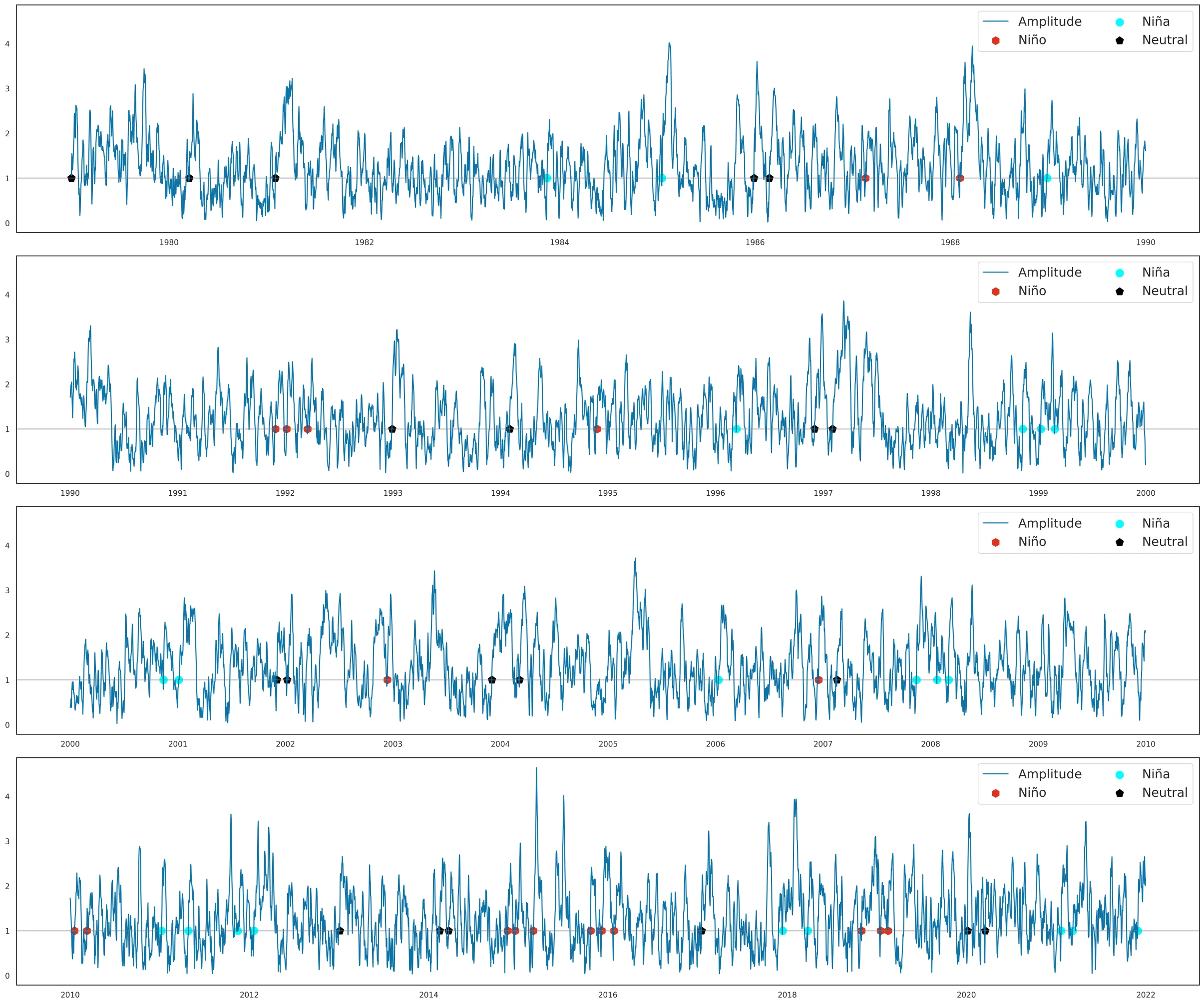
The scientists studied 132 extreme events over 43 years, identifying them by accumulated strength: the sum of the wave's amplitudes had to exceed a threshold of 39. These rare runners most often start over the warm waters of the Indian Ocean, not the Pacific. If an event begins in the right phase, it has a 68% probability of crossing the Maritime Continent barrier, a chain of islands where weaker waves typically die out.
Further along, the relay changes weather on the other shore. In South America, the oscillation creates a seesaw: when the north of the continent gets downpours, the south dries out, and vice versa. Extreme events rock this seesaw harder and longer. During La Niña, when the Pacific is cooler than usual, marathoners live on average 40 days versus 35 during El Niño.
Previously, forecasters looked only at the wave's current strength, not its accumulated size or starting location. Now, if a meteorologist sees a wave born over the Indian Ocean and quickly gaining strength, they can warn farmers in Brazil about drought or flooding weeks in advance.
The relay continues: weak runners drop out, while rare marathoners carry rain across oceans. Learning to recognize them from the very start means buying time for those waiting on their harvests.
An extreme MJO event starting in phases 2–3 can pass through five consecutive phases before decaying, whereas a weak event often dies after just one or two phases. The longest extreme event in the sample lasted 32 days, comparable to a full MJO circuit around the globe.