How to Pick the Best El Niño Forecasts: A Council of Elders ✛
When 80 people try to predict the weather two years ahead, some err less often, others more. Instead of listening to everyone and taking the average, scientists built a network: each forecast is a point, and a line between points means the forecasts are similar in error and in how synchronously their values change.
These 20 forecasts show less scatter across different lead times and transition more smoothly from El Niño to La Niña. At lead times up to 23 months, they capture nearly half of all events, with correlation to reality staying above 0.4. Previously, it was unclear how to select reliable forecasts; now it's clear: look for a consistent core, like a council of elders amid a crowd. This method can be applied to other problems with many forecasts, from climate to finance.
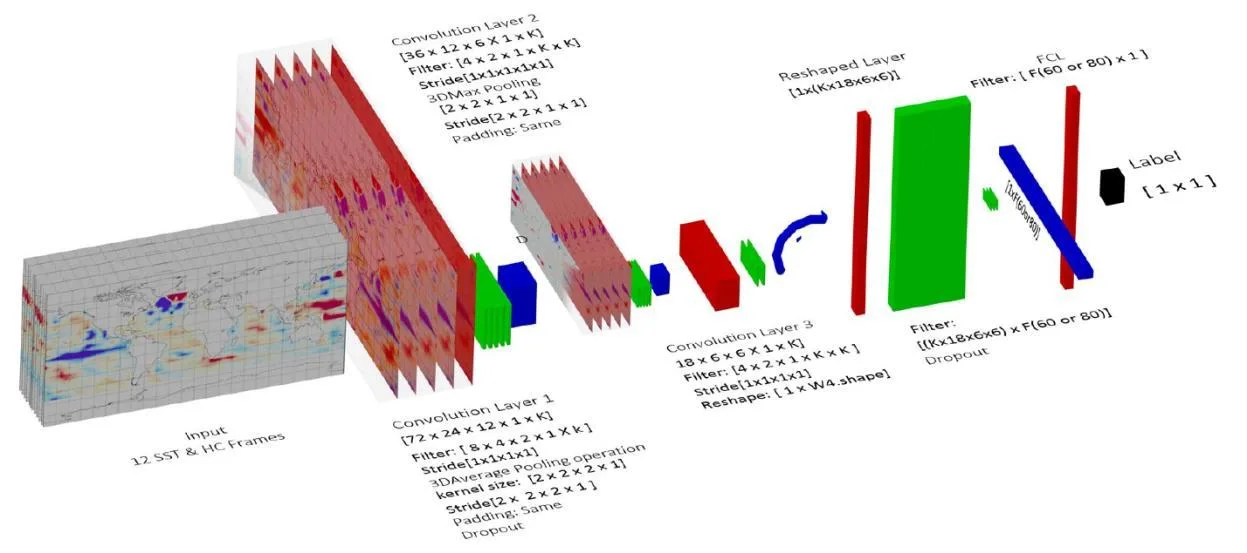
The model was trained on data from 1875 to 1975 and tested on 2000–2017. Between these periods lies a quarter century that the model never saw. This gap was deliberately left to avoid the ocean memory effect and to test whether the forecast works under completely different conditions.