How Volunteers Help Unravel the Mysteries of Radio Galaxies ✛
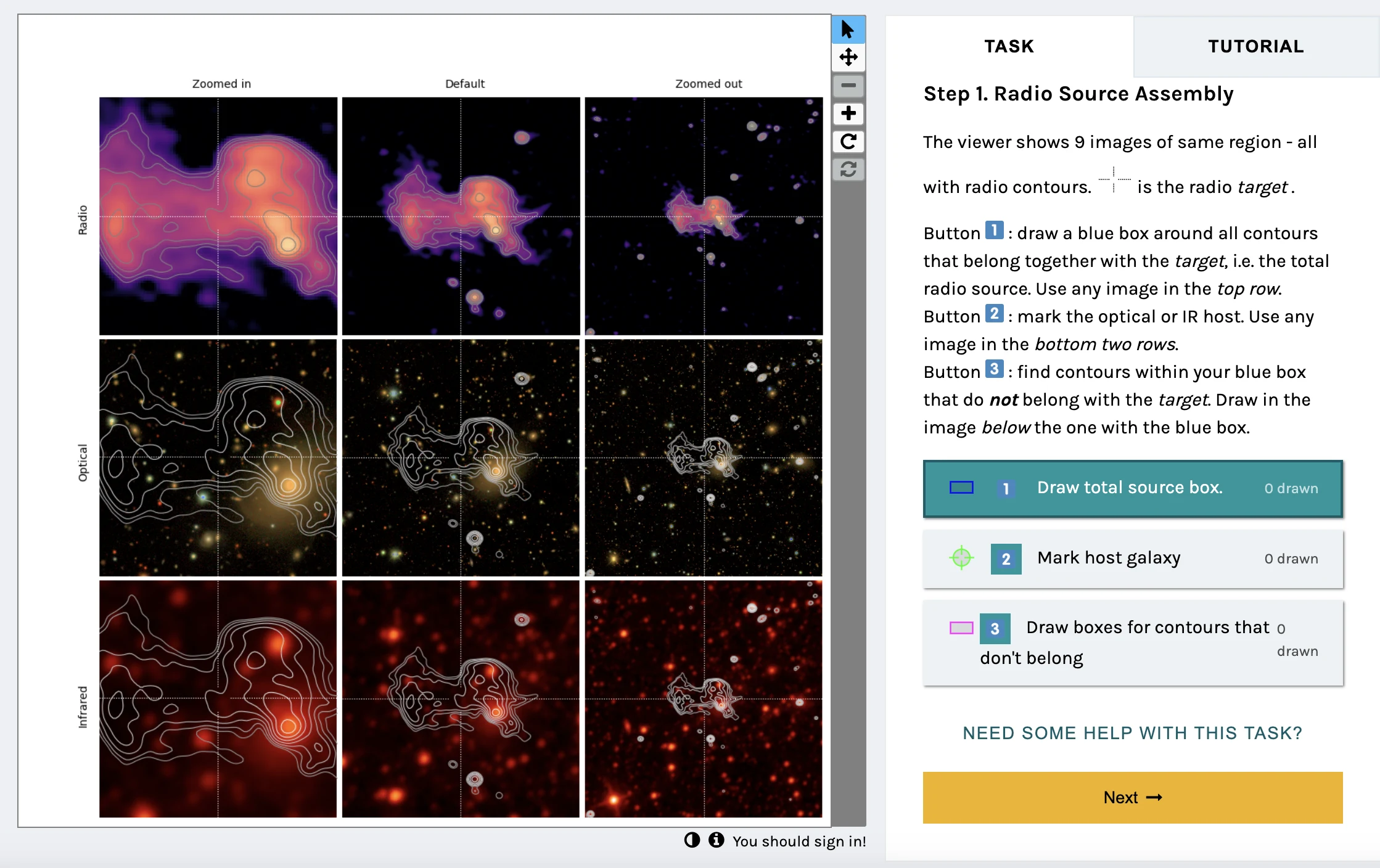
The ASKAP radio telescope sifts through cosmic sand, scooping up millions of radio sources — glowing 'seashells'. These are distant galaxies where supermassive black holes spew out energy. Analyzing radio waves reveals their chemical makeup. But sorting through this mountain of finds by hand is beyond scientists' reach. Volunteers from the Radio Galaxy Zoo project lend a hand. On the website, anyone can sort images like shells on a beach: is it a lone galaxy or a complex structure? The human eye catches what algorithms miss. Then these labels are fed to neural networks, and the machine learns to sort on its own.
Thanks to thousands of participants, the EMUCAT catalog has become more accurate, and millions more discoveries lie ahead. This is how order emerges from chaos, and science advances through shared effort.
Radio waves pass effortlessly through dust, so radio telescopes find galaxies invisible to ordinary telescopes.
In Sagan's 'Contact', radio astronomers pick up alien signals; our project also 'eavesdrops' on the cosmos, but so far only hears the voices of galaxies.