Radio astronomy explores the Universe in the radio wave range (wavelengths from fractions of a millimeter to tens of meters). Radio telescopes consist of an antenna and a sensitive receiver, often combined into interferometers to achieve high angular resolution. Key sources: synchrotron radiation from relativistic electrons in magnetic fields (supernova remnants, active galactic nuclei), spectral lines of hydrogen (21 cm) and molecules.
History
Radio astronomy was born in 1932 when Karl Jansky discovered radio emission from the Milky Way. In the 1940s, Grote Reber built the first parabolic radio telescope and mapped the sky. After World War II, rapid development led to the discovery of discrete sources, the synchrotron mechanism, and the 21 cm line (Ewen and Purcell, 1951). In the 1960s, Jocelyn Bell Burnell discovered pulsars, and Arno Penzias and Robert Wilson discovered the cosmic microwave background. Modern networks (ALMA, SKA) continue the tradition.
How it works
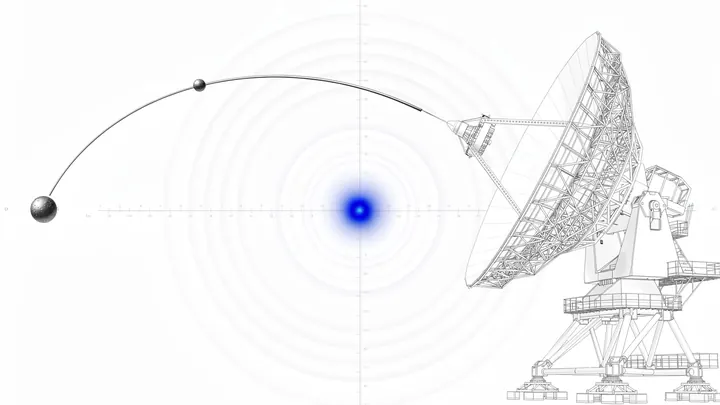
An antenna collects radio waves and focuses them onto a feed, where the signal is converted into an electric current. After amplification and frequency conversion, power is measured. In an interferometer, signals from multiple antennas are correlated, forming a visibility function. Inverse Fourier transformation using the Stokes theorem reconstructs the image. Angular resolution is determined by the diffraction limit θ ≈ λ/D. Autocorrelation and acousto-optic spectrometers are used for spectroscopy.
In practice
It helps discover pulsars, capture the echo of the Big Bang, and see through dust clouds.
Fun fact
Jansky's first radio telescope was built from wood and wire, while today the largest radio telescope, FAST in China, has a diameter of 500 meters. It is so sensitive that it picks up signals from the edge of the observable universe.
Stated relations:describes →vla · part of →VLBI · case of →EHT
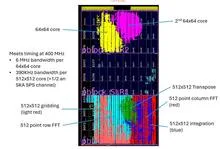
A radio telescope with thousands of antennas is like a giant ear that hears the whole sky at once. But an ear cannot draw a picture: signals from every pair of antennas must be multiplied, and in an array of ten thousand elements there are already fifty million pairs. A classical correlator does exactly that, and its complexity grows as the square of the number of antennas.
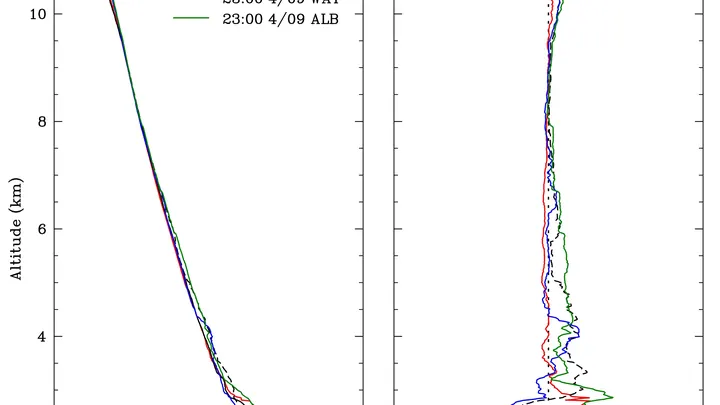
Every second, thousands of passenger aircraft in the sky transmit radio signals: that's how air traffic controllers track where each flight is. These signals don't travel in a straight line: air of varying humidity bends them like a lens. If you can measure that bending, you can work out where the air is drier and where it's more humid.
Radio telescopes listen to the sky like sensitive ears: they catch the whispers of distant explosions, the hum of galaxies, the crackle of pulsars. But sometimes they pick up a sound that isn't in the catalogs. In 2003, such a sound emerged in the constellation Aquila — a spot in the sky that had been quiet until it suddenly began to speak.
From 1987 to 1991, astronomers last measured how Jupiter's icy moons reflect radio waves. Then came a long pause. In 2011–2024, researchers aimed a radar beam at Europa again: this time using the 70-meter antenna at Goldstone and the Green Bank Telescope.
Ice is nearly transparent to radio waves, like clear window glass is to light.
In July 1969, as Apollo 11 flew toward the Moon, astronauts noticed something unusual: brief flashes of light that appeared even with their eyes closed. At first, this was attributed to fatigue, but the flashes recurred in different crews. Gradually, it became clear: cosmic rays were to blame — tiny particles hurtling through space at tremendous speeds.
A radio telescope, like a sensitive ear, picks up the whispers of distant galaxies. Hidden among that noise are giants — giant radio sources. These are clouds of charged particles ejected from the vicinity of supermassive black holes.
The universe is constantly sending us signals, but many are too faint to notice. Relic neutrinos, particles left over from the Big Bang, pass through Earth by the billions every second, yet catching even one is a feat on the edge of possibility. We need a detector that can sense energy a thousand times smaller than what it takes to move a speck of dust.
Somewhere in the depths of the Milky Way, radio pulses flare up from time to time — rare, steady, like the ticks of a distant metronome. These long-period radio transients were discovered only recently, and they immediately puzzled astronomers.
A flashlight beam cuts through fog. The denser the fog, the more the light scatters and the later it reaches your eye. A similar principle works with fast radio bursts — mysterious, super-powerful pulses from distant galaxies. As their radio waves travel through space, they interact with free electrons — particles stripped from atoms.
The cosmic dawn is hidden behind a dense veil of time. To see beyond it, you need to catch the radio signal from clouds of neutral hydrogen — the so-called global 21 cm signal. But it is so faint that the receiver's own noise drowns it out.
A fast radio burst is a short but powerful flash of radio waves from deep space. As it travels to us, the signal passes through clouds of tenuous gas, and the more gas it encounters, the more the signal is smeared across frequencies. Astronomers call this delay the dispersion measure — essentially, it's a "weighing" of all the matter along the line of sight.
Radio astronomy began with the mysterious noise caught by the antenna of Karl Jansky and the rhythmic pulses that Jocelyn Bell Burnell playfully called 'little green men'.
When a radio wave encounters a building in its path, it doesn't just reflect or get absorbed: it bends around it, much like ocean waves flowing around a rock, leaving calm water behind. In radiophysics, this phenomenon creates a radio shadow — a complex pattern of zones where the signal is amplified or attenuated, which scientists call a radio portrait.
At the heart of the system is a rail with clip-on antennas moving along it, each emitting a radio signal. The smartphone receives these and, knowing the speed of light, calculates the distance to each antenna from the time delay.
Conventional antennas for precise direction finding must work coherently: they capture not just volume, but also the wave's phase at a given moment. The slightest tuning mismatch, and the direction is lost. The new method relies solely on signal strength. It's like finding your way in fog, seeing only the brightness of lights, not their color.
Wireless devices flood the airwaves with signals that blend into chaos — as if everyone in a room started talking at once. Scientists have proposed a solution: smart panels, reminiscent of acoustic tiles. Each cell can either reflect a radio wave on command, like a wall echo, or absorb it, as soundproofing dampens noise.
The flash lasts a thousandth of a second, but in that instant it releases as much energy as the Sun emits in a day. Such signals, fast radio bursts, have been caught by telescopes since 2007, and their source remains a mystery. A new study offers an elegant answer: it's all about a cosmic amplifier.
Decades of radio astronomy have listened to space, hoping to catch narrowband radio transmissions — the technogenic 'voice' of distant exoplanets. But our own technological evolution reveals a paradox: loud analog signals, like 1960s TV broadcasts, are just a brief squawk of a newborn civilization.
Fast radio bursts — millisecond radio pulses arriving from distant galaxies — long remained a puzzle. Their colossal energy, compressed into instants, pointed to cataclysms on neutron stars, perhaps pulsars or magnetars.
3I/ATLAS burst into the Solar System like an uninvited guest, a gift of fate for hunters of extraterrestrial intelligence. This comet-like wanderer from the depths of the Galaxy flew close enough to be heard in all its details — unlike distant exoplanets.
Somewhere deep in space, a radio beacon flashes for a fraction of a second, and then goes dark. Such signals are called fast radio bursts. They come from other galaxies and last from microseconds to milliseconds.
Two sensitive microphones are listening to the Universe. One hears a low hum, the other hears almost nothing. It's not a malfunction: it's about how they are oriented.
Gravitational-wave observatories like LIGO don't just catch loud bursts from black hole mergers.
A lighthouse sends its beam through a storm of its own mirrors: that's roughly how fast radio bursts behave when trying to leave a magnetar's vicinity. A magnetar is a neutron star with a magnetic field a quadrillion times stronger than Earth's.
Gravitational waves are ripples in the very fabric of spacetime, akin to vibrations of a giant cosmic string. Conventional detectors like LIGO and Virgo pick up low-frequency "notes"—disturbances from mergers of massive black holes of stellar masses.
When two neutron stars, compressed to the size of a city, approach in their final dance, the spacetime around them comes alive, emitting gravitational waves.
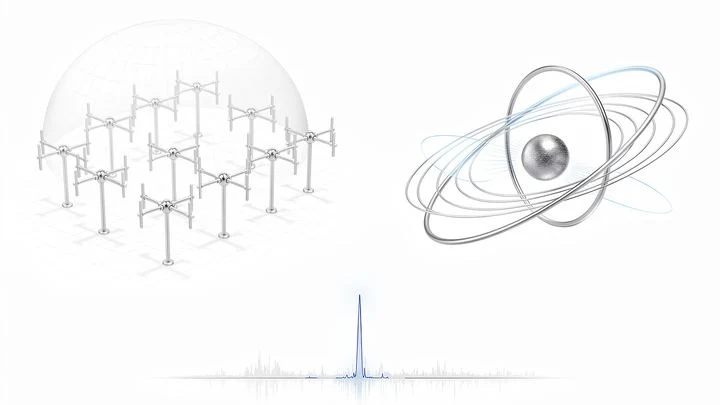
Listening to the cosmos requires patience and a finely tuned ear. Astronomers chose the most sensitive low-frequency instrument for this: the OVRO–LWA antenna array — 352 dipole antennas scattered across two and a half kilometers of California desert.
Astronomers listen to the cosmos like an old radio: they twist the knob not to find a particular station, but to catch any unusual noise. This approach breaks the mold: instead of hunting for gravitational waves using memorized patterns, they catch everything — without bias.
A lighthouse spins in dense fog. Its beam cuts through the gloom, but the fog itself remains invisible. That's roughly how astronomers search for dark matter: it doesn't emit light, yet it can affect the signals that reach us.
A rock concert blares at full volume, and you're trying to catch your friend's whisper. That's roughly how radio detectors feel when they pick up signals from cosmic dust particles. A particle slams into the atmosphere and spawns an air shower, a cascade of millions of secondary particles, and this shower emits a short radio pulse.
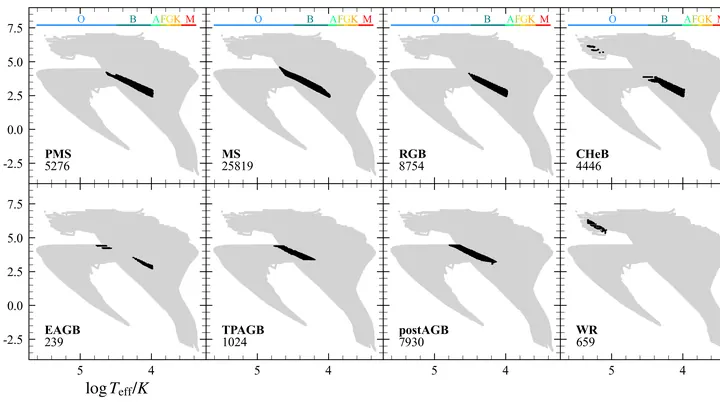
The Gaia space telescope works like a sieve, sifting through myriad celestial objects. It gathers photometric data, measuring brightness across different wavelength bands, and spectroscopic data, which splits light into a rainbow spectrum.
The cosmic microwave background is the afterglow of the Big Bang, which we see at millimeter wavelengths. But it also has a long-wavelength tail extending into the radio range.
Just after the Big Bang, clumps weighing as much as a trillion Suns and with an electric charge of colossal strength, like trillions of electrified balloons, could have drifted through space.
Gravitational waves are ripples in space from the mergers of black holes and neutron stars. Existing detectors, built with contributions from Kip Thorne and Rainer Weiss, work like highly sensitive microphones but only hear the highest 'notes'.
The ionosphere at an altitude of 70 kilometers acts like a giant mirror for radio waves. Ground antennas constantly beam signals into it and listen for the reflection. When a solar flare occurs on the Sun, a stream of X-rays reaches Earth in 8 minutes and compresses the lower layer of the ionosphere.
The Standard Model is a set of rules for all known particles. But it says nothing about dark matter, which makes up a quarter of the Universe. To find it, you don't need to build city-sized colliders. Radioactive molecules act like sniffer dogs: their incredible 'scent' picks up the faintest traces of unknown forces that slip past giant machines.
In the searing plasma of the newborn Universe, when space itself still rang with the echo of the Big Bang, objects may have emerged that challenge gravity itself. Not ordinary black holes — but electrically charged giants, astrons.
For decades, the search for extraterrestrial intelligence has waited for quiet, coherent signals from space — a kind of 'whistle' in the radio silence. However, our own technosphere has created a continuous radio background — the hum of a vast metropolis, emitted by all communications, radars, and broadcasting stations.
Dark matter is invisible, but its gravity governs the motion of galaxies. What it's made of is a mystery. One idea: it consists of ultra-light particles akin to axions.
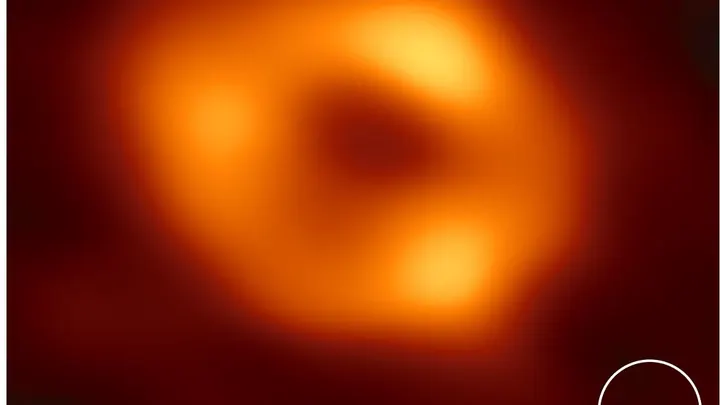
Einstein's theory of gravity explains how mass warps space and time. Its predictions have been tested near Earth, but the most grueling tests lie around black holes, where distortions reach their breaking point. Until now, astronomers saw them as blurry smudges on an underexposed photo.