A Scale-Free Fusion Boiler: The Secret's in the Walls express
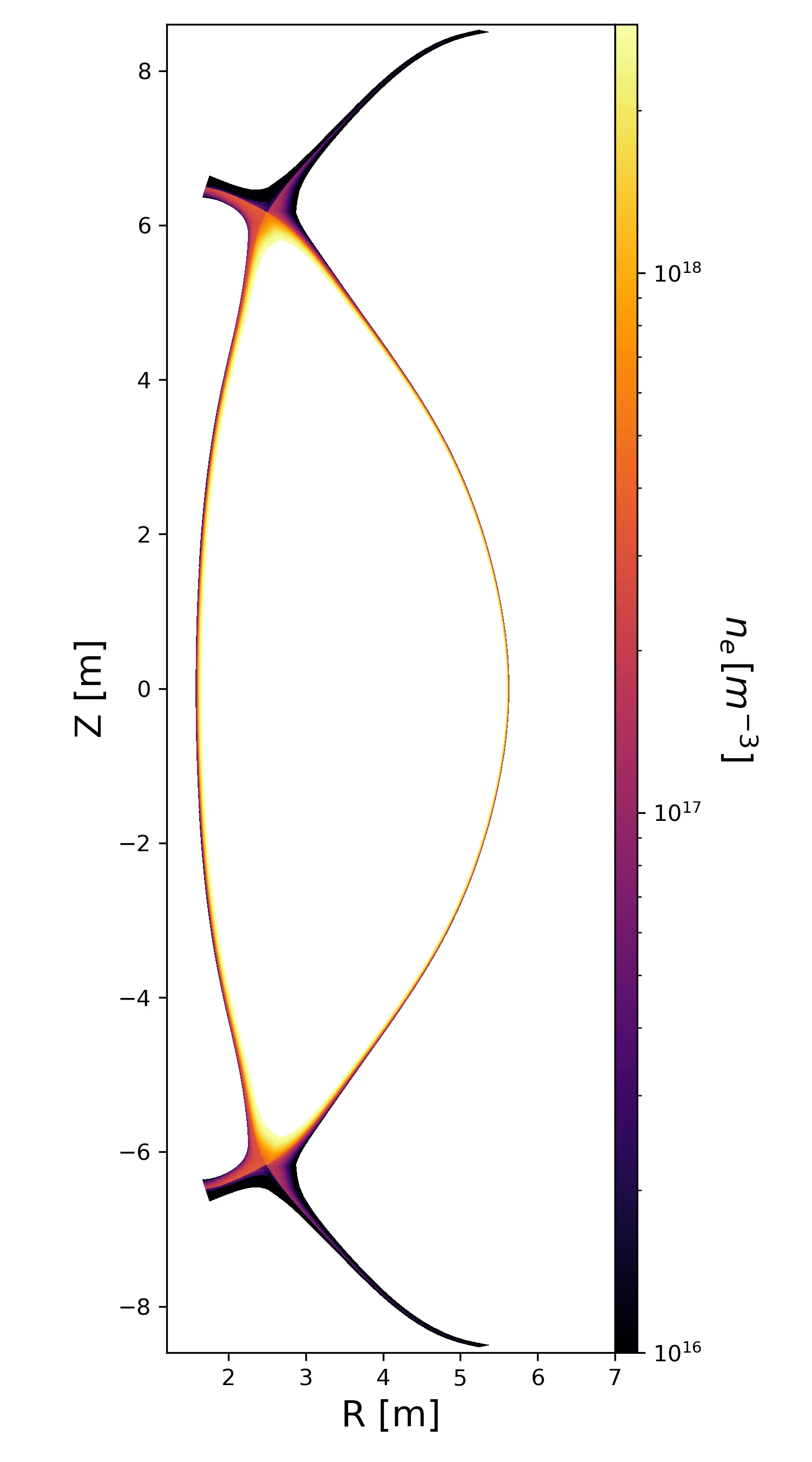
A fusion reactor resembles a giant boiler where hydrogen is 'cooked' into helium. The plasma inside is heated to 150 million degrees — ten times hotter than the Sun's core. But like any boiler, scale forms: harmful impurities that settle on the walls and quench the plasma.
Physicists have proposed making the walls from a sponge-like material that absorbs impurities and prevents them from returning to the fuel. This preserves the heat but creates severe overheating. Computer simulations have shown that if you track each particle's motion individually rather than as a continuous flow, the heavy impurities get trapped in a corner — the divertor chamber. Meanwhile, the heat spreads evenly, saving the walls from melting.
Even if the main 'pot' returns particles, absorbing panels on other walls can shift the reactor into a clean-burning mode. This brings reliable fusion power plants closer.
A single glass of water contains enough fusion energy to power a home with heat and electricity for an entire year.
In the movie 'Spider-Man 2,' Doctor Octavius launches an artificial sun — a fusion reactor that spirals out of control. The plasma containment problem that scientists are tackling today becomes a catastrophe there.