Simple

Hot Cools Faster: The Quantum Mpemba Effect ⚡ экспресс

Original: "Experimental observation and application of the genuine Quantum Mpemba Effect"
arXiv:2511.14552 · 2025-11-18 · CC BY 4.0 · ⏱ 1 min · Quantum Physics
A quantum paradox: the farther from equilibrium, the faster the system returns to it.
Abstract

The quantum Mpemba effect is when a system farther from equilibrium cools down faster than a closer one. Just like hot water sometimes freezes before cold, quantum objects can speed up their own cooling. Scientists harnessed this effect in a quantum refrigerator and amped up its output. Could mind‑bending physics make our tech more efficient?

Links in the knowledge graph 1

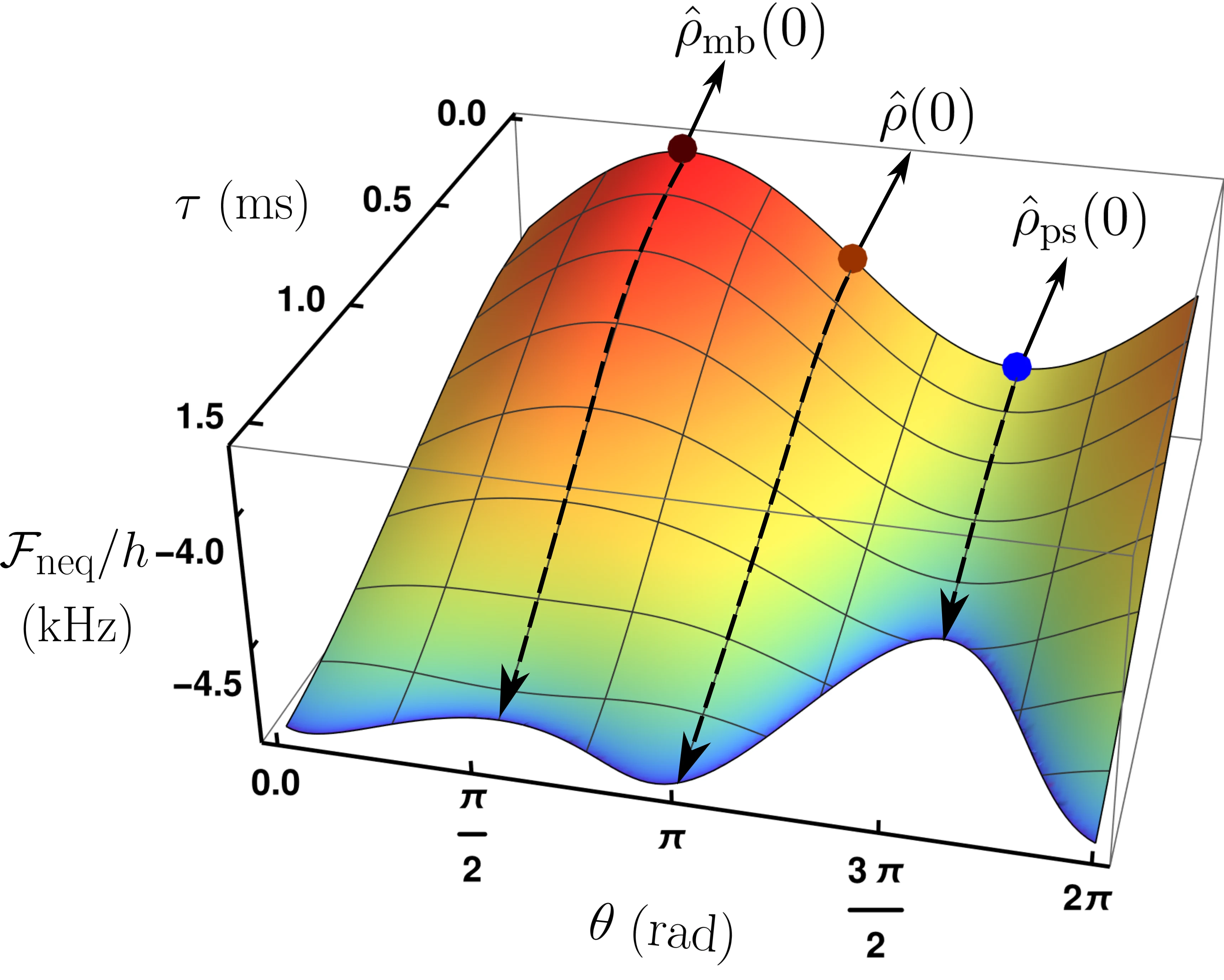
The Mpemba paradox—hot water sometimes freezes faster than cold—has gained a quantum sequel. In the microworld, a particle pushed farther from the finish line gets there first. Experimenters demonstrated this on a single spin: like a racer, they pushed it farther from equilibrium, and it reached it faster than after a weak nudge.

The key is entropy, the measure of chaos. In quantum reality, greater disorder accelerates the march toward order. The irony is that the classical Mpemba effect is a capricious rarity, while its quantum counterpart is stable and predictable.

Engineers harnessed this trick: they embedded it into a micro-fridge and dramatically boosted its cooling capacity.

Such devices will help cool qubits in quantum computers to ultralow temperatures, making their operation error-free.

🎯 Although the Mpemba effect in a glass of water is not always observed and still sparks debate, its quantum sibling turned out to be more reliable and predictable.

Scientists
Jacob BekensteinStephen HawkingLudwig BoltzmannEdward WittenJuan MaldacenaGerard 't Hooft
Tags
entropy Water
Laws
second law of thermodynamicsBekenstein-Hawking entropyBoltzmann distributionfirst law of thermodynamicsAdS/CFT correspondenceholographic principle
Original: arXiv:2511.14552 · CC BY 4.0 · bridge42worlds