Mixer Waves of the Solar Wind: How the Corona Heats Up express
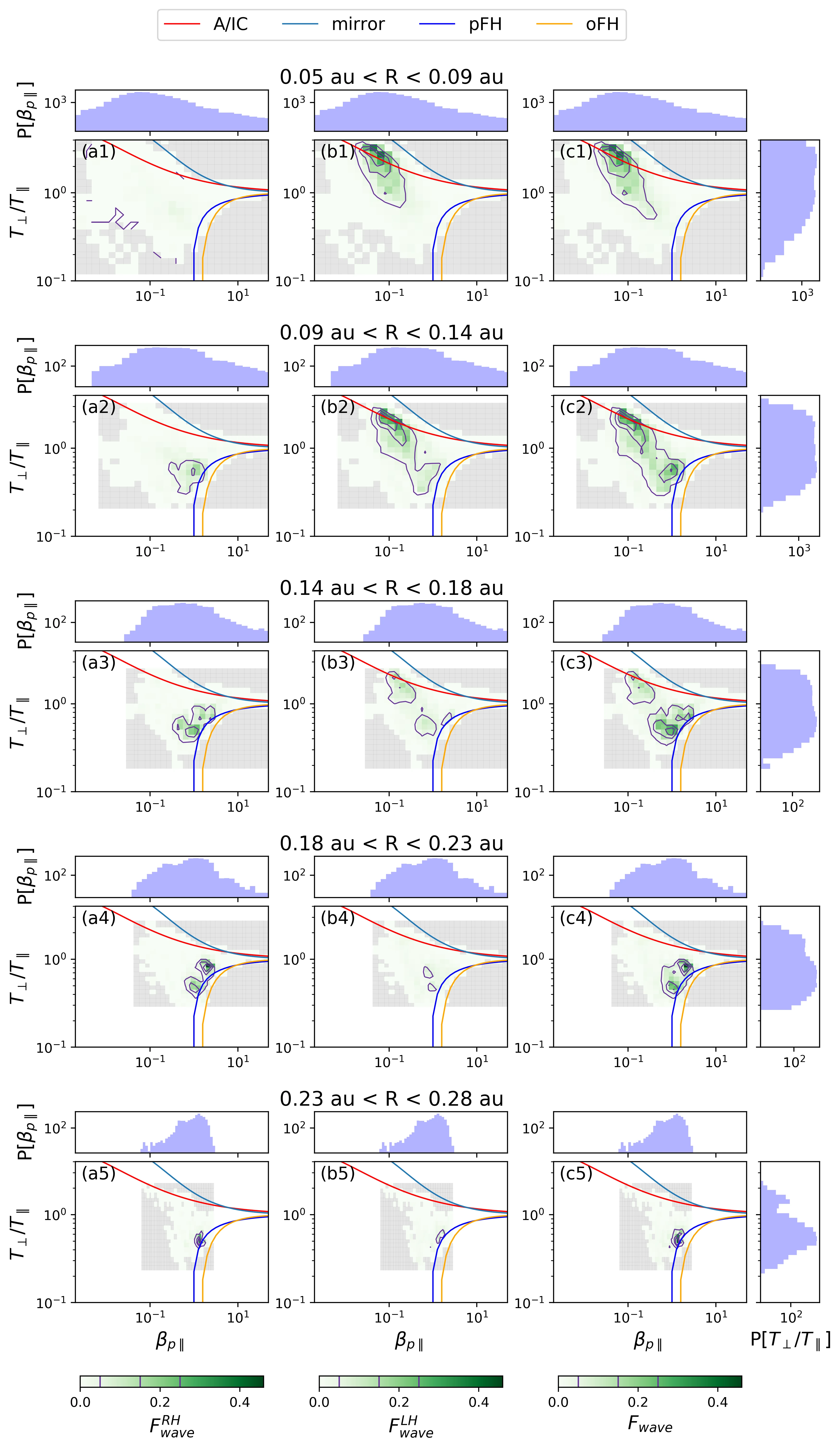
The solar wind isn't a calm stream but a bubbling soup of charged particles. Diving close to the Sun, the Parker probe picked up two types of stirring waves. Left-handed ones, like a whisk in a chef's hand, whip up the material when the temperature differs along and across the flow. They rage nearly a third of the time near the star, boosting the share of the fastest particles — much like a mixer pushing foam to the surface.
Right-handed waves
Fine analysis of light (spectroscopy) and machine learning captured the moment when thermal jets give birth to right-handed waves. Paradoxically, it's this invisible ripple, not grand eruptions, that heats the giant corona — its temperature is hundreds of times that of the solar surface. The rhythm of these waves determines space weather near Earth.
Original abstract
as written by the authors arXiv:2512.11182
Parker Solar Probe (PSP) observes abundant circularly polarized ion-scale waves throughout the inner heliosphere. These waves are a signature of the interplay between plasma microinstabilities and turbulent dissipation. We perform a mission-wide statistical survey of ion-scale waves observed by PSP, investigating if the waves correspond to specific free energy sources in the measured proton velocity distributions. We find that left-handed waves (LHWs) are frequently observed, with the fraction of time they are observed increasing closer to the Sun, reaching $$\sim$$30\%. Right-handed waves (RHWs) are less frequently observed, with the associated time fraction decreasing closer to the Sun. The observed LHWs are generally consistent with parallel propagating ion cyclotron wave (ICW) storms that occur continuously for extended periods of time. Turbulent energy spectra are consistently steeper when LHW storms are observed; these wave storms mediate the spatial transport of the free energy associated with temperature anisotropy. The observed RHWs are generally consistent with oblique and parallel fast magnetosonic waves (FMWs), and their observation is well correlated with enhanced proton parallel heat flux, which quantifies the presence of secondary proton populations. Using observations and the SAVIC machine learning instability identification algorithm, we identify a threshold on the proton heat flux beyond which FMWs are likely to be driven unstable by the proton beams. We are thus able to associate trends in the observed ion-scale waves with known sources of free energy for Encounters 3 through 24 of the PSP's prime science phase.
The solar wind carries away about the mass of Mount Everest every minute.