Dance of the Invisible Giants: Gaia Finds a 'Desert' of Brown Dwarfs express
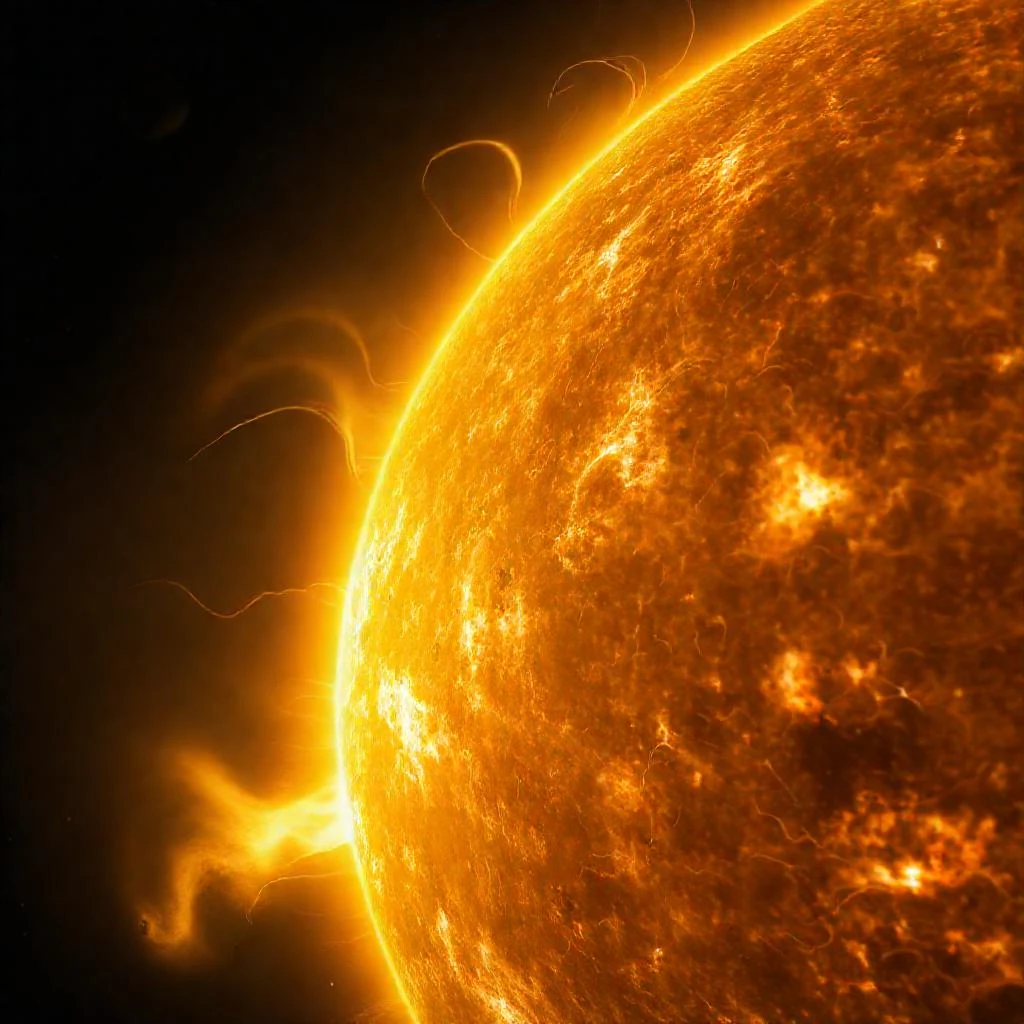
Sun-like stars rarely spin alone. Many of them dance with invisible partners — brown dwarfs: objects bigger than planets but too lightweight for steady stellar burning. In their cores, hydrogen fusion flickers, only to fade fast, never matching the stability of the Sun.
Yet on orbits shorter than five years, such couples were deemed nearly impossible. Astronomers labeled this gap the 'brown dwarf desert.'
Everything shifted with the Gaia telescope. It is so precise it can catch a star's faint wobble, as delicate as a hair's breadth from thousands of kilometers away. Surveying 110,000 suns, Gaia detected signs of brown dwarfs around one in ten — tenfold more than before. Most turned up right in the 'desert' once branded barren. The 'desert' was a mirage, and brown dwarfs were simply hiding at the edge of our sight. Bulky brown dwarfs (heftier than 50 Jupiters) remain scarce, but the lighter ones have flooded this zone. The full story awaits the upcoming Gaia DR4 catalog, which will unveil just how lively this former desert really is.
Original abstract
as written by the authors arXiv:2601.03539v1
The brown dwarf desert describes a range of orbital periods (<5 years) in which fewer brown dwarf-mass companions have been observed around Sun-like stars, when compared to planets and low mass stellar companions. It is therefore theorised that brown dwarf companions are unlikely to form or remain in this period range. The Gaia space telescope is uniquely sensitive to companions in this period range, making it an ideal tool to conduct a survey of the brown dwarf desert. In this study, we use Bayesian inference to analyse data from nearby (<200pc) Sun-like stars in Gaia's DR3 catalogue, assuming single companions. From this, we identify 2673 systems (2.41% of the sample) with possible brown dwarf companions in this period range. Accounting for observational biases, we find that 10.4+0.8-0.6% of nearby Sun-like stars have astrometric errors consistent with a brown dwarf-mass companion with a period less than 5 years, significantly higher than previous studies which reported occurrence rates of <1%. However, we acknowledge the limitations of DR3 and are unable to make a definitive statement without epoch data. By simulating epoch data with multiple companions, we find that, while some of the data can be explained by multiple low-mass brown dwarf companions and high-mass planets (>10MJ), high-mass brown dwarfs (>50MJ) in this period range are comparatively rare. Finally, we used our studies of the brown dwarf distribution to predict the number of companions in the brown dwarf desert we can expect to discover in DR4.
Those 'failed stars,' brown dwarfs, brew clouds of scorching sand and downpours of liquid iron — sounding more like overachieving giant planets.