X-ray passports for habitable worlds
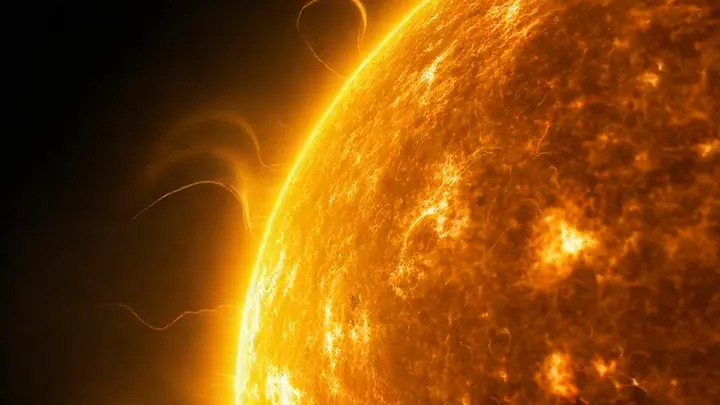
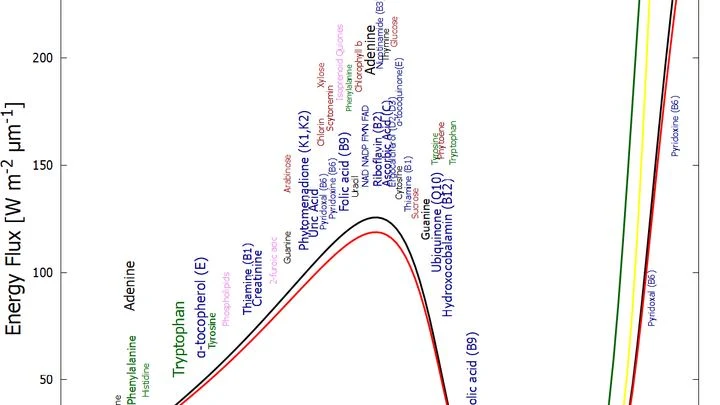
Twelve stars have received X-ray passports. Now, for each of them, we know the exact radiation dose received by a planet in the habitable zone, the region where liquid water is possible.
A star with properties similar to the Sun, such as spectral type and luminosity.A Sun-like star is a star that shares key properties with our Sun, such as spectral type (typically G-type main-sequence), luminosity, mass, and temperature. These stars are often referred to as solar analogs or solar twins, depending on how closely they match the Sun's characteristics. Sun-like stars are of particular interest in the search for exoplanets and habitable worlds, as they provide a stable environment over billions of years, allowing for the potential development of life on orbiting planets.
The concept of a Sun-like star emerged in the 19th century with the development of stellar classification, but the systematic search for solar analogs began in the 20th century, particularly with the discovery of the first exoplanet around a Sun-like star in 1995.
Sun-like stars generate energy through nuclear fusion of hydrogen into helium in their cores, a process that lasts about 10 billion years for a star of solar mass. Their stability comes from a balance between gravitational collapse and radiation pressure. The study of Sun-like stars involves measuring their brightness, color, and spectral lines to determine their age, composition, and activity cycles, which can be compared to the Sun's behavior.
Sun-like stars are primary targets in the search for Earth-like exoplanets, as they are considered the most likely hosts for habitable planets. They are also used to understand stellar evolution and the future of our own Sun.
The closest known Sun-like star to Earth is Alpha Centauri A, which is part of a triple star system and is slightly more massive and brighter than the Sun.