Metal Locks Magnetic Flux express
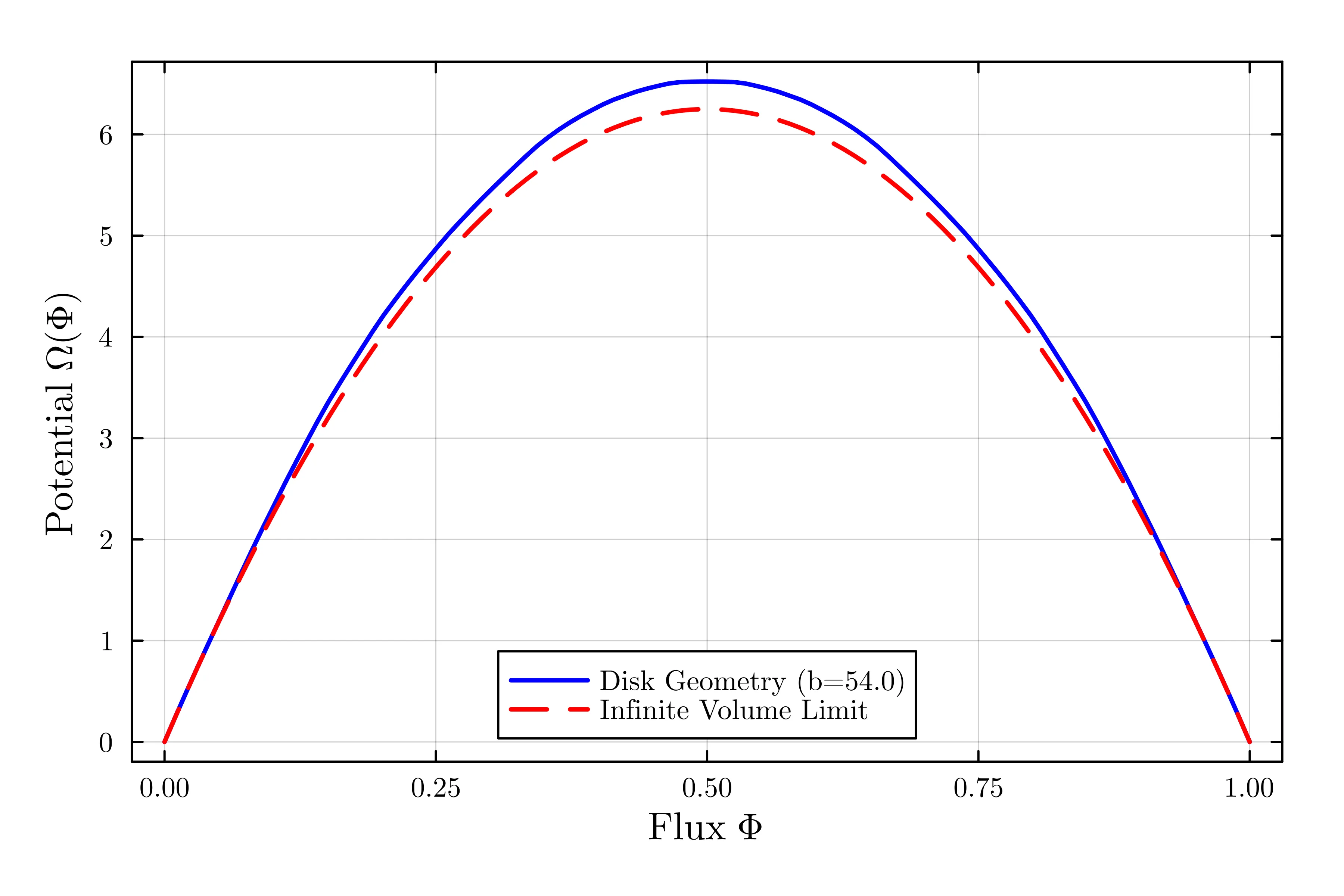
Metals are full of free electrons: they dart between atoms like a swarm of bees around a hive. If you poke such a metal with a thin magnetic filament, the electrons start to feel its field. A new calculation shows they don't just go around the field; they trap it inside, like a cork sealing water in a bottle. And they trap it in strict portions — either nothing at all, or exactly half of the standard portion of magnetic field.
This portion is called a flux quantum. Usually, flux quanta appear in superconductors — materials that conduct electricity without loss. But here we have an ordinary metal with resistance. Its electrons behave like a crowd that suddenly starts marching in formation. When the magnetic filament is slowly removed, a weak circular current remains in the metal. It resembles a whirlpool that keeps spinning long after you've pulled a stick out of the water.
This discovery changes our view of how metals interact with magnetic fields. Previously, it was thought that an ordinary conductor couldn't hold a quantized field — only a superconductor could. Now it's clear that even in copper and aluminum, electrons can pull off this trick. This might help create more precise magnetic field sensors or memory elements where information is stored as trapped flux.
Half a flux quantum is like half a sock: useless on its own, but together with the other half it makes a whole. In superconductors, half-quanta have been found before, but in ordinary metals: this is the first time.