Clocks That Tick Quantumly express
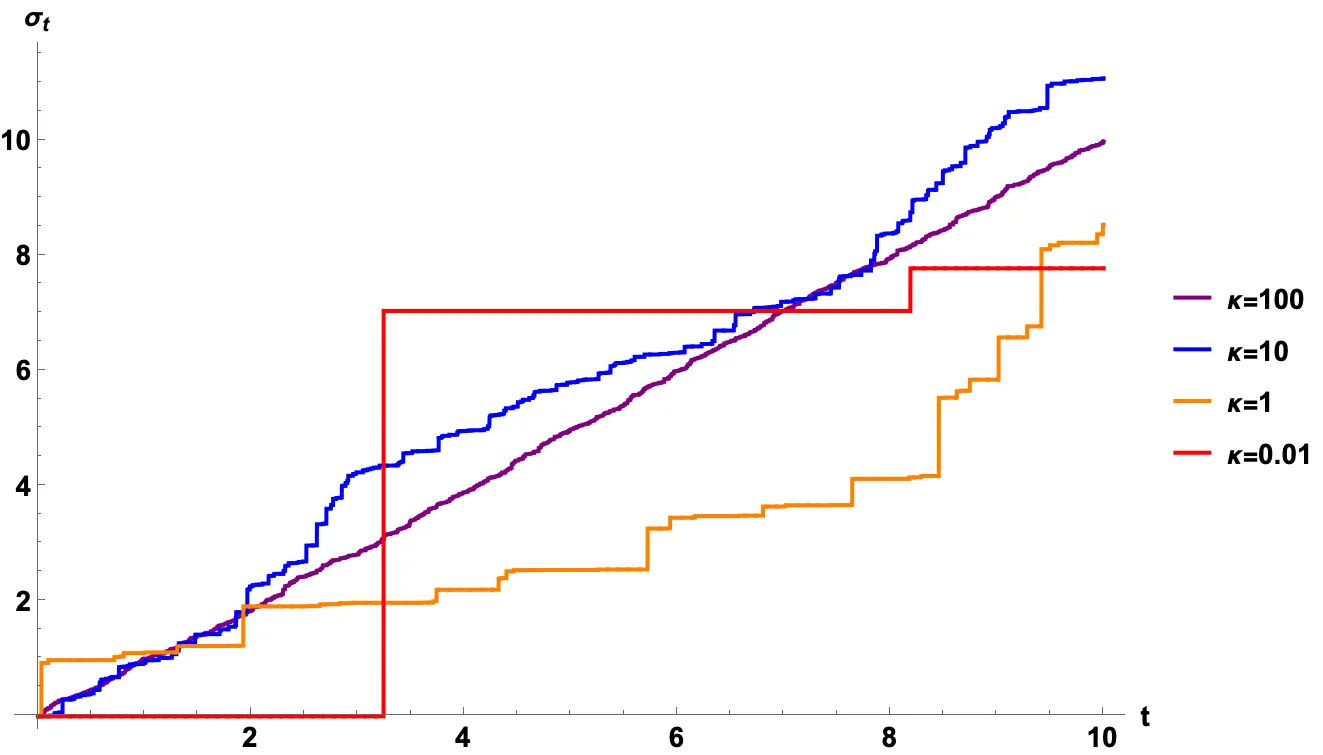
A regular wall clock runs smoothly, but quantum clocks are a different story. They tick at random moments, and each tick can have a different duration. On average, if you watch such a clock for a long time, it will show the correct time. But at any given moment, its hand might jump forward by an unexpected amount.
The authors replaced the usual time in quantum mechanics equations with the readings of such 'quantum clocks.' It turns out that the leading term in the equation for the density matrix (which describes the state of a quantum system) yields the familiar von Neumann equation. The next correction, however, is the Lindblad equation, which typically describes losses and noise. Further corrections are even more subtle and were previously unknown.
For a free particle, the corrections lead to an anomaly in the Ehrenfest theorem — the rule connecting the average values of position and momentum. If such an anomaly is detected in an experiment, it would signal that time in the quantum world is indeed not as smooth as we tend to think.
Atomic clocks are so accurate that over the age of the Universe they would have drifted by less than a second. It is precisely their accuracy that sets the lower bound on the parameters of quantum clocks in this model.