Popular

Math Physics math.MP

16 articles

Application of mathematics to physics problems, mathematical methods for such applications, rigorous formulations of physical theories (same scope as math-ph).

articles

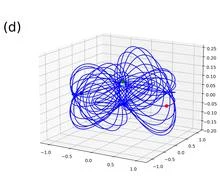
The Dance of Three Bodies: New Orbits in Chaos

What the work is about: searching for periodic orbits in the three-body problem. What's new: over 10,000 three-dimensional orbits, many of them stable, including round dances and duets with a solo. Why it matters: these refined movements explain the stability of triple star systems and offer a glimp
arXiv:2508.08568 · 2025-08-12

The Butterfly Secret: How Physicists Painted the Most Complex Pattern

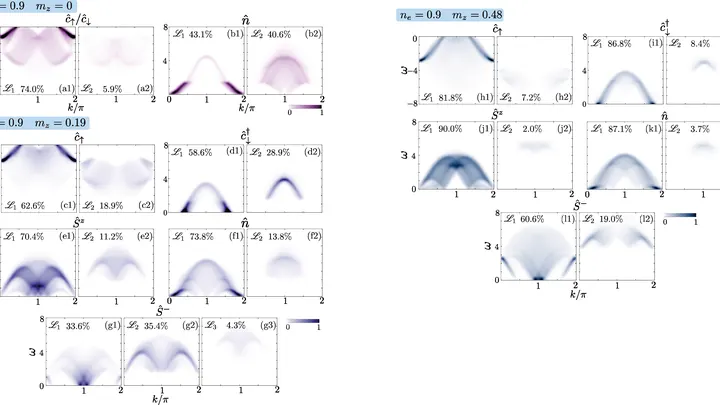
The Kohmoto butterfly is a self-similar pattern that emerges from electron behavior under special conditions. For a long time, it defied separation into independent parts: traditional methods failed. A new approach turns the butterfly into a spectral paint-by-numbers: types of oscillations are sorte
arXiv:2509.24025 · 2025-09-28

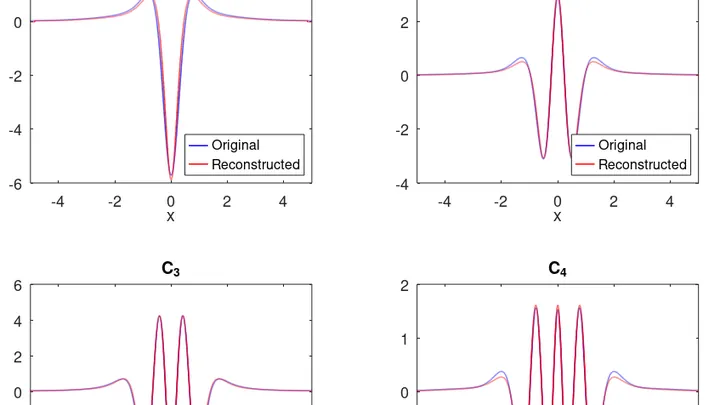
A Quantum Instrument Plays the Music of Primes

Scientists constructed a quantum energy landscape whose allowed levels match the special points of the Riemann zeta function, which governs the distribution of primes. Corrections to the approximate model obeyed a simple rule that explains a mysterious fractal pattern and brings us closer to proving
arXiv:2510.16759 · 2025-10-19

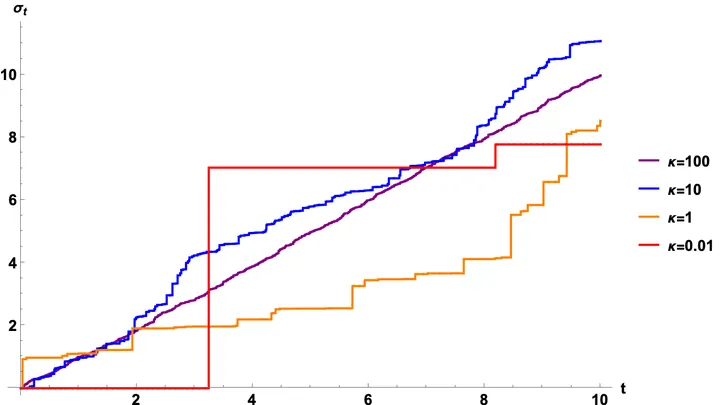
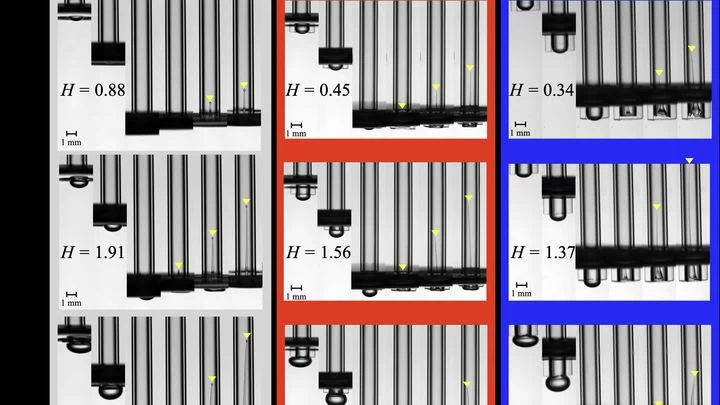
How Honey Flows Through a Sponge: New Equations

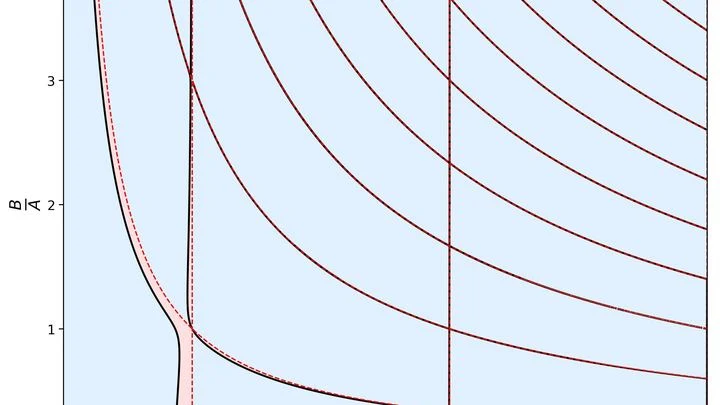
Fluids that change thickness under pressure behave unexpectedly in porous materials. Scientists built a model that predicts their path, accounting for uneven pores and friction. This will change filtration, oil recovery, and our understanding of biological processes.
arXiv:2512.03240 · 2025-12-02

The Secret of Warped Webs: A New Way to Compare Networks

Graphs are diagrams made of dots and lines. Determining whether two graphs have the same structure, even if drawn differently, is often difficult. Scientists have found a way by envisioning a graph as a landscape of hills and valleys. Each node gets its own curvature measure. By comparing these curv
arXiv:2601.03787 · 2026-01-07

Diffusion and Light Speed No Longer Quarrel

The diffusion equation was seen as a violator of relativity due to the instant spread of signals. It turned out to be an artifact of a rough approximation. On the micro level, everything is lawful, and paradoxes vanish with the right 'focus': track the particles, not the blurry picture.
arXiv:2601.19464 · 2026-01-27

Quantum Entanglement on a Short Leash

Scientists have proven that in a chain of quantum particles at any non-zero temperature, there is a maximum entanglement length. Remove a piece longer than this limit and the halves are no longer connected. Like a leash that snaps under tension, quantum connections are broken by thermal noise, which
arXiv:2602.20694 · 2026-02-24

Heat-Resistant Quantum Memory

Scientists have created a three-dimensional structure that, like a Russian doll, shields quantum information from thermal noise layer by layer. The qubit stays stable for a very long time, paving the way for quantum computers that operate without extreme cooling.
arXiv:2605.10943 · 2026-05-11

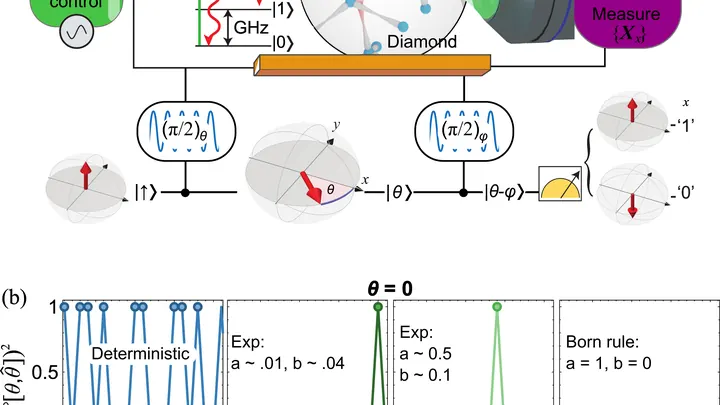
Quantum Droplets: Precision Unattainable

New interval quantum mechanics describes states not as points, but as 'quantum droplets' — regions of possible values. Measurement squeezes the droplet, and paradoxes like Schrödinger's cat simply do not arise in the real, imprecise world.
arXiv:2605.19706 · 2026-05-19

How to Measure the Chaos of Spacetime Itself

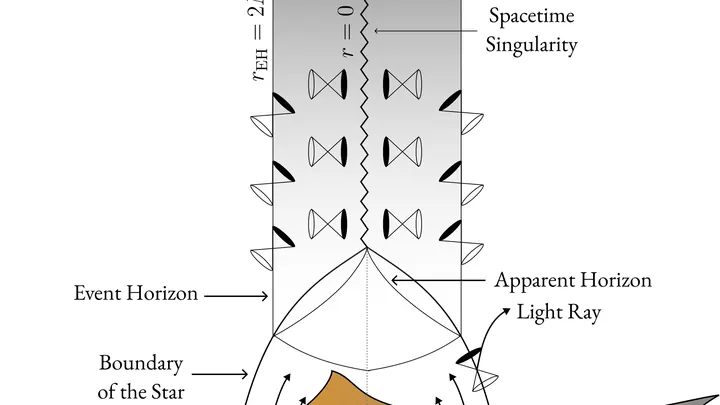
A geometric way to measure the chaos of curved spacetime: entropy is calculated as the sum of disorder of all light rays passing through a region. For a black hole, the result matches the Bekenstein–Hawking formula, revealing a connection between gravity, information, and heat.
arXiv:2605.22172 · 2026-05-21

Invisible Waves Make a Plate Ring

Scientists described the vibrations of an elastic plate when a gravitational wave passes through it. If the plate’s material does not expand sideways when compressed (like cork), the calculations simplify. Exact formulas for displacements and absorbed energy were obtained. The main discovery: the vi
arXiv:2605.28932 · 2026-05-27

Dark Matter: Quantum Vortices Around Black Holes

A new study models dark matter as a superfluid near a black hole. Physicists found two types of stable structures: a dense core and a rotating vortex. It turns out the vortex is stable if dark matter particles attract each other weakly; strong attraction makes it collapse. This discovery suggests th
arXiv:2605.29069 · 2026-05-27

Smart Pushes for Quantum Swings

Quantum devices — from masers to ultra-precise clocks — rely on repetitive motions within themselves. Energy losses disrupt these rhythms, but precise 'pushes' can sustain them. Previously, calculating such pushes consumed hours of computer time. Now a mathematical trick does it almost instantly, pa
arXiv:2606.15383 · 2026-06-13

Politics as a Galaxy: Public Opinion Obeys Physics

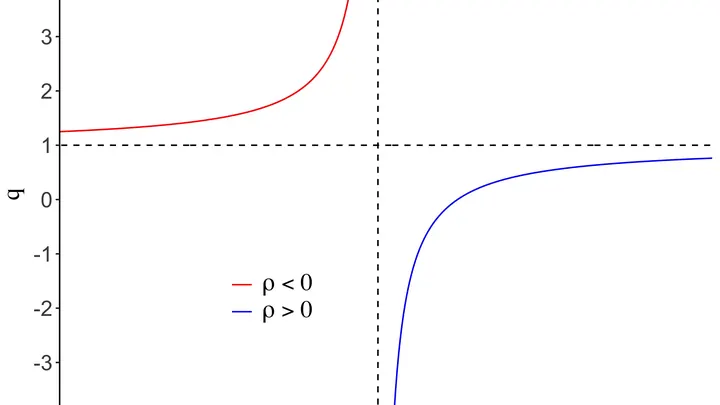
Researchers built a model where the ruling coalition is a galaxy: parties are stars, voters are invisible dark matter. Using equations from quantum physics, they showed how government cohesion and actual outcomes shape public trust. The model predicts three scenarios and reveals why some governments
arXiv:2606.19014 · 2026-06-17

Vortices in the Quantum World

Scientists have reformulated the Schrödinger equation, representing particles as a flowing medium. Points where the probability of finding a particle is zero become vortices. Their integer count naturally yields precise energy levels, explains the eternal jitter even of a particle at rest, and links
arXiv:2606.28640 · 2026-06-26

The Quantum Wave That Gives Birth to the Universe

A physicist found that interpreting a motionless quantum wave as a probability distribution for a particle’s internal clock naturally yields the math of an expanding universe. Gravity becomes unnecessary—spacetime bends purely from statistical chances. This offers a route to merging quantum physics
arXiv:2607.05020 · 2026-07-06