MeerKAT's Radio Ear Hears the Whisper of Solar Flares express
A solar flare is like thunder on a clear day: a short but powerful burst of energy. The MeerKAT radio telescope in South Africa caught one such M1.3-class flare and examined it with unprecedented clarity. Ordinary instruments see either bright details or faint ones, but not both at once. MeerKAT handled both, like an ear that hears both a drumbeat and the rustle of leaves simultaneously.
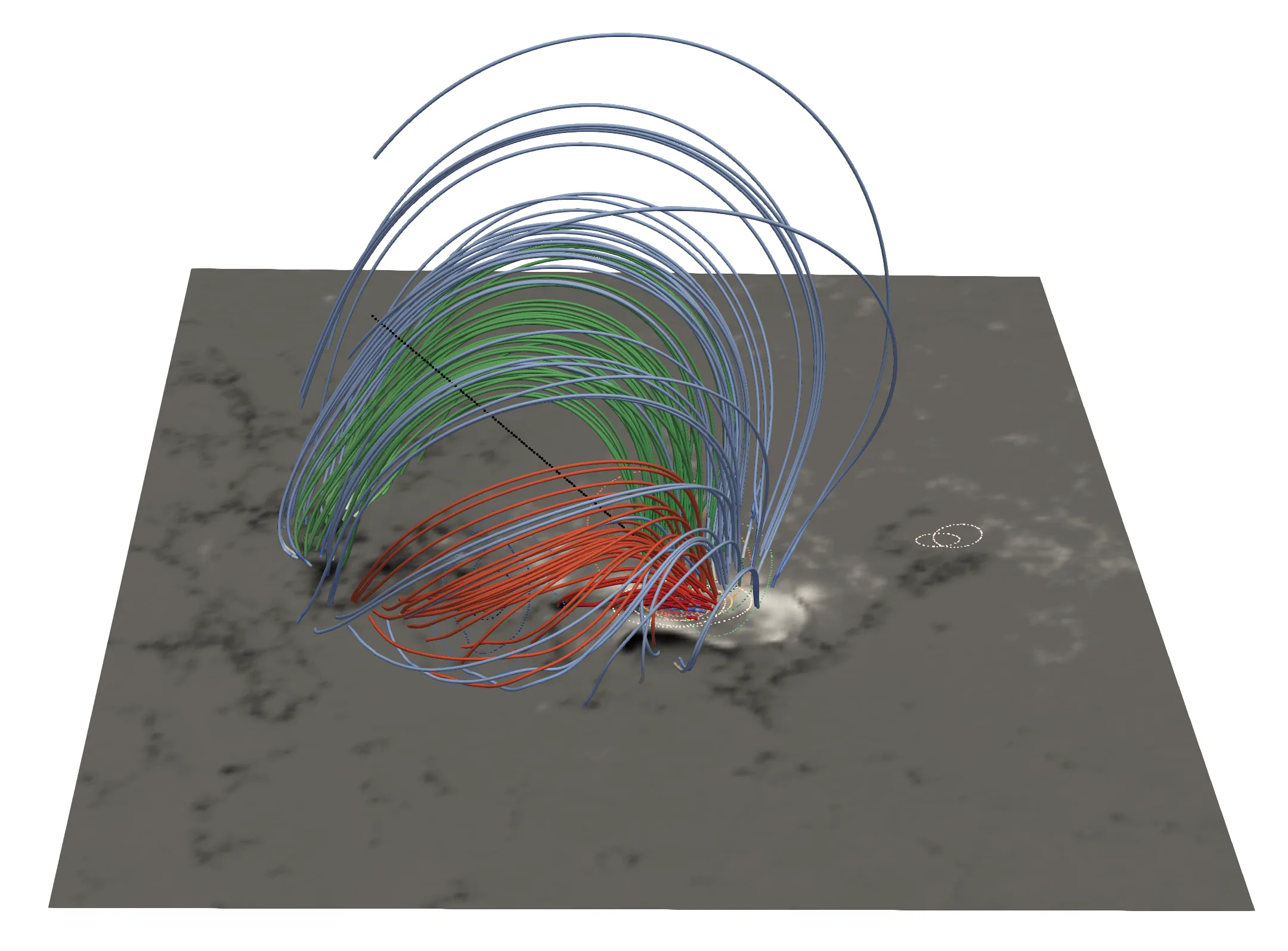
In the radio band, the flare appeared as several distinct sources. Some are bright coherent bursts, like sharp clicks; others are faint incoherent emission spread across the active region. This means different groups of electrons accelerated by magnetic fields shine in different ways. By comparing the radio map with X-ray images and magnetic field calculations, astronomers saw that each source sits in its own magnetic loop.
This result is not just a pretty picture. It shows how the future giant array SKA-Mid will be able to dissect flares: where accelerated particles come from, where exactly magnetic field lines break, and how energy flows from one place to another. MeerKAT is a touchstone, and it has already lived up to expectations.
The dynamic range of the resulting images exceeds 1000—that's like spotting both a bright lamp and a glowing ember in a single photo without overexposure.