The Square Kilometre Array (SKA) is a planned radio telescope of unprecedented scale, designed to observe the sky in radio wavelengths with a collecting area of about one square kilometre. It will consist of thousands of dishes and millions of low-frequency antennas spread across South Africa and Australia, working as a single instrument. The SKA's primary scientific goals include mapping neutral hydrogen in the early universe, studying the epoch of reionization, and probing the nature of dark energy and gravity.
History
The SKA project was conceived in the early 1990s, with the international collaboration formally established in the 2000s. The design and site selection process involved extensive global cooperation, with the final decision to split the array between South Africa and Australia announced in 2012.
How it works
The SKA uses interferometry: signals from many separate antennas are combined to create a virtual telescope with a resolution equivalent to that of a dish spanning the maximum distance between antennas. By correlating the signals, it can produce high-resolution images of radio sources. Its sensitivity allows detection of extremely faint signals, such as the 21-cm line from neutral hydrogen, which is a key tracer of cosmic structure.
In practice
Beyond fundamental astrophysics, the SKA's data processing and imaging techniques drive advances in big data analytics, high-performance computing, and signal processing, with spin-offs in areas like medical imaging and radar technology.
Fun fact
The SKA will generate more data per day than the entire global internet traffic, requiring exascale computing to process.
A storm in the upper atmosphere lasts a few millionths of a second. A cosmic ray, a proton or a helium nucleus, strikes air molecules, sending a swarm of particles downward. Most of them stay together, but occasionally one particle gains so much energy that it surges ahead.
The night sky is full of rings and bubbles, but in the radio band they look different. In data from the Australian radio telescope ASKAP, a structure has surfaced that resembles two soap bubbles blown from the same straw.
When an orchestra of thousands of musicians plays in harmony, the credit goes not only to each player's talent but also to the invisible work of the conductor.
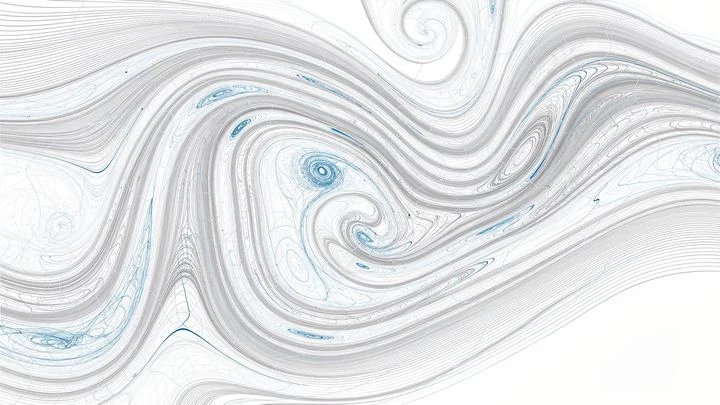
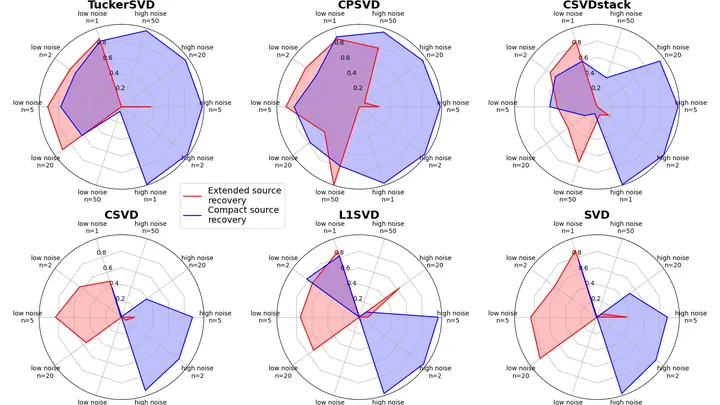
Imagine a philharmonic orchestra playing, but the microphone picks up only a blended roar — a tutti where double basses, flutes, and timpani all merge. Physicists have grappled with a similar task for decades, staring at fields of density, temperature, or magnetic induction.
A pair of neutron stars, locked in a gravitational embrace, traces invisible circles in the void. A century ago, Albert Einstein described this dance as waves of curved geometry, but for a long time we could only catch glimpses — through the feverish flicker of radio pulses.
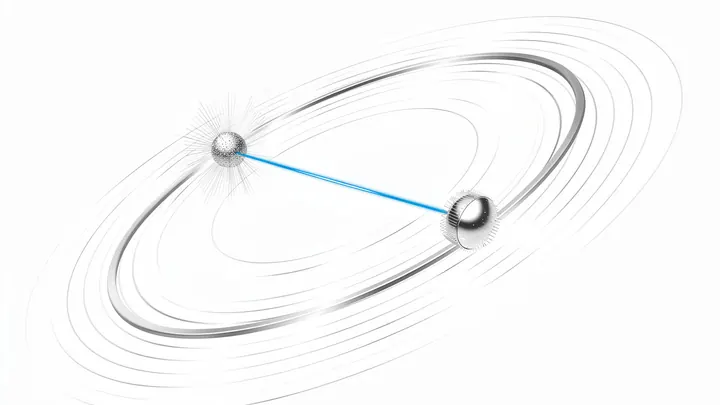
Two beams of light race around a closed loop, heading toward each other. Since the speed of light is constant, when the ring turns, one beam has to catch up with a moving finish line, while the other meets it sooner. Their meeting creates a pattern, and from that pattern we can tell how fast the whole system is spinning.
For decades, the search for extraterrestrial intelligence has waited for quiet, coherent signals from space — a kind of 'whistle' in the radio silence. However, our own technosphere has created a continuous radio background — the hum of a vast metropolis, emitted by all communications, radars, and broadcasting stations.
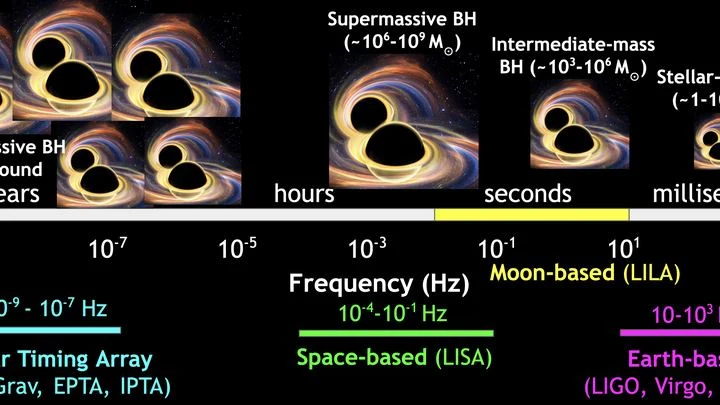
Gravitational waves are ripples in the fabric of space, like circles on water from a thrown stone. On Earth, they are drowned out by traffic, tides, and earthquakes, like a storm beating on a lake, making it impossible to notice faint splashes. The LILA project moves the detector to the Moon, where windless silence reigns.
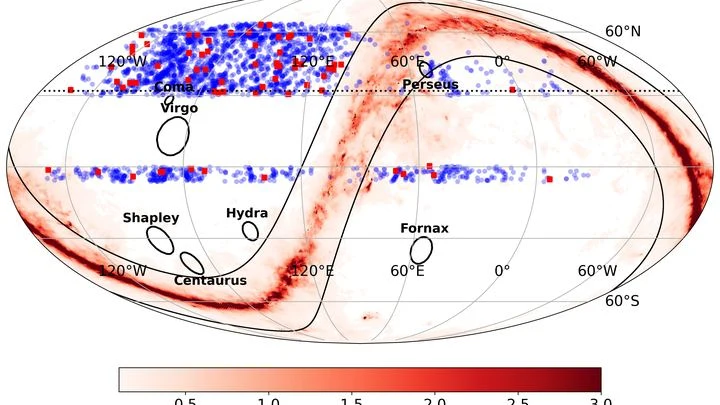
Searching for extraterrestrial signals is like trying to hear a whisper at a roaring stadium. The Green Bank Telescope listened to 70,000 stars, but 100 million bursts turned out to be earthly noise — from phones, satellites, microwave ovens.
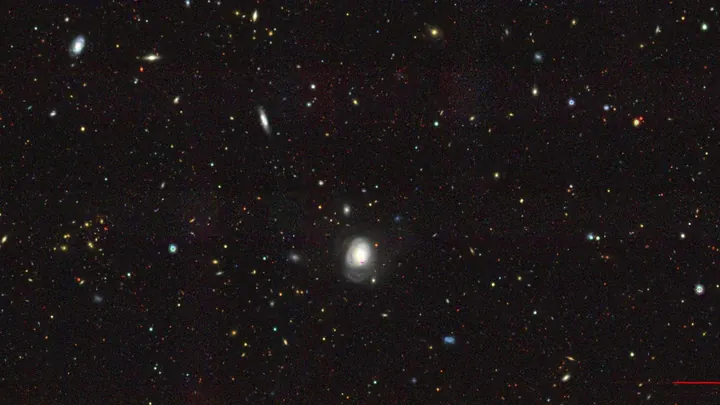
For a long time, astrophysics was dominated by the belief that giant jets of radio emission, radio outbursts blasting from central regions, were the exclusive privilege of elliptical galaxies. It was thought that only their calm, featureless internal environment could allow such colossal fountains of energy, powered by supermassive black holes, to form.
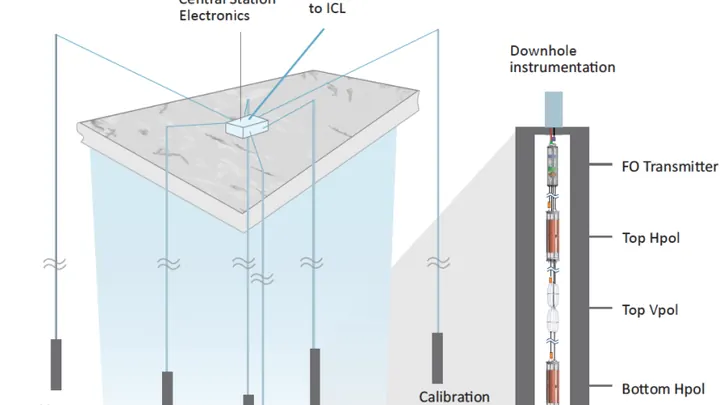
Deep within the Antarctic ice, at depths where sunlight never reaches, antennas hang suspended. They listen not for sounds but for radio waves, waiting for a signal from a particle that is nearly impossible to catch. A neutrino passes through the Earth like a bullet through fog, but occasionally, very rarely, it grazes an ice atom.
Radio telescopes are like ears listening to space. Usually, there's just one ear: it picks up a signal from a single tiny spot in the sky. That's slow. The Parkes telescope in Australia now has 72 ears working at once.
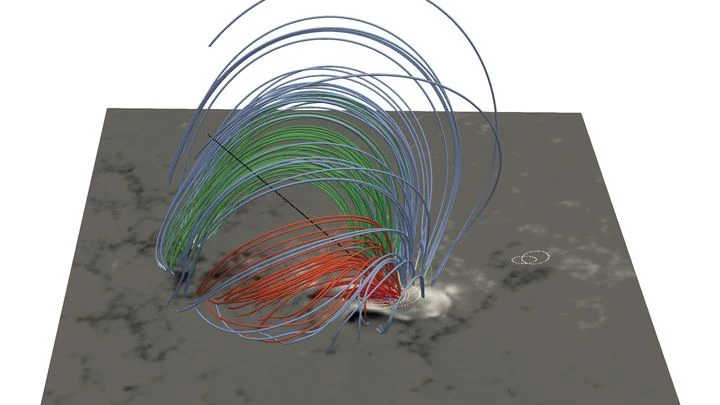
A solar flare is like thunder on a clear day: a short but powerful burst of energy. The MeerKAT radio telescope in South Africa caught one such M1.3-class flare and examined it with unprecedented clarity. Ordinary instruments see either bright details or faint ones, but not both at once.
The universe was born dark and cold, like a room with the lights off. Then someone started turning on the bulbs — the first stars. Around each such star, gas heated up and lost electrons, becoming transparent to light. These glowing regions grew like bubbles in boiling water and gradually merged until the entire cosmos became transparent.
At a distance of 8.58 megaparsecs, the spiral galaxy M51 spins its arms, while the VLA radio telescope in its most extended configuration observes it with a resolution of 0.16×0.14 arcseconds. That is like spotting a coin on the surface of the Moon from Earth.
Every second, dozens of particles from space fly through each of us. Most are light protons, but there are also heavier atomic nuclei: carbon, oxygen, iron. They are born in stellar explosions and travel to Earth for millions of years. Their energy can be staggering: a single particle can carry as much as a tennis ball on a serve.
Deep in the Siberian taiga, there are a hundred light traps: each about the size of a small table, but together they cover a square kilometer. At night, these traps gaze at the sky, catching faint flashes of light born when cosmic particles slam into the atmosphere. The setup is called TAIGA-HiSCORE, and it usually works as a giant "eye" for such particles.