X-ray snapshot of a chip in minutes express
An X-ray machine at the dentist's office takes a single flat image of a tooth. But if you need to see the insides of a microchip from all sides, you have to take the sample to a synchrotron — an accelerator the size of a football field. Hybrid photon detectors are changing that picture: they catch each X-ray quantum individually, like a digital camera catches light, and turn it into an electrical signal.
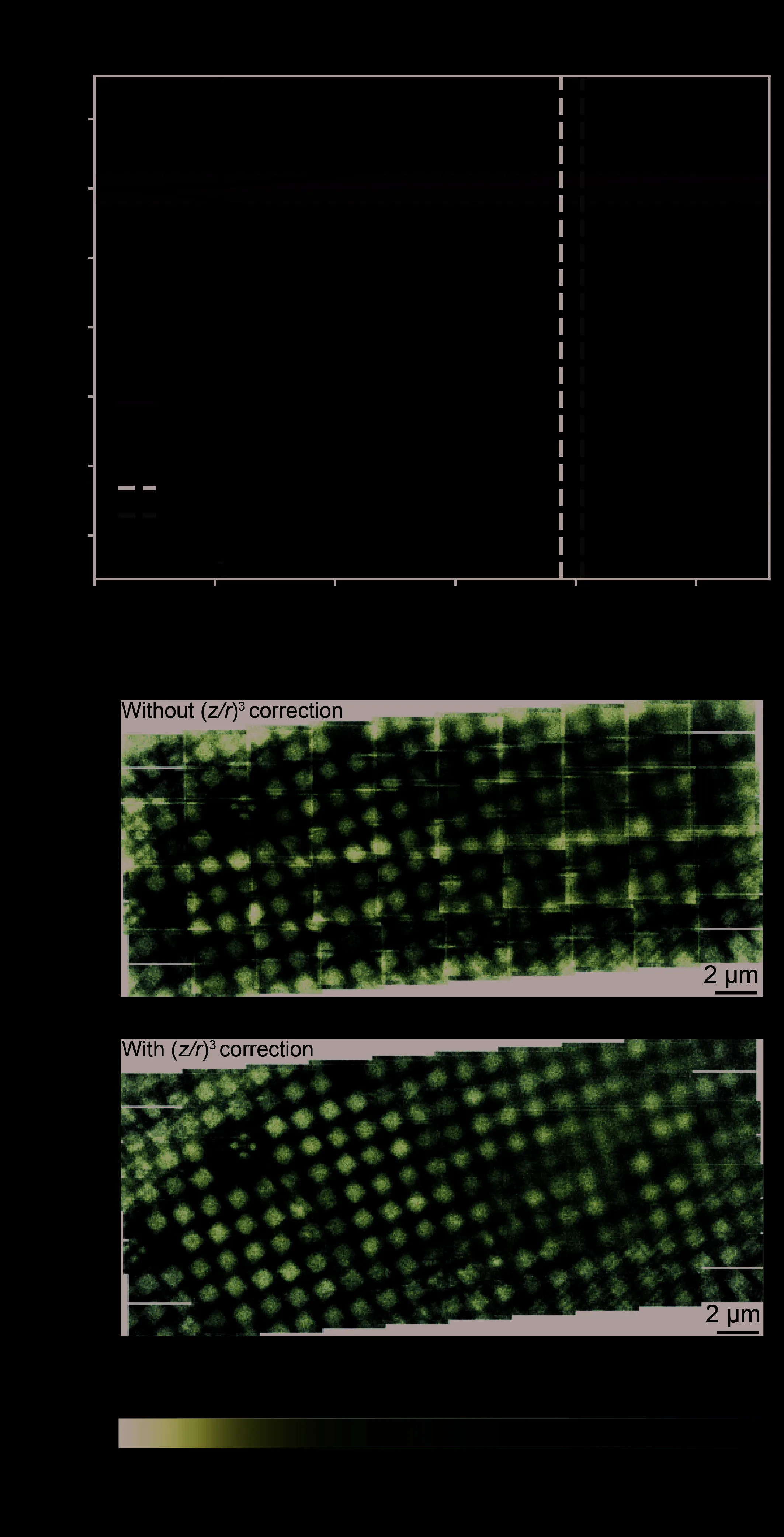
Optical microscopy can't see through metal, and ordinary X-rays can't distinguish details smaller than a micron. A hybrid detector solves both problems: a sensor layer absorbs the X-rays, and an electronics layer immediately reads the signal. As a result, on a lab bench, the team managed to collect 40 times more photons per shot and complete the entire scan 20 times faster than the same group had done before. The result is an 800-fold speedup.
Image quality was checked in three ways: how sharply fine details are rendered, how consistent repeated scans are, and how contrasty the wires look against the substrate. All metrics confirmed that the imaging parameters were chosen correctly, and even now, without further improvements, the tomograph can distinguish microchip features at the limits of laboratory X-ray capabilities.
Original abstract
as written by the authors arXiv:2602.11375
Hybrid photon counting detectors (HPCDs) have unlocked new capabilities for x-ray-based measurements at synchrotrons around the world in the last 30 years. By leveraging independently optimized sensor and readout layers, they offer high quantum efficiency ($$> 80 \%$$), ultra-low dark counts, sub-pixel point-spread function, and high count rates ($$> 10^{6}$$ counts per pixel per second). Furthermore, their small pixel size and large active area endow them with excellent coverage and resolution for both real-space and reciprocal space imaging. Here, we demonstrate that HPCDs are also well-suited for laboratory-based nanoscale x-ray tomography (nano-xCT). We perform nano-xCT on an integrated circuit fabricated at the 130-nm node and produce a 3D reconstruction with 40 times more photons collected 20 times faster than in this group's previous work, for an overall speedup of 800$$\times$$. We review the technical considerations of using an HPCD for tabletop tomography. We quantify our reconstruction image quality using well-established metrics, including the modulation transfer function (MTF), Fourier shell correlation (FSC), and contrast-to-noise (CNR), to validate our choice of experimental parameters that provide sufficient resolution and imaging speed. Using these metrics, we determine that even under current experimental conditions, 160 nm wiring features are reconstructed at 75-80 nm spatial resolution.
Hybrid photon detectors were originally developed for experiments at the Large Hadron Collider, where they need to count millions of particles per second.
In the series "Westworld," X-ray tomography helps take apart robot hosts down to the last screw — much like engineers now look inside silicon chips.