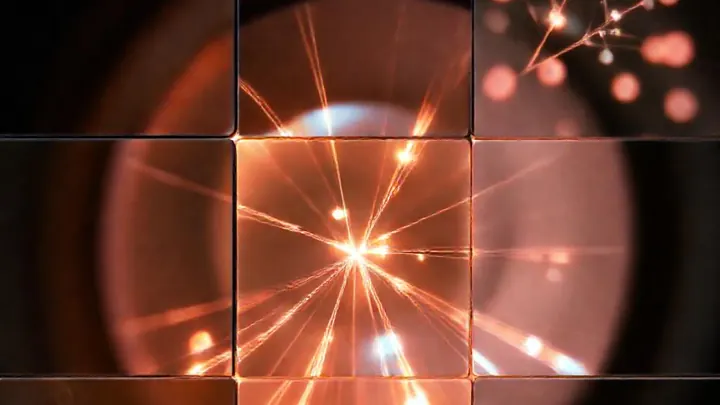
A high-speed camera is an imaging device that captures frames at rates far exceeding standard video (typically thousands to millions of frames per second), freezing motion that the human eye or conventional cameras cannot resolve. These cameras are essential tools in physics, engineering, and biology for studying phenomena that unfold in microseconds or nanoseconds — from shockwaves and explosions to the propagation of light itself. The titles in this corpus show its versatility: one article describes a camera that 'sees the breath of tissues' (likely measuring subtle motion or blood flow), another captures 'a million points per second' in light-based printing, and a third combines color and motion in a single frame, revealing how high-speed imaging has evolved beyond simple slow-motion playback into quantitative scientific measurement.
History
The first practical high-speed cameras emerged in the mid-20th century, with Harold Edgerton at MIT pioneering stroboscopic photography in the 1930s and later developing electronic flash techniques that effectively froze motion. Rotating-prism cameras in the 1940s–1960s pushed frame rates into the thousands per second, and digital high-speed cameras became commercially available in the 1990s.
How it works
High-speed cameras work by exposing a sensor for extremely short durations (shutter times of microseconds or less) and reading out the data very quickly. To achieve such speeds, they often use specialized sensors with parallel readout architectures, high-bandwidth memory, and intense illumination to compensate for the brief exposure. Some designs use rotating mirrors or multiple sensors to capture sequential frames, while modern digital systems rely on ultra-fast CMOS or CCD sensors. The key trade-off is between frame rate, resolution, and light sensitivity — faster capture means less light per frame, so powerful lighting or image intensifiers are often required.
In practice
High-speed cameras are used in automotive crash testing, ballistics analysis, fluid dynamics research, and biomedical imaging — for example, visualizing blood flow in living tissues or tracking the rapid dynamics of laser-material interactions.
Fun fact
Some high-speed cameras can capture images so fast that they can record the actual propagation of light through a scene, achieving effective frame rates of trillions of frames per second using streak-tube techniques.
An assembly line spits out parts one by one per cycle. If the cycle is short and defects are few, the line runs fast. In quantum optics, a single-photon source plays the role of such a line: it must emit exactly one quantum of light per cycle, and the more cycles per second, the more photons go into the fiber.
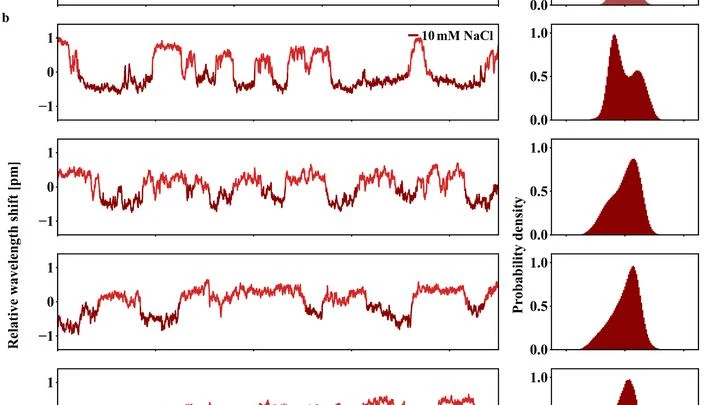
A protein in a cell is not a frozen sculpture but a restless mechanism. Its parts are constantly vibrating, and these movements determine how it grabs molecules, transmits signals, or builds the cellular scaffold. But filming the life of a single protein was hampered by two nuisances at once. First, the movements last millionths of a second — ordinary cameras simply cannot catch them.
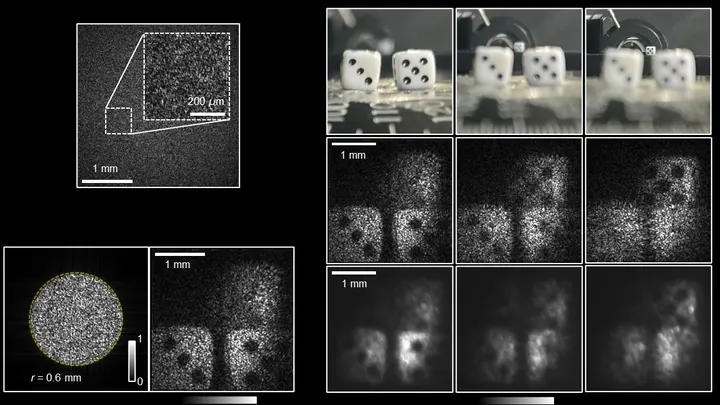
A single-pixel camera works like an artist creating a picture through a stencil with many holes. In each frame, only a portion of the light, modulated by a mask, a spatial light modulator, reaches the single sensor, and then the computer reconstructs the full image by assembling this mosaic with computational algorithms.
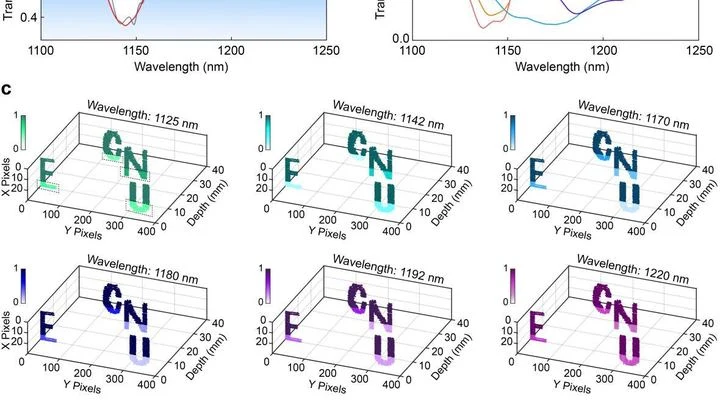
A conventional lidar is like an artist who paints a landscape but sees only gray shadows. It measures distances to each point accurately, but can't tell whether it's looking at rock, wood, or plastic. To learn the composition, you need a spectrometer — a separate device that works slowly and can't keep up with a fast scanner.
The new system takes a different approach.
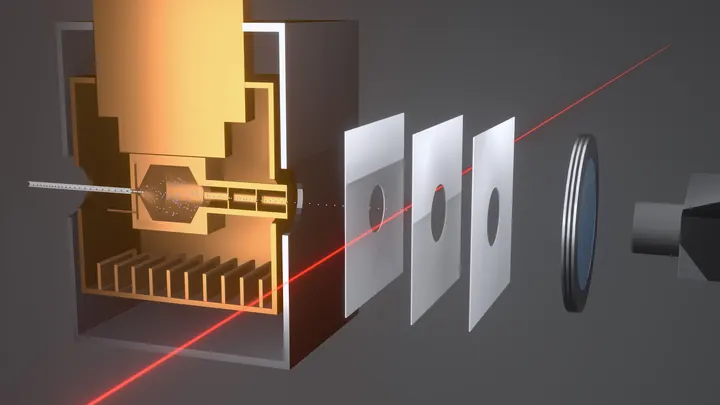
Imagine trying to examine a snowflake without letting it melt or get damaged. That's roughly the challenge facing scientists who want to study individual proteins — the tiny molecular machines of life. In solution, a protein constantly jiggles and clumps with its neighbors, and in an electron microscope, the beam destroys it.
A regular camera captures the world as a series of frames: twenty-four, sixty, or even a hundred images per second. That's enough for filming a falling drop, but inside a living cell, events unfold a thousand times faster. Protein molecules carry cargo, membranes bubble, ions slip through channels — all in fractions of a millisecond.
A standard laser rangefinder works like a stopwatch on a 100-meter dash: it times how long light takes to run to the target and back. But such a stopwatch has a limit: it ticks in steps of tens of picoseconds (trillionths of a second). In that step, light travels about a centimeter, so finer details are invisible.
A superconductor is a material that, when cooled sufficiently, conducts electricity without losses, like water flowing through a perfectly smooth pipe. But if you hit it with a brief flash of light, it quickly loses this property.
Two laser beams, like two pencils, draw an invisible scale on the wall. One tip moves slightly faster than the other, and by the way their strokes alternately coincide and diverge, you can calculate the distance to the wall with an accuracy down to the thickness of a spider's thread.
In the new work, physicists made these two beams work continuously, without pauses.
An X-ray machine at the dentist's office takes a single flat image of a tooth. But if you need to see the insides of a microchip from all sides, you have to take the sample to a synchrotron — an accelerator the size of a football field.
A typical 3D printer squeezes out plastic like a pastry chef piping cream from a bag. Here, instead of plastic, it's light. A laser beam draws in liquid resin, making it solidify at precise points. This creates parts too small to see without a microscope.
Until now, such printers were slow: the beam crawled across the surface like a pen on paper.
A warm cup or a human hand emits invisible light — mid-infrared radiation. Every substance absorbs this light in its own way, leaving a unique 'fingerprint'. From this fingerprint, you can tell what an object is made of without touching it.
Previously, seeing this fingerprint required huge lasers that fired very short pulses. They were expensive and complex.
Cells breathe. They need oxygen, and they take it from the blood flowing through the tiniest vessels. If blood flow is weak or oxygen is scarce, cells start to suffocate. Doctors need to see this as early as possible. But how do you look inside living tissue without cutting it open?
The new device does it in two ways at once.
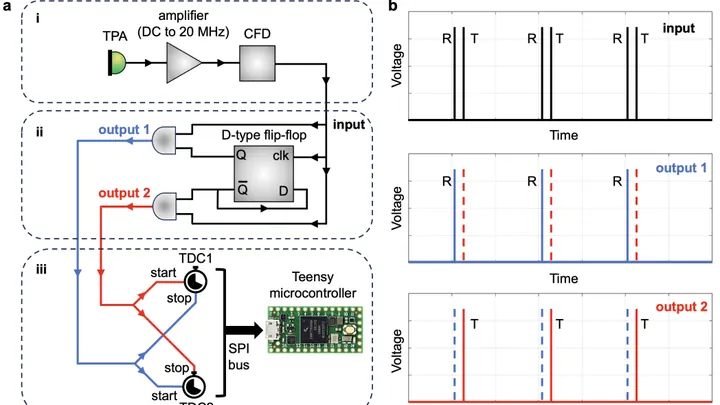
An X-ray image is like a photograph taken in the dark with a very short flash: anything that moves comes out blurred. Conventional X-ray detectors are large arrays of millions of pixels, and by the time they read out one frame, the next is already missed. For a spinning turbine or a beating heart, such sluggishness is a death sentence.
A team of researchers sidestepped this problem by ditching the array altogether.
Shine a flashlight through rough glass, and the wall lights up with a speckled pattern of bright and dark dots. Once dismissed as useless noise, this pattern now serves as the key to reconstructing 3D images.
In the new system, light from an object passes through a specially designed plate with known irregularities.
Entangled photons are like twins: what affects one instantly affects the other, even if they are separated by kilometers. Until recently, observing such a connection required detectors that counted each photon individually in pitch darkness. Physicists simplified the task by swapping them out for a regular scientific camera.