Quantum Threads: How Measurements Weave Connections express
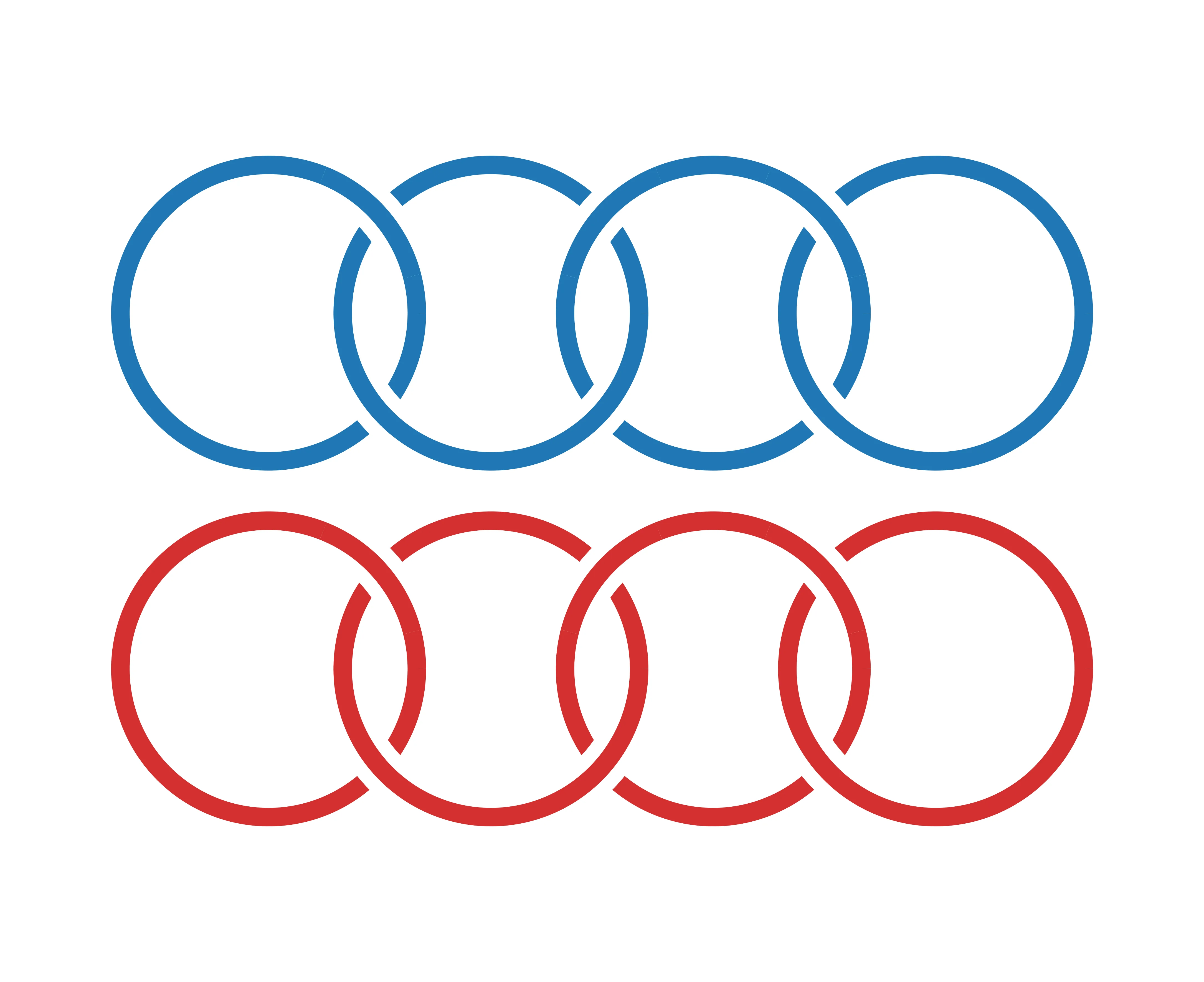
A quantum computer weaves a kind of thread from qubits, where each node is a particle and the connection between them is an entanglement. When a physicist measures a qubit, the thread changes: it breaks somewhere, gets sewn together somewhere else, and sometimes a twist appears on it. The authors of the new work found precise rules for these transformations for the simplest chain — linear, where qubits are arranged in a row.
Measurement along the Z axis acts like scissors: if the qubit is inside the chain, the thread is cut, and if it is at the edge, it simply shortens. Measurement along the X axis, on the contrary, removes the qubit itself but connects its neighbors directly, as if you cut out a link and tied the ends together. The connection is preserved, but in a different way than before.
The complexity arises with measurement along the Y axis: it also preserves the connection but adds a complex phase factor to the state, as if the ribbon received an additional twist, not visible in the usual diagram. To account for this, the authors moved from simple threads to ribbons with markings, where the phase ±i is encoded by a twist of ±90 degrees. Thus, geometry becomes sensitive to what previously escaped.
The whole construction resembles knitting: the order of loops and turns determines the final pattern. For quantum computing, this means that the sequence of measurements can be read as an instruction for weaving, and the properties of quantum entanglement as the topology of the resulting ribbon. The work is limited to one-dimensional chains and measurements in three standard bases, but already here you can see how abstract mathematics of knots becomes a working tool.
The phase ±i in quantum mechanics is a rotation by 90 degrees, and in the ribbon model it becomes a literal twisting of the ribbon, as if you twisted a belt before fastening it.