Topological quantum computation is a model of quantum computing that uses anyons—quasiparticles that exist only in two-dimensional systems—to store and process information. Unlike ordinary particles, anyons have exotic statistics: when two are exchanged, their quantum state changes by a phase or a unitary transformation that depends on the topology of the exchange path, not the details of the trajectory. This topological property makes the information encoded in the braiding of anyons inherently robust against local perturbations, such as noise or decoherence, because the information is stored non-locally in the global structure of the braid.
History
The idea was proposed in the late 1990s by Alexei Kitaev and, independently, by Michael Freedman and collaborators, building on earlier work on anyons and topological quantum field theory. Kitaev's 1997 paper on fault-tolerant quantum computation with anyons laid the foundation, and the concept has since been developed theoretically and experimentally.
How it works
In a topological quantum computer, qubits are encoded in the collective state of a set of anyons, and quantum gates are performed by braiding the anyons around each other in a specific sequence. The result of a computation is determined by the topology of the braid, which is insensitive to small disturbances in the positions or interactions of the anyons. This provides a natural form of error correction: as long as the anyons are kept far apart and the temperature is low enough to prevent unwanted anyon pairs, the quantum information remains protected. The final readout is done by bringing anyons together and measuring their fusion outcomes, which reveals the result of the computation.
In practice
Topological quantum computation is a leading candidate for building fault-tolerant quantum computers, and it is being pursued by companies like Microsoft, which has invested in research on Majorana fermions—a type of anyon—in semiconductor-superconductor heterostructures.
Fun fact
The braiding of anyons in topological quantum computation is mathematically equivalent to the braid group, which is also used to describe how strands of hair or rope can be intertwined, but in this case, the braids perform logical operations.
The quantum world is full of surprises: swap two electrons, and their combined wavefunction just changes sign; swap two photons, and nothing happens at all. But there are particles that behave very differently when exchanged, as if they remember being swapped. These particles are called anyons, and they can only exist in a two-dimensional world.
A laser beam can do more than heat things up: it can also calm motion. When light enters a mirror trap, it exerts pressure on the mirrors, and if you tune the beam's color just right, that pressure becomes a gentle braking force. This is how tiny mechanical vibrations are cooled to nearly absolute zero.
Cut a spin chain, and particles without an energy gap appear at the edges. They are called zero modes, and they live only at the boundary. Previously, they were counted using complex topological invariants, but now there is a simpler way.
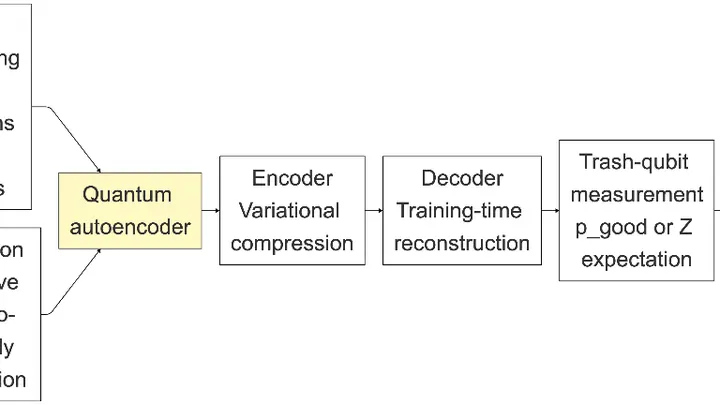
A cook spends years honing the skill of reducing a recipe to three or four essentials and recreating the dish from them. If the ingredients are familiar, the expected meal lands on the plate. A foreign ingredient disrupts compression, and you get something unrecognizable. The Quantum Compressor does the same with medical scans.
A quantum simulator based on ion traps is like an orchestra where each ion is a musician and the phonon bus (the collective vibrations) is the conductor relaying signals. As long as everyone plays the same tune, everything goes smoothly.
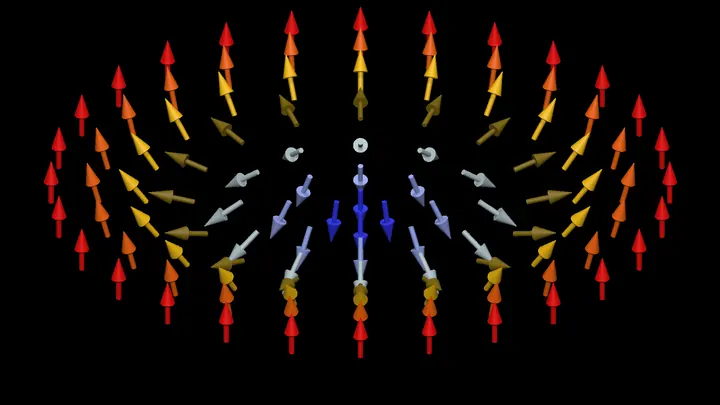
In a field trap, scientists assembled a crystal — 150 ions at ultra-low temperature. Each ion behaves like a tiny magnet, capable of rotating in any direction. By controlling forces that depend on this rotation, physicists made all the magnets swirl into a common vortex called a skyrmion.
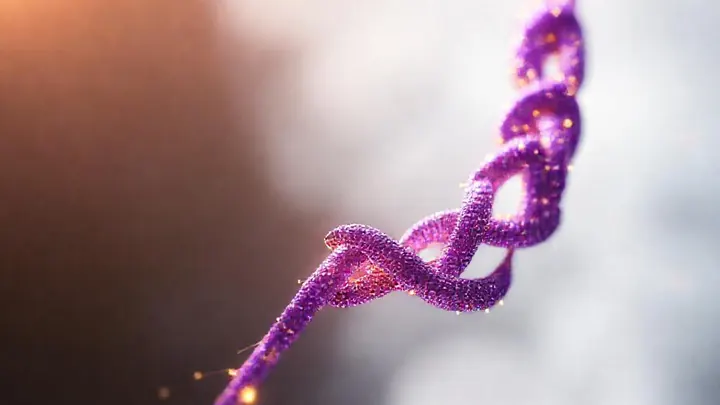
A quantum computer weaves a kind of thread from qubits, where each node is a particle and the connection between them is an entanglement. When a physicist measures a qubit, the thread changes: it breaks somewhere, gets sewn together somewhere else, and sometimes a twist appears on it.
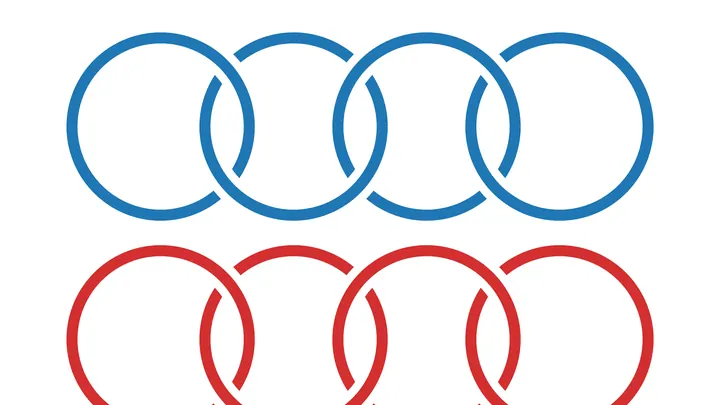
Atoms, like strands in a braid, follow a strict rule: if one strand is 'charged', its neighbors must stay silent. This phenomenon, Rydberg blockade, allows stable quantum patterns to be woven.
In such patterns, topological order emerges: a structure where the overall weaving pattern matters more than individual loops.
Deep inside a superconductor, electrons pair up into Cooper pairs and glide without resistance. But if a vortex appears in this perfect order, a tiny region where superconductivity vanishes, special excitations emerge there: Bogoliubov quasiparticles.