Topological quantum computing is a proposed paradigm for building quantum computers that are inherently resistant to errors. Instead of encoding information in the quantum states of individual particles, it uses anyons—quasiparticles that exist only in two-dimensional systems—whose braiding operations implement quantum gates. The key advantage is that the information is stored non-locally in the global properties of the system, making it immune to local perturbations and decoherence. This approach promises to solve one of the biggest challenges in quantum computing: the fragility of quantum states.
History
The concept was proposed by Alexei Kitaev in 1997 and independently by Michael Freedman and collaborators around the same time. Experimental efforts have focused on realizing Majorana fermions in semiconductor-superconductor heterostructures, with promising but still debated evidence reported in the 2010s.
How it works
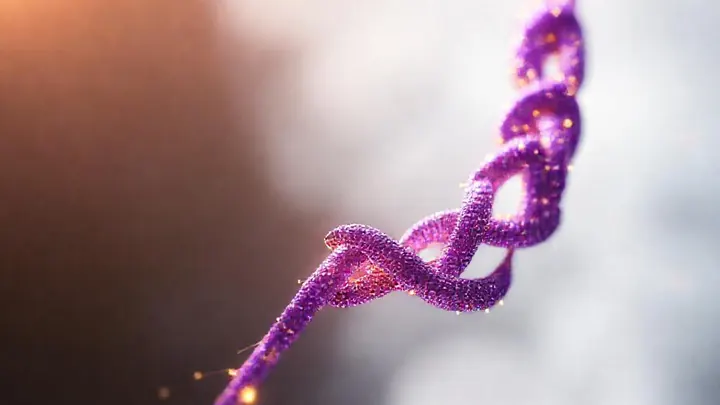
In a topological quantum computer, qubits are encoded in the fusion and braiding of non-abelian anyons, such as Majorana zero modes in certain superconductors. When anyons are exchanged (braided), their quantum state transforms in a way that depends only on the topology of the braid, not on the details of the path. This topological protection means that small local disturbances—like thermal fluctuations or stray fields—cannot alter the computational state. To perform a computation, one creates pairs of anyons, braids them in a specific sequence, and then measures their fusion outcomes to read the result.
In practice
While still experimental, topological quantum computing is being pursued by Microsoft and academic groups, with potential applications in fault-tolerant quantum computation for cryptography, drug discovery, and complex optimization problems.
Fun fact
The braiding of anyons in topological quantum computing is mathematically equivalent to the braid group, which also appears in the study of knots and has deep connections to pure mathematics.
Quantum systems made of many particles are the basis of future computers and secure networks. But the more particles there are, the harder it is to understand how they are arranged: the number of possible states grows like an avalanche. The usual approach, measuring everything, takes an incredibly long time.
The quantum world is full of surprises: swap two electrons, and their combined wavefunction just changes sign; swap two photons, and nothing happens at all. But there are particles that behave very differently when exchanged, as if they remember being swapped. These particles are called anyons, and they can only exist in a two-dimensional world.
In the world of quantum particles, there are introverts — anyons. They are unlike familiar electrons or protons. If you swap two such introverts, they remember the maneuver, as if leaving an invisible trace.
For a long time, identifying quantum phases was like interrogating a witness: you had to reach every corner of the system to uncover its secret. In the era of Landau, order was tied to symmetry breaking and a local parameter — everything plain as day.
In quantum physics, there are theories where everything follows clear proportions, like a musical rhythm that always returns to the beginning of the bar. But there are also 'irrational' theories where the rhythm breaks and predicting the next beat is nearly impossible. One such theory is the compactified boson: a particle lives on a circle, and its behavior depends on the radius of that circle.
Light flows like an invisible river. If you place an obstacle in the stream, the water whirls into eddies. Likewise, specially designed surfaces create light 'whirlpools' that catch nanoparticles like wood chips.
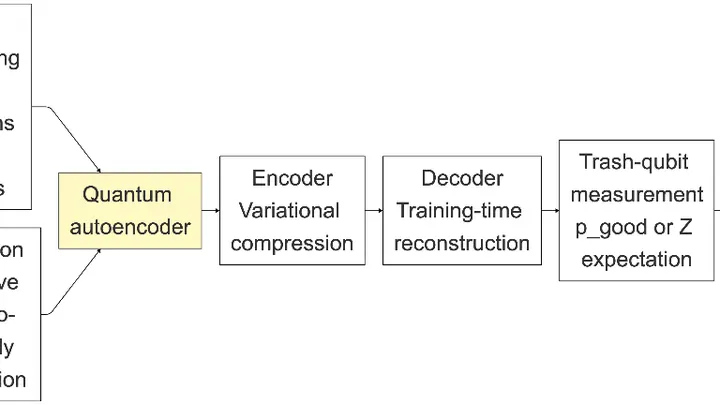
A cook spends years honing the skill of reducing a recipe to three or four essentials and recreating the dish from them. If the ingredients are familiar, the expected meal lands on the plate. A foreign ingredient disrupts compression, and you get something unrecognizable. The Quantum Compressor does the same with medical scans.
Textbooks divide particles into two camps: bosons love to crowd into the same state, fermions absolutely refuse. But nature allows a third option. Anyons are quasiparticles whose behavior lies somewhere in between. They can 'remember' how they were exchanged and obey a nonstandard exclusion principle.
A cloud of rubidium atoms falls into a trap made of light. Lasers and magnetic fields arrange it like a crystal lattice, but the cells here are not fractions of a millimeter: they are fractions of a micrometer.
Two dice always land on the same number, no matter how far apart you toss them. In quantum physics, this behavior is called entanglement, and it's the key resource for future computers and secure communication. The trouble is, not all entanglement is easy to spot.
Two quantum batteries sit far apart, but between them lies a shared cloud of qubits, like a stretched canvas. Alice wants to charge Bob's battery without touching it. Instead of a direct push, she paints a pattern on the canvas, a logical qubit, spending her own energy. Then she sends Bob not the picture itself, but a list of blemishes: where the canvas sagged or warped.
A driver turns the steering wheel to make the car turn. The quantum world also has its own "steering wheels"—external parameters that are slowly varied to shuttle particles from one place to another.
A long string of beads settles into a tiny box — some beads press together, others spread apart. That's the puzzle a protein solves when it folds into a working molecule. Except the beads, amino acids, can number in the hundreds, and every contact between them reshapes the whole structure.
A spoon drops into a cup of hot coffee, and ripples spread across the surface. They show how quickly the disturbance moves away from the point of impact. In the quantum world, physicists look for similar 'ripples on water'—how information spreads along a chain of atoms.
A quantum computer is a finicky instrument. Each measurement of its state is like photographing a fast-moving object: the shorter the exposure, the higher the chance of getting a blurry shot. But if you skillfully process a series of such snapshots, you can reconstruct a clear picture.
That's exactly what the researchers did.
In a cold cloud of atoms chilled to near absolute zero, energies can behave like threads that weave into braids. These braids are not just a pretty image: their pattern is tied to topology, the branch of mathematics that studies properties preserved under continuous deformations.
A rope braided from a hundred short strands can be twisted to the right or to the left. Each strand individually doesn't know which way the whole rope is twisted, but try to unravel it, and the difference immediately shows. That's roughly how the states physicists call symmetry-protected are arranged: locally they are indistinguishable, but globally they are different.
If you compress a plate with accordion-like cells, a kink wave runs through it, like a wrinkle in a rug when you push it with your foot. Such waves can switch the material between two stable shapes, and this is the basis of mechanical memory. But if a table leg gets in the way of the wrinkle, it gets stuck. In a new study, researchers showed how to nudge it loose without brute force.
A quantum computer weaves a kind of thread from qubits, where each node is a particle and the connection between them is an entanglement. When a physicist measures a qubit, the thread changes: it breaks somewhere, gets sewn together somewhere else, and sometimes a twist appears on it.
A superconductor is a material that, at very low temperatures, conducts electricity without losses: electrons move without bumping into each other, like a crowd walking down a perfectly smooth corridor. But turn on a strong magnetic field, and vortices appear inside the superconductor — tiny regions where superconductivity vanishes.
A quantum computer is like a pot of boiling water: particles are jostling around chaotically, and you need to calm them down to get a useful answer. In a new study, physicists have devised a way to cool a chain of 19 quantum spins (tiny magnets) right on a real device.
Atoms, like strands in a braid, follow a strict rule: if one strand is 'charged', its neighbors must stay silent. This phenomenon, Rydberg blockade, allows stable quantum patterns to be woven.
In such patterns, topological order emerges: a structure where the overall weaving pattern matters more than individual loops.
All matter, from stars to humans, is built from particles that in the Standard Model are divided into two families. But there's a third, rare kind — particles that, when swapped, don't just exchange places but tie themselves into a knot, remembering the intertwining rather than the path.
Deep inside a superconductor, electrons pair up into Cooper pairs and glide without resistance. But if a vortex appears in this perfect order, a tiny region where superconductivity vanishes, special excitations emerge there: Bogoliubov quasiparticles.