Cosmic Plasma in a Box express
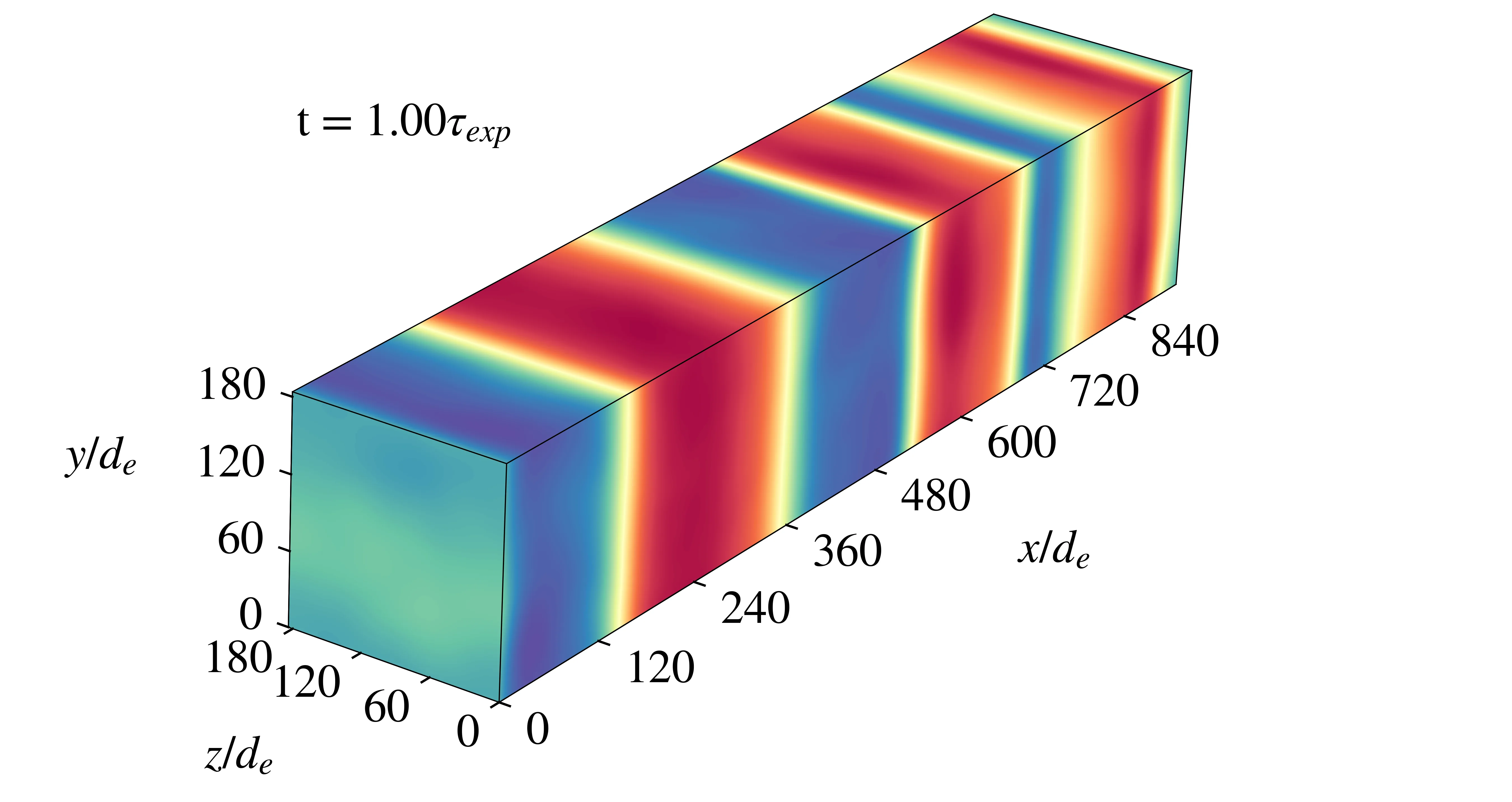
Plasma is a gas in which electrons are stripped from atoms, and it conducts electricity. In space, such gas is often so rarefied that particles rarely collide, and its behavior is described by the equations of motion for each particle. The computer method Particle-in-Cell (PIC) does exactly that: it tracks millions of particles and the electric fields they create.
But space doesn't stand still. Plasma clouds stretch, rotate, and from some regions particles fly away. The new work compiles and improves three techniques that add these effects to PIC models: the "stretching box" for expanding gas, the "shearing box" for rotating disks, and the "leaky box" when particles can leave the region. For each case, the equations are laid out, and new ways to move particles are proposed, similar to the well-known Boris algorithm.
The result is a more honest picture of what happens to plasma in real cosmic conditions — not in a static box, but in a moving, changing universe.
Original abstract
as written by the authors arXiv:2602.15939
Particle-in-Cell (PIC) methods have achieved widespread recognition as simple and flexible approaches to model collisionless plasma physics in fully kinetic simulations of astrophysical environments. However, in many situations the standard PIC algorithm must be extended to include macroscopic effects in microscale simulations. For plasmas subjected to shearing or expansion, shearing-box and expanding-box methods can be incorporated into PIC to account for these global effects. For plasmas subjected to local acceleration in confined regions of space, a leaky-box method can allow closed-box PIC simulations to account for particle escape from the accelerator region. In this work, we review and improve methods to include shearing, expansion, and escape in PIC simulations. We provide the numerical details of how Maxwell's equations and the particle equations of motion are solved in each case, and introduce generalized Boris-like particle pushers to solve the momentum equation in the presence of extra forces. This work is intended to serve as a comprehensive reference for the implementation of shearing-box, expanding-box, and leaky-box algorithms in PIC.
The Particle-in-Cell method is used not only in astrophysics: it helps design plasma thrusters for satellites and even model plasma in fusion reactors.