Peeking Inside a Battery Without Taking It Apart express
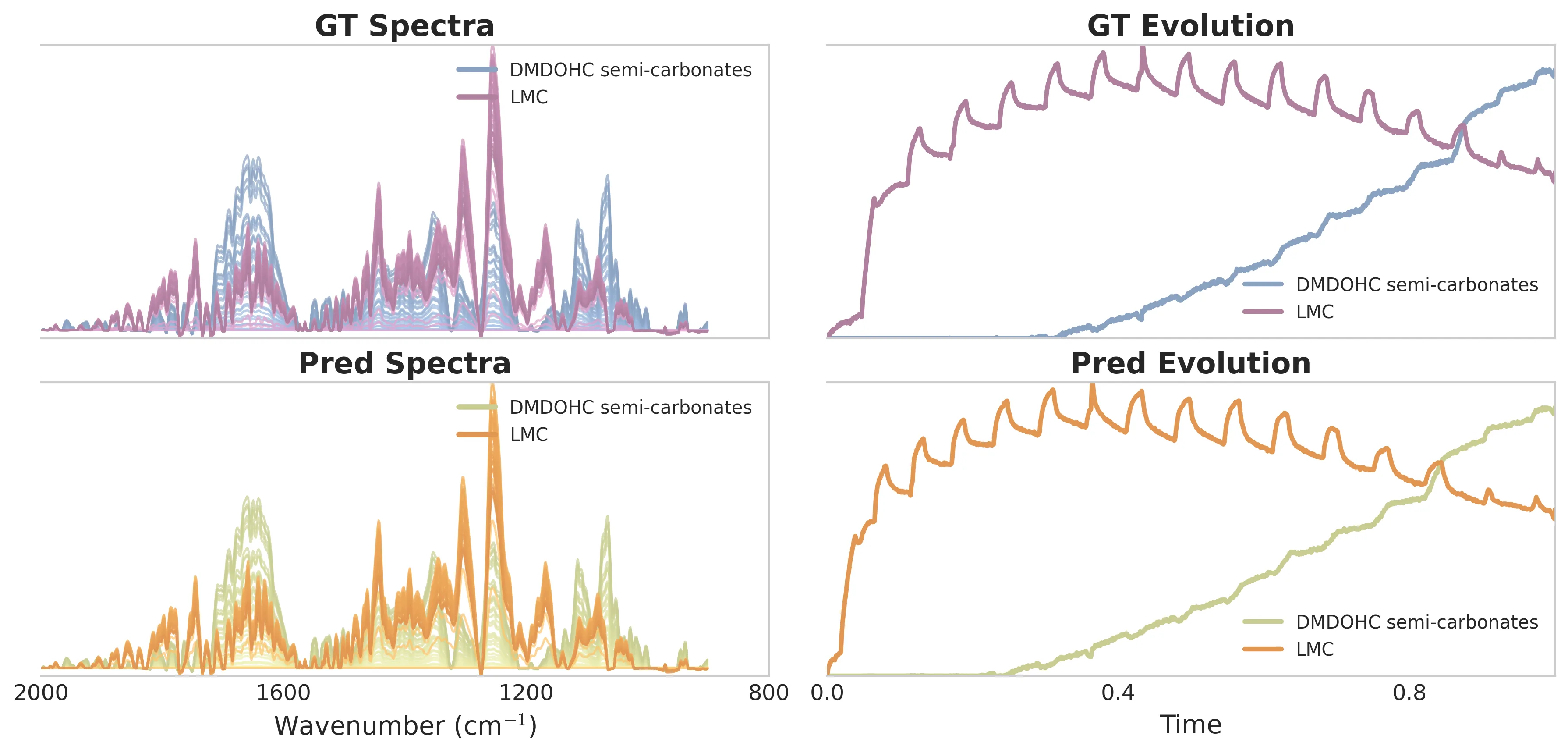
The battery in your phone or electric car is a tiny chemical factory. Inside, lithium ions shuttle between two electrodes, and at the boundary with the liquid electrolyte, a thin film forms: it determines how long the battery will last. This film is called the solid-electrolyte interphase. Seeing it directly is tricky: it's thinner than a human hair and changes with every charge.
Chemists can track it using infrared spectroscopy, as if we were listening to the 'notes' the film plays when light passes through it. But real-time imaging is expensive and requires complex equipment. So the authors of the new study made a clever move: they collected 7118 spectra from ten different battery types and trained a neural network to predict how the film's 'music' would change over time, given only a single static snapshot.
The model, named ABCC, works like a translator from the language of chemistry to the language of prediction. It doesn't just memorize similar cases; it incorporates physical laws — for instance, that mass is conserved and that peaks in the spectrum shift in a strictly defined manner. This allows it to distinguish what belongs to the solvent and what to the film itself, and to predict how the protective layer will grow.
Tests showed that ABCC outperforms all existing methods — both those that work with static images and those that analyze sequences. Crucially, the model can transfer knowledge to unfamiliar battery types it never saw during training. This means engineers can quickly optimize electrolyte composition and additives without spending months at a spectrometer. In this way, artificial intelligence becomes another tool in the electrochemist's workshop.
The solid-electrolyte film in a battery is so thin that its thickness is measured in nanometers — thousands of times thinner than a human hair. Yet it decides whether a battery lasts a year or ten years.