Spectral analysis with artificial intelligence combines the traditional technique of splitting light (or other radiation) into its component wavelengths with machine learning algorithms that can recognize patterns in the resulting spectra. Spectra are like fingerprints: every element, molecule, or physical process leaves a unique signature in the light it emits or absorbs. AI is used to classify these signatures, identify rare objects, or enhance the resolution of spectral data, making it possible to analyze vast datasets from telescopes or quantum experiments that would be overwhelming for human researchers.
History
The use of computers to analyze spectra dates back to the 1960s, but the application of deep learning to astronomical spectra became prominent in the 2010s with the rise of large sky surveys like SDSS and the availability of powerful GPUs.
How it works
A spectrometer captures light and spreads it out into a spectrum, which is recorded as a series of intensity values at different wavelengths. Instead of manually comparing this spectrum to known templates, a neural network is trained on thousands of labeled examples to learn the subtle patterns that distinguish, say, a black hole from a neutron star, or a young star from an old one. Once trained, the AI can instantly classify new spectra, even those with low signal-to-noise ratios, and can sometimes infer physical properties like temperature, velocity, or chemical composition.
In practice
Used in astronomy to automatically classify millions of galaxies and stars from survey data, and in quantum optics to interpret the spectra of exotic materials or single-photon sources.
Fun fact
AI spectral analysis can sometimes identify a star's age just from the subtle shape of its spectral lines, something that previously required complex physical modeling.
A storm in the upper atmosphere lasts a few millionths of a second. A cosmic ray, a proton or a helium nucleus, strikes air molecules, sending a swarm of particles downward. Most of them stay together, but occasionally one particle gains so much energy that it surges ahead.
The instrument shines an infrared beam at a sample, and molecules respond with their own absorption pattern, like bells of different tones. This pattern, the spectrum, holds information about the chemical composition. But to read it, a specialist usually consults a library of reference records, which is slow and not always possible.
Assembling the puzzle of the Universe, astronomers are used to every new detail fitting perfectly into the already completed picture. But sometimes there are pieces that seem cut from another jigsaw. Twenty thousand active galactic nuclei, and eleven percent of them the neural network confidently rejects as alien.
An artist makes a quick charcoal sketch, and the face in the portrait is already recognizable. Astrophysicists face a similar challenge: the spectrum of a star is its individual portrait, revealing temperature, composition, and gravity.
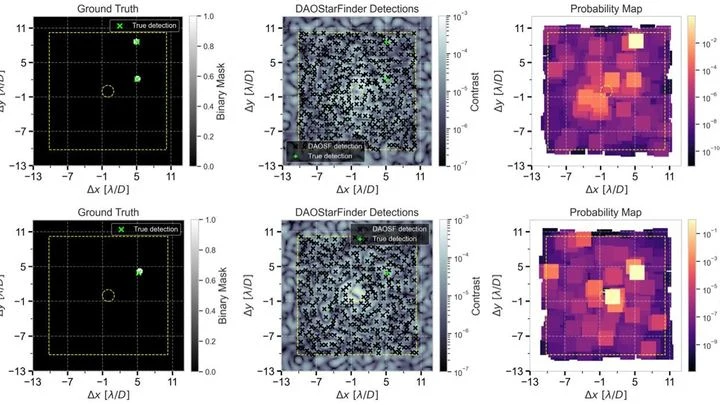
A pebble on a streambed lies still as sunlight sparkles dance on the water's surface. In astronomy, the contrast is similar: a real exoplanet is the stone, while myriad speckles (patches of scattered starlight) are the ripples trembling in instruments.
A single-pixel camera works like an artist creating a picture through a stencil with many holes. In each frame, only a portion of the light, modulated by a mask, a spatial light modulator, reaches the single sensor, and then the computer reconstructs the full image by assembling this mosaic with computational algorithms.
The gamma sky, captured by the Fermi telescope, is a grand symphony of thousands of sources. Here, the rhythmic pulsations of pulsars, the powerful chords of active galactic nuclei, but most of all — unidentified objects, whose part remains a mystery.
3I/ATLAS burst into the Solar System like an uninvited guest, a gift of fate for hunters of extraterrestrial intelligence. This comet-like wanderer from the depths of the Galaxy flew close enough to be heard in all its details — unlike distant exoplanets.
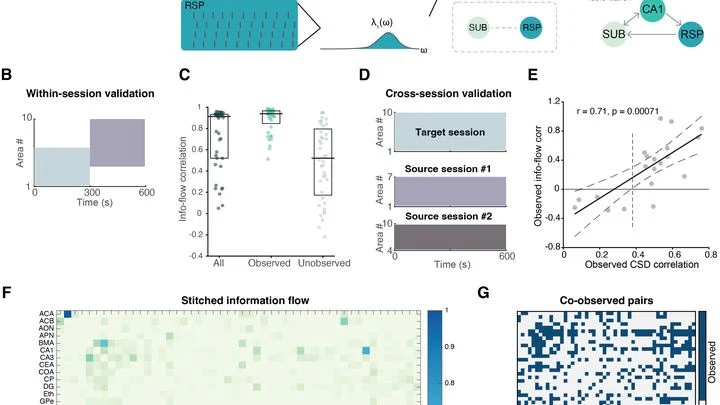
A patchwork quilt where each patch is a recording of activity from a small brain region. One patch was stitched on Monday in London, another on Tuesday in New York, and a third a month ago in Tokyo. This mosaic covers the brain only partially, and there is no common seam to join them.
Solar flares are powerful explosions on the Sun that can knock out satellites and blackout cities. Predicting them is complicated by the tangled magnetic fields in sunspots.
After a merger, the newborn black hole emits a fading tremble — gravitational waves, similar to a ringing bell. By analyzing the overtones of this signal, spectroscopy can determine its mass and spin rate.
A spectrum is like a photograph of a material's inner workings, taken with light. When a beam passes through or reflects off a sample, molecules leave characteristic dark bands, peaks, on that photograph. But if the image is overexposed or veiled in gray, making out details becomes nearly impossible.
For decades, the search for extraterrestrial intelligence has waited for quiet, coherent signals from space — a kind of 'whistle' in the radio silence. However, our own technosphere has created a continuous radio background — the hum of a vast metropolis, emitted by all communications, radars, and broadcasting stations.
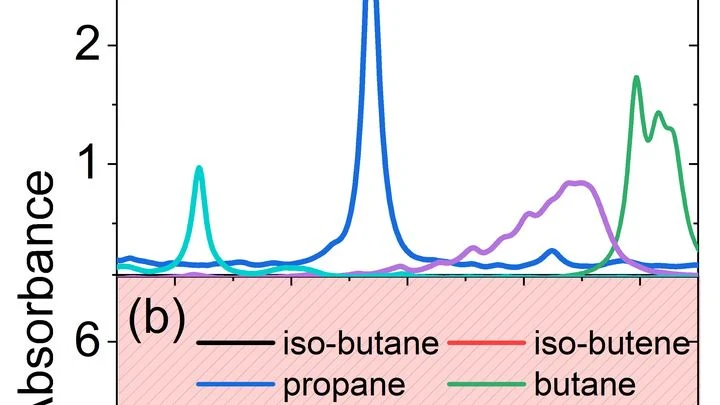
A hundred people are talking at once in a large hall. You try to hear one, but voices blend, some whisper, and you don't even suspect the existence of others. That's roughly how a conventional laser gas analyzer feels when dozens of substances mix in a combustion chamber or a factory pipe.
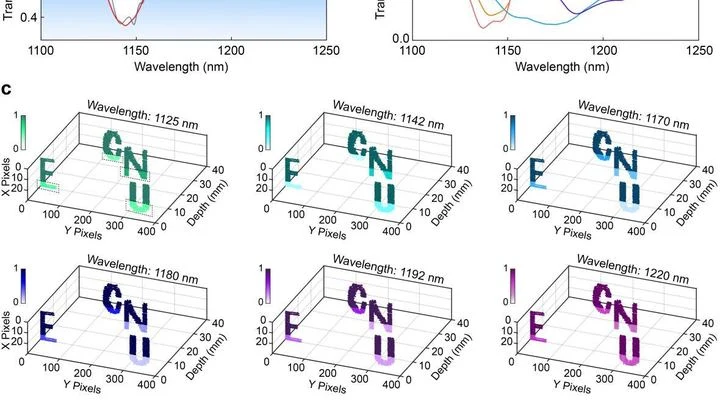
A conventional lidar is like an artist who paints a landscape but sees only gray shadows. It measures distances to each point accurately, but can't tell whether it's looking at rock, wood, or plastic. To learn the composition, you need a spectrometer — a separate device that works slowly and can't keep up with a fast scanner.
The new system takes a different approach.
Hot massive stars are the kitchens of the Universe, where heavy elements are cooked up. They end their lives in supernova explosions. To understand their recipe, astronomers use spectroscopy — the analysis of the rainbow band of light passed through a prism. Previously, deciphering such a 'menu' took hours.
A laser flash lasts a few femtoseconds — imagine a single instant stretched into a million parts. Such a flash mixes many colors, from red to violet. Instruments that measure the pulse shape often err: they see some colors well and others poorly, blurring the picture.
The authors propose a simple fix.
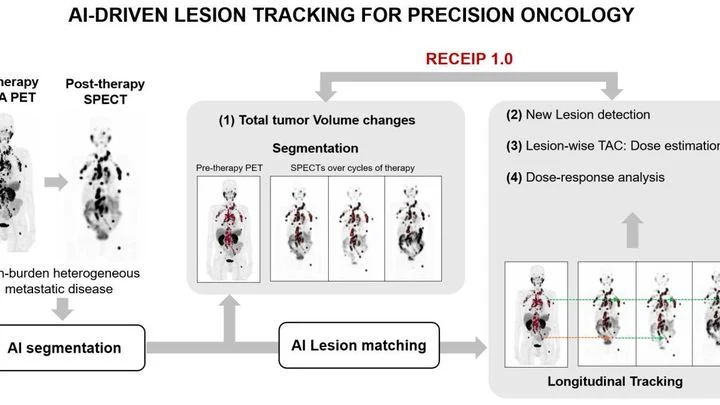
When treating prostate cancer, doctors often see not one tumor but many lesions in bones and lymph nodes. Each lesion can respond to therapy differently: one shrinks, another stays the same, a third grows. Previously, the disease was assessed as a whole, like judging the weather by the average temperature over a year.
A finger is illuminated with a laser beam, and some of the light returns after traveling inside. That's how Raman spectroscopy works: molecules in bone and skin alter the color of the reflected beam differently, leaving their chemical fingerprints. But skin, muscle, and fat are noisy: their signal drowns out the bone's, like a crowd's chatter overpowering a single singer.
To spot a dim star above a brightly lit city, astronomers subtract one image from another — removing the glare of streetlights. They do the same with living neurons: their faint flashes drown in noise, but if you subtract everything unchanging, only they remain.
The battery in your phone or electric car is a tiny chemical factory. Inside, lithium ions shuttle between two electrodes, and at the boundary with the liquid electrolyte, a thin film forms: it determines how long the battery will last. This film is called the solid-electrolyte interphase.
Light from a distant star, after passing through air and telescope lenses, loses its sharpness, like looking at a streetlamp through wet glass. Astronomers call this blur the telescope's "fingerprint": each instrument has its own, and you need to know it down to the smallest detail.
A charged particle spiraling in a magnetic field doesn't stay silent: it emits light. This light is called synchrotron radiation, and it shows up everywhere — from distant galaxies to laboratory accelerators.
Imagine a vast field of fireflies, each flashing alone rather than in a swarm: that's what the new automated setup is hunting for. It sweeps a laser across the sample like a flashlight and records the color and brightness of the glow at every spot.
Infrared light with a wavelength of about three micrometers is the working range for identifying molecules: each molecule absorbs light at its own characteristic frequencies, leaving behind "fingerprints." But until now, instruments for this range could not simultaneously provide broad frequency coverage, sufficient power, and…
The scorching gas streaming from the Sun is not a continuous flow but rather a soup of charged particles. In this soup, waves constantly boil up: electric fields flare and fade like ripples on water from a tossed stone. One such wave is the ion-ion acoustic wave.
The light of a star is stretched into a rainbow band. Dark lines — scars from absorbed elements, bright peaks — traces of hot gas. That’s a spectrum, the astronomer’s key piece of evidence. Cecilia Payne-Gaposchkin was the first to read that almost all stars are made of hydrogen.
A laser hits tissue, and the tissue responds with a barely audible click — a sound wave. Sensors pick it up, and from that, an image of what's inside is built. That's how photoacoustic imaging works: light reaches deep, and sound carries the picture out.
In the new scheme, there are no sensors. Instead, several thin light beams are sent through the area where the wave has passed.
Graphs are considered identical if their 'terrain' matches. Imagine two maps with mountains and valleys: even if drawn differently, the heights and steepness of slopes can be the same.
A star trembles like a bell after being struck. These tremors, tiny fluctuations in brightness and surface, can be caught by a telescope. From the frequencies of these 'stellar notes,' astronomers infer what's happening inside: how old the star is, how it's structured.
In 2008, a group of physicists spent months of supercomputer time to compute a single quantity in quantum gravity theory. This is the vertex amplitude of spinfoam, a number that sets the probability of a local quantum transition of spacetime.
An orchestra plays a complex piece, and each group of instruments enters on its own schedule. The violins might slow down while the woodwinds keep the same tempo, and the percussion might suddenly burst into a roll. The conductor hears everything at once, but pinpointing the exact moment when the flutes, not the cellos, changed rhythm is nearly impossible.