A Quantum Orchestra on a Superconducting Chip
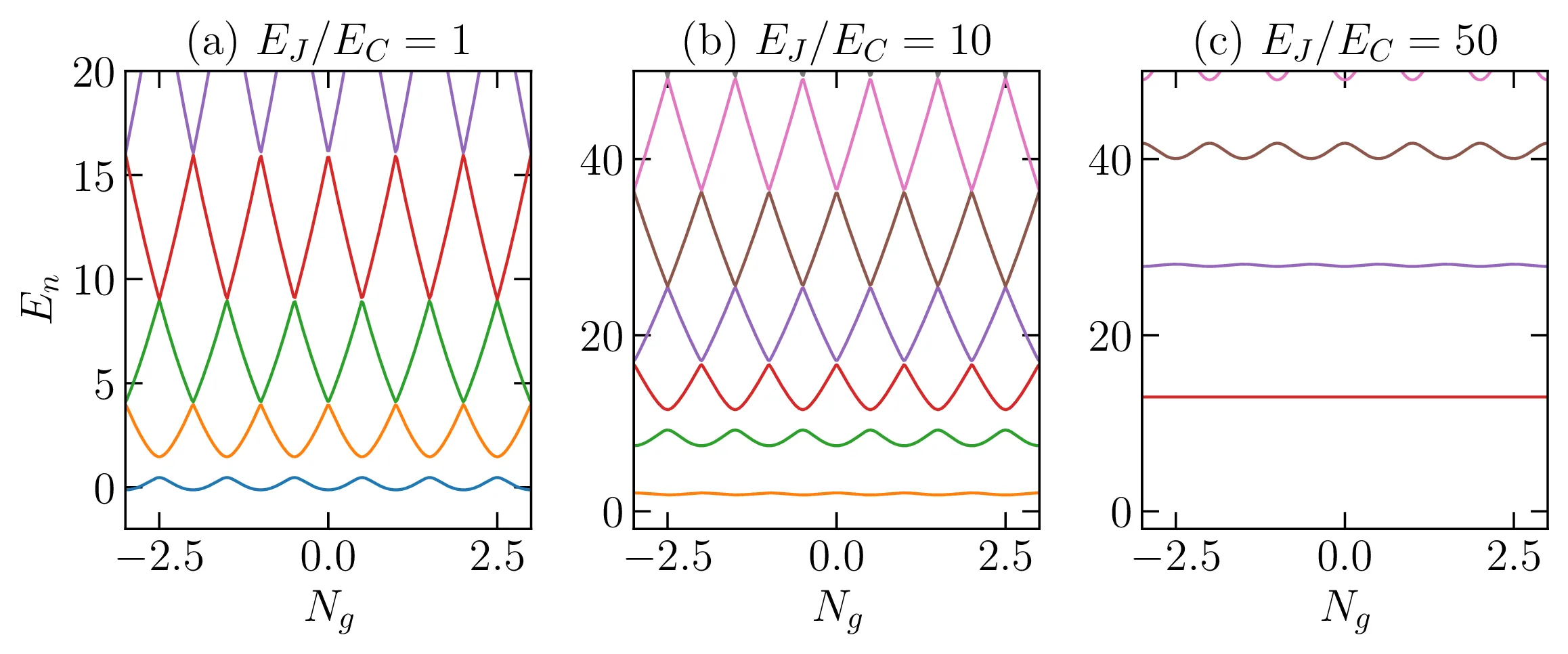
Tuning a quantum orchestra begins not with notes but with silence: a superconducting circuit is cooled almost to absolute zero, and thermal noise freezes inside it. In that silence, billions of electrons pair up into Cooper pairs and start moving as a single entity, like musicians playing in unison. Thus an artificial atom is born: a qubit that can be tuned by changing the gate voltage, much as a conductor adjusts pitch by turning the violin's pegs.
In an ordinary atom, energy levels are set by nature, but in a superconducting qubit they can be rearranged at will. This makes it possible to create a three-level system resembling a three-step staircase. If you shine two microwave pulses on such a system, you can achieve a striking effect: the medium becomes transparent to one of the beams, even though without the second beam it would have absorbed it. This effect, known as electromagnetically induced transparency, was previously observed only in gases, and now it is reproduced on a chip.
One of the most elegant protocols is stimulated Raman adiabatic passage, or STIRAP. Its idea is like moving a passenger from one platform to another via a train that never stops. The passenger does not board the train but ends up directly on the desired platform if the two pulses are synchronized. In the quantum version, population transfers from the first level to the third without occupying the intermediate second level. This matters because the intermediate state often lives briefly and loses coherence. The accelerated version of STIRAP adds a third pulse that compensates for unwanted transitions, much as a corrector in an orchestra fixes off-key notes. As a result, population transfer can be performed faster without losing accuracy.
The quantum orchestra of superconducting circuits is no longer playing for beauty alone. The same protocols that allow control of populations form the basis of quantum gates, quantum memory, and single-photon sources. Once atoms were the only musicians in this ensemble, but now they are joined by man-made instruments that can be stamped out in a factory like microchips. The silence of absolute zero has filled with the music of quantum states, and the baton of pulses is conducting it with ever greater confidence.
A superconducting qubit the size of a microchip behaves like a single atom, even though it consists of billions of electrons bound into Cooper pairs. Its energy levels can be tuned simply by changing the gate voltage.
The idea of macroscopic quantum states echoes Greg Egan's novel Quarantine, where quantum effects reach the level of the everyday world. Here, superconducting circuits allow quantum coherence to be observed in objects visible to the naked eye.