Quantum Coherence in Superconducting Circuits
Context
The work sits at the intersection of quantum optics and superconducting electronics. Nearby in the archive are studies of quantum coherence microscopes, magnetic vortices as qubits, universal control of light in cavities, and cryoelectronics for qubit control at 4 Kelvin. All of them address a common challenge: how to transfer coherent control methods proven on atoms to scalable solid-state platforms. This review systematizes the foundation, from field quantization to specific protocols for population control, drawing on Josephson junctions and circuit quantum electrodynamics.
Methods
The authors build a theoretical framework step by step: they quantize the electromagnetic field in vacuum, the LC circuit, and a one-dimensional transmission line; introduce dissipation via the Lindblad equation; describe two-level systems and superconducting qubits (charge, flux, and phase). Then they move on to multilevel circuit quantum electrodynamics: the Jaynes-Cummings model for a transmon coupled to an LC oscillator, and the engineering of a three-level system in the basis of doubly dressed polaritons. On this basis, they analyze EIT, ATS, STIRAP, and its accelerated variant saSTIRAP with counterdiabatic driving.
Results
It is shown that in the doubly dressed polariton basis, all dipole-allowed transitions of a closed three-level system can be realized. This makes it possible to observe electromagnetically induced transparency and Autler-Townes splitting, as well as to perform coherent population transfer between states |1⟩ and |2⟩ without populating the intermediate state |3⟩. The saSTIRAP protocol with counterdiabatic driving proves faster and more robust than conventional STIRAP: with pulse durations on the order of tens of nanoseconds, high transfer efficiency is achieved. Key numbers: typical coherence times of transmons reach milliseconds, and the qubit-resonator coupling in the strong regime exceeds the decoherence rate.
Implications
Unlike neighboring works, where coherence is studied at the level of individual qubits or cavities, here a holistic recipe is proposed for engineering three-level systems from dressed states. This allows a unified approach to quantum-optical phenomena in superconducting circuits. The work follows the general trend but stands out for its systematic nature: from field quantization to specific control protocols. Such a foundation facilitates the transfer of quantum optics methods to scalable solid-state architectures.
Future development
The topic may develop toward integrating superconducting circuits with other quantum systems: nanomechanics, magnonics, NV centers in diamond, and quantum dots. Hybrid schemes will make it possible to combine the strengths of different platforms. Also promising is the use of STIRAP-like protocols for generating entangled states and error-resilient quantum gates.
Impact
The results will influence the development of quantum computing, quantum memory, and microwave photonics. They are also useful for quantum metrology and simulation of complex systems.
Next steps
Experimental realization of saSTIRAP in superconducting circuits with high precision and verification of noise resilience. Study of the scalability of the protocols to multiqubit systems.
Key open problems
The work is directly related to the problem of decoherence in superconducting qubits. Controlling coherence through dressed states and accelerated adiabatic protocols is one of the paths to fault-tolerant quantum computing. The problem of scalability of quantum processors is also addressed by using multilevel systems.
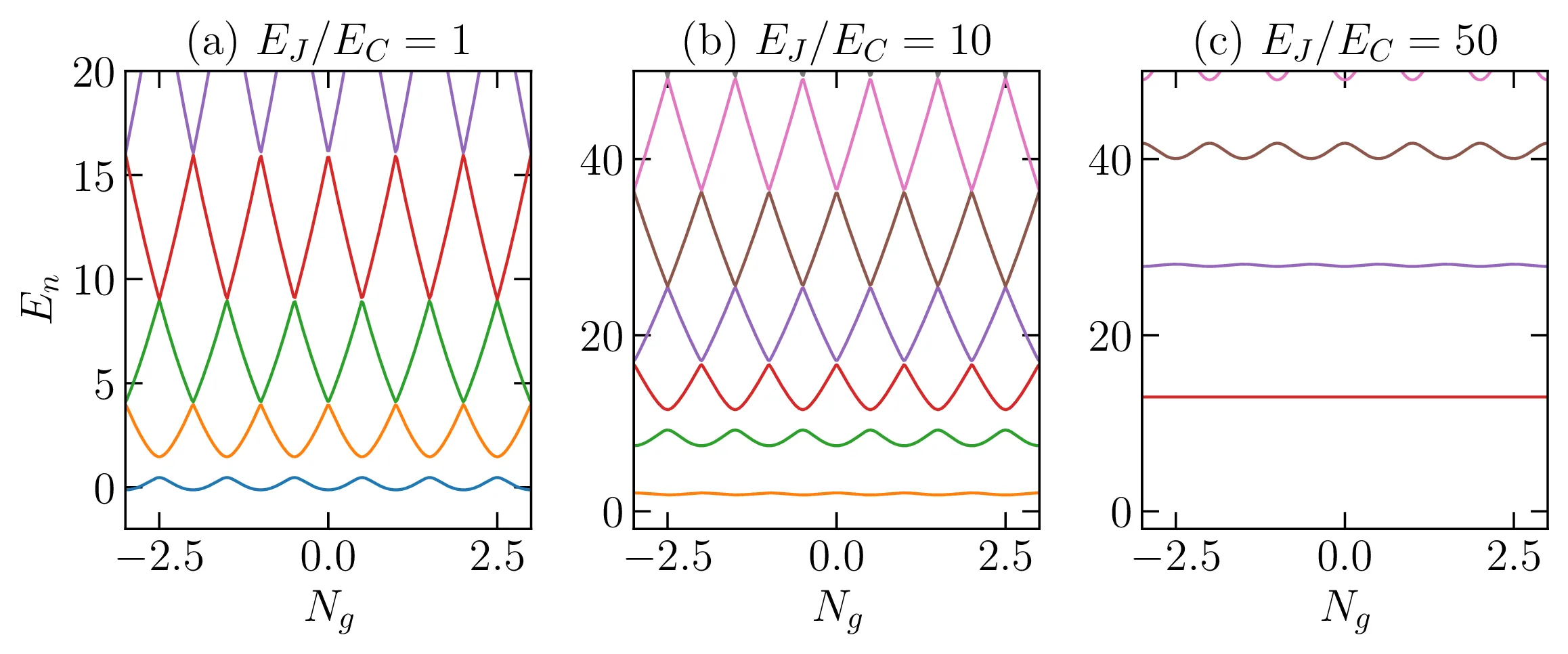
A superconducting qubit the size of a microchip behaves like a single atom, even though it consists of billions of electrons bound into Cooper pairs. Its energy levels can be tuned simply by changing the gate voltage.
The idea of macroscopic quantum states echoes Greg Egan's novel Quarantine, where quantum effects reach the level of the everyday world. Here, superconducting circuits allow quantum coherence to be observed in objects visible to the naked eye.
Key numbers
- transmon coherence time: up to milliseconds
- pulse duration in saSTIRAP: tens of nanoseconds
- typical qubit frequency: a few gigahertz
- superconducting resistance quantum: about 6453 Ohm
- transmon anharmonicity: negative, on the order of hundreds of megahertz