Randomness Without Trust express
A coin toss seems random, but in reality, physics decides everything: the force of the throw, air resistance, the surface's elasticity. If you knew all the details, you could predict the outcome. True randomness lives deeper — in the quantum world. There, a particle has no definite state until you measure it, and the measurement outcome cannot be predicted in advance. It's as if a coin, while in the air, is neither heads nor tails, but becomes one or the other only at the moment it lands.
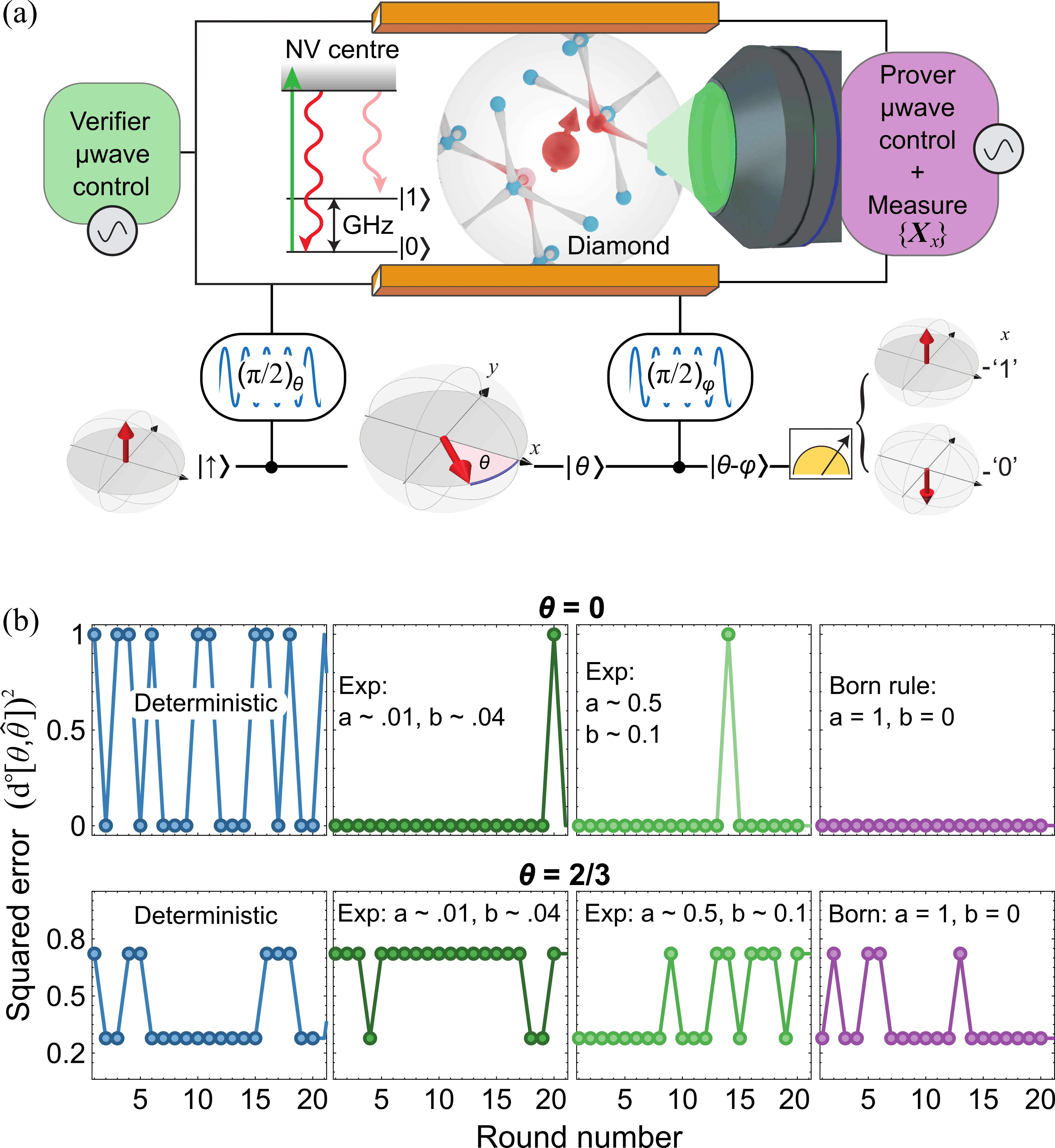
The problem is that trusting someone else's random number generator is risky. What if it's feeding you a pre-arranged sequence? Previously, to verify randomness, you had to know how the device worked and trust that it hadn't been tampered with. The authors of the new work did it differently. They built a test that acts like a strict examiner: even if the device itself is a cheater with unlimited computational power, it cannot pass off its data as random. The test is based on measurements of single quantum particles, and it doesn't need an initial random key.
This achievement matters for cryptography, where random numbers protect our passwords and bank transfers. If a random number generator can be certified without trusting it, then even the equipment manufacturer couldn't embed a secret predictable mechanism. Randomness becomes a commodity whose quality can be verified, like the purity of gold at a pawnshop.
Quantum randomness is so fundamental that even Albert Einstein doubted it, saying, 'God does not play dice.' However, numerous experiments have confirmed: He does, and how.