A random number generator (RNG) is a device or algorithm that produces sequences of numbers with no predictable pattern. In physics and technology, randomness is not just a nuisance—it is a resource. Quantum random number generators (QRNGs) exploit the inherent unpredictability of quantum measurements, such as the arrival times of photons or the phase noise of laser light, to produce numbers that are fundamentally random, not just pseudo-random. This is distinct from algorithmic generators, which are deterministic and only appear random if you do not know the seed.
History
The concept of using quantum processes for randomness dates back to the early 20th century, but practical quantum RNGs were developed in the 1990s. The first commercial QRNG was introduced by ID Quantique in 2001, based on photon arrival times.
How it works
A typical quantum RNG uses a beam splitter: a single photon arriving at a half-silvered mirror has a 50% chance of being transmitted and 50% of being reflected. Detecting which path the photon took yields a random bit. In practice, sources are often not single-photon but attenuated laser pulses, and the randomness is extracted from the timing or intensity fluctuations of the detected signal. The key is that the measurement outcome is fundamentally undetermined until the moment of detection, due to the superposition principle. The raw data may have biases, so post-processing (e.g., hashing) is applied to distill a uniform random sequence.
In practice
Cryptographic key generation, secure communications (quantum key distribution), and high-stakes Monte Carlo simulations where true randomness is required.
Fun fact
The output of a quantum RNG is not just unpredictable in practice—it is unpredictable in principle, because the laws of quantum mechanics forbid any hidden variable that could determine the outcome in advance.
In the depths of the Universe, when a massive star collapses into a black hole or a magnetar is born, a gamma-ray burst flares up — for an instant, it outshines all the stars in the observable Universe.
In 1981, Alan Guth proposed a scenario of cosmological inflation — a lightning-fast expansion of space that stretched quantum fluctuations to the scale of entire galaxies. Since then, cosmologists, like archaeologists, have been excavating this event from the structures of the Universe.
Picking out a single faulty microchip from a million, without any clue what the fault looks like, is a classic needle-in-a-haystack problem. A classical computer would test each chip one by one.
Conventional neural networks learn from thousands of examples, burning hours and gigawatts. Physicists have found a quantum workaround. As early as Max Planck showed the discreteness of energy, today this allows generation without training.
Molecules float in a test tube. Their abundance (say, the concentration of some protein) becomes the input signal. And the output isn't just a cloudy solution but a clear yes-or-no answer.
The authors build a chemical cascade that does exactly that.
Before assembling a huge puzzle, you need to stamp out the pieces — otherwise the picture won't come together. In fusion-based quantum computers, the role of such pieces is played by tiny clumps of light — photonic resource states. They are collided and measured to gradually grow the computational fabric.
A laser that usually produces a steady beam starts to tremble near its threshold, like a string about to sound. This trembling is not a defect but quantum noise: atoms inside the laser emit light randomly, without any external cause.
Ordinary light is like a crowd in a square: each photon moves on its own, bumping into others and scattering. But in some media, photons start running together like a pack of dogs: they bunch up. Scientists have built a random fiber laser where light particles gather into especially dense clusters.
A coin toss seems random, but in reality, physics decides everything: the force of the throw, air resistance, the surface's elasticity. If you knew all the details, you could predict the outcome. True randomness lives deeper — in the quantum world.
A powerful laser strikes a semiconductor, and it responds with light at many frequencies, like a string sounding a chorus of overtones. Previously, this was used in spectroscopy to observe ultrafast processes. But now physicists have noticed: the overtones are not independent; they behave as if connected by invisible threads.
A tossed coin is the simplest source of randomness. But if the coin is shaved, it starts cheating. In the quantum world, light plays the role of the coin: its properties are fundamentally unpredictable. The catch is that the device that “flips” the quantum coin might be faulty or even swapped by an adversary.
A random fiber laser is a thin glass thread through which light travels, but instead of reflecting off mirrors, it reflects off the tiniest irregularities in the fiber itself. Such a laser doesn't produce a steady beam: its light flickers and flares like a candle flame in a draft.
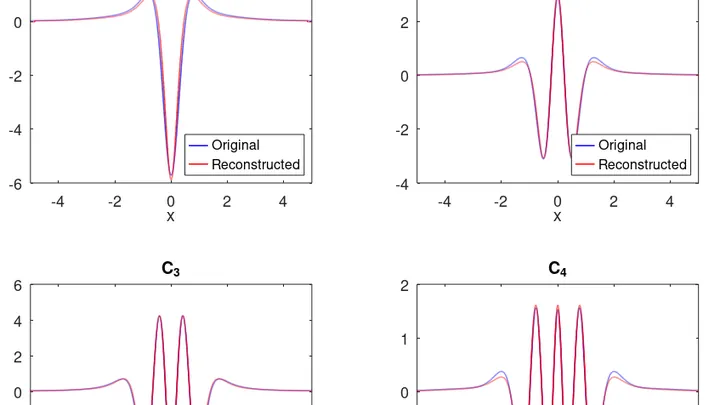
Physicists have created a quantum analogue of a musical instrument. Its “notes”—the allowed energy levels — precisely replicate the first numbers from a set that governs the distribution of primes. These numbers are the imaginary parts of the zeros of the famous Riemann zeta function, a mathematical object inextricably linked to prime numbers.
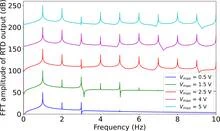
In 1974, physicists first described a device in which electrons pass through an energy barrier thanks to quantum tunneling. Today, that device, the resonant tunneling diode, is becoming the heart of an unusual computing architecture.