Tiny Islands and Invisible Barriers express
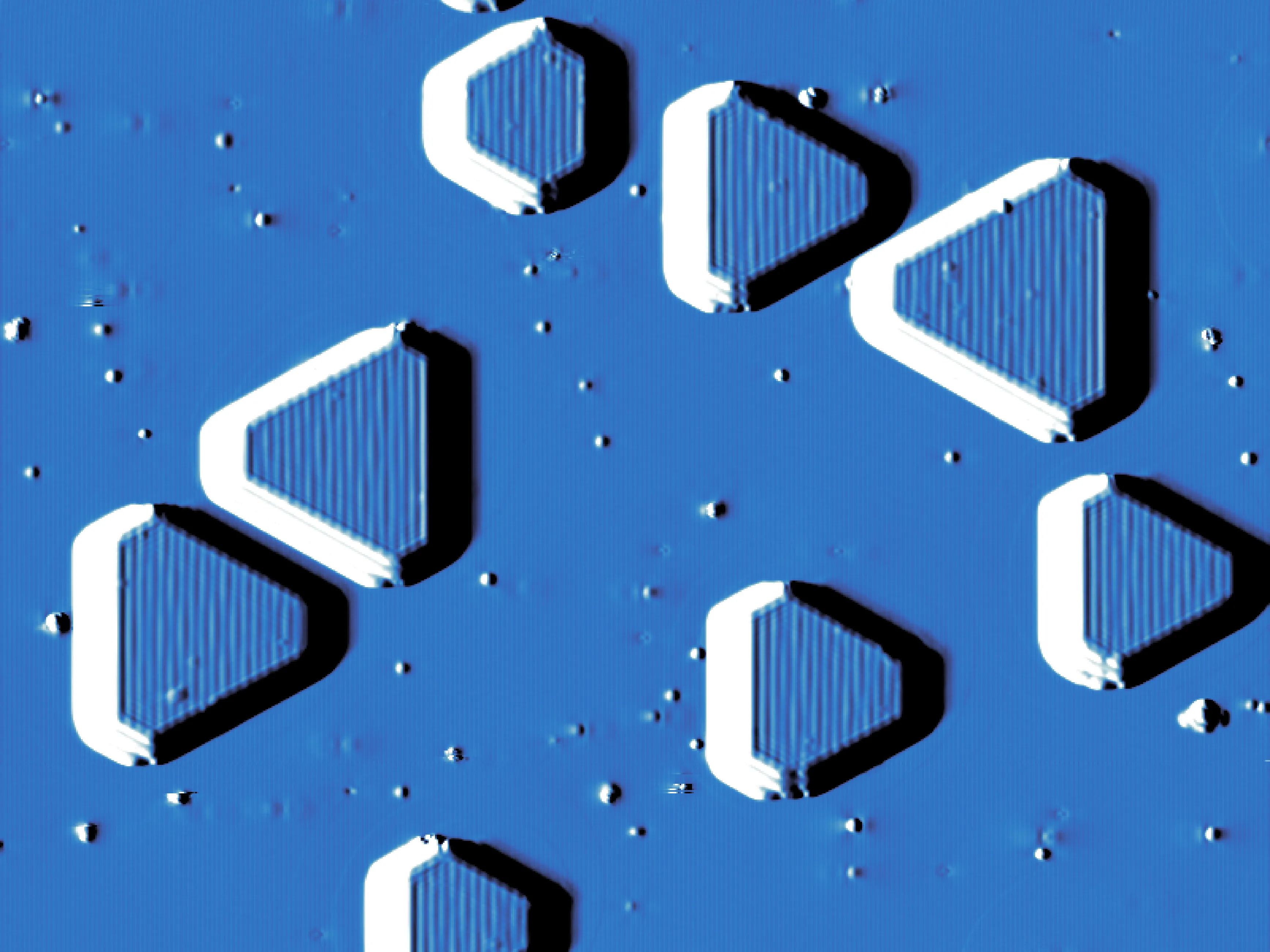
A drop of metal on a semiconductor is like an island in the sea. For an electron to reach that island, it must pay a "toll": overcome a barrier that arises because the island is tiny, and each extra charge significantly changes its energy. This phenomenon is called Coulomb blockade. It underpins single-electron transistors, where current flows one electron at a time.
Scientists studied indium islands on black phosphorus using a scanning tunneling microscope — a device that probes the surface with a needle at distances less than a nanometer. They observed that the barrier for electrons is not uniform across the island: at different points, it is shifted in voltage and curved differently. Comparing with calculations, the researchers realized the cause: the island and the substrate have different "work functions"—the energy needed for an electron to escape from the material. This makes the electric field around the island asymmetric.
So, for precise tuning of future single-electron devices, one must consider not only the size of the islands but also how they pair with the substrate. Otherwise, the device will behave unpredictably, like a turnstile that sometimes works and sometimes doesn't.
Indium is a metal that melts at 156.6 °C: you can melt it in hot water.