Phosphorus is a chemical element with the symbol P and atomic number 15. It is a nonmetal that exists in several allotropic forms, including white, red, and black phosphorus. In materials science, phosphorus is notable for its ability to accumulate at grain boundaries—the interfaces between crystals in a polycrystalline material—where it can significantly alter the material's properties, including magnetic interactions. This is particularly relevant in steels and other alloys, where phosphorus segregation can embrittle the material, but it also plays a role in magnetic materials, where it can modify the exchange coupling between magnetic atoms.
History
Phosphorus was discovered in 1669 by Hennig Brand, a German alchemist, who isolated it from urine. Its role in grain boundary segregation was recognized in the mid-20th century, particularly in studies of steel embrittlement, with significant contributions from researchers like Eric D. Hondros and others in the 1960s and 1970s.
How it works
Phosphorus atoms are smaller than many metal atoms, so when they segregate to grain boundaries, they occupy interstitial or substitutional sites, distorting the local lattice and changing the electronic structure. This can alter the magneticexchange interactions between neighboring magnetic atoms (like iron or nickel) by modifying the distance and bonding between them. In some cases, phosphorus can reduce the magnetic moment or change the Curie temperature. The segregation is driven by the reduction in free energy when phosphorus sits at the boundary rather than in the bulk, and it is influenced by temperature and the material's composition.
In practice
Phosphorus is used as a dopant in silicon semiconductors to create n-type materials, and its segregation behavior is controlled in steel manufacturing to prevent brittleness. In magnetic materials, phosphorus is sometimes added to tune magnetic properties, such as in certain soft magnetic alloys.
Fun fact
White phosphorus glows in the dark due to chemiluminescence—a property that gave it the name 'phosphorus,' which means 'light-bringer' in Greek.
Deep beneath our feet, in the scorching mantle, iron leads a double life. It can be divalent or trivalent, like a coin that lands heads or tails. Which side dominates determines how much oxygen stays in the planet's rocky shell and how much sinks into the core.
Steel is not a monolith but a mosaic of microscopic grains fused together. Their seams, the grain boundaries, are the most vulnerable spots: this is where cracks begin. Impurity atoms, even in negligible amounts, accumulate at these seams like sand between gears, and they can either lubricate the mechanism or jam it completely.
Diamond is the hardest natural material and usually does not conduct electricity. But if you add a few foreign atoms to its crystal lattice, it can become a semiconductor, like silicon in computer chips.
Nitrogen, the very gas we breathe, behaves like a finicky metal under a million atmospheres of pressure. In a diamond anvil cell, it is squeezed to 78–98 gigapascals and heated with a laser to 1800–2500 kelvin. Under these conditions, N₂ molecules rearrange into crystals that can store energy more densely than explosives.
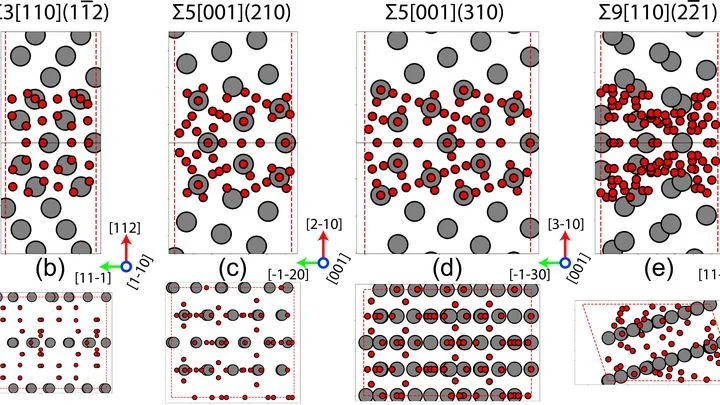
An iron crystal is like a mosaic of tightly packed grains. Where one grain meets another, a boundary forms — a narrow seam with disrupted order. It is in these seams that surprises for magnetism hide.
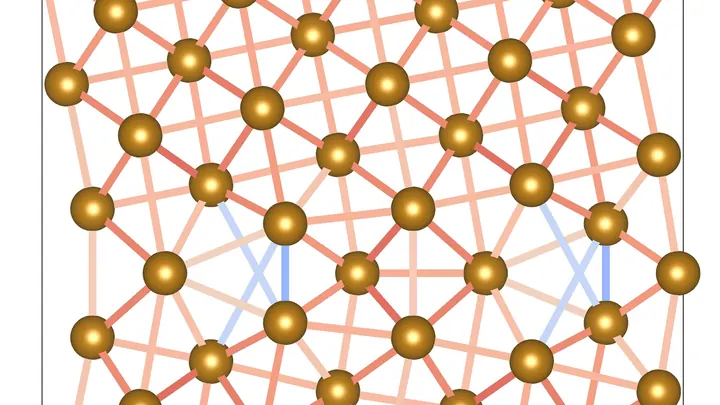
Scientists calculated how iron atoms interact with each other at three types of such boundaries.
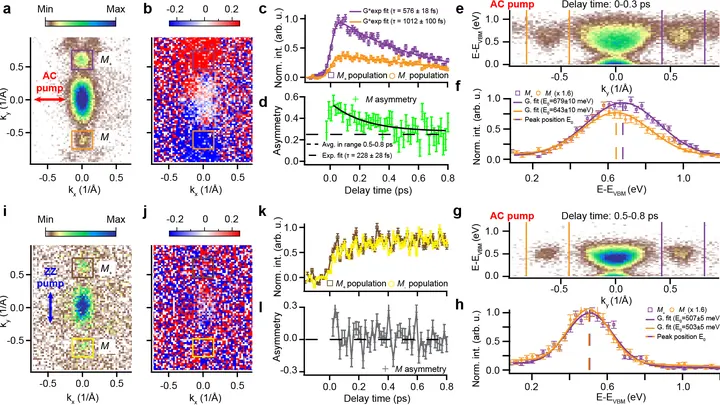
An ordinary sheet of black phosphorus looks like a layered cake of atoms. If you shine a regular lamp on it, nothing special happens: the electrons sit still, like spectators in a dark theater. But a short laser flash lasting millionths of a billionth of a second shakes up that theater.
Infrared light is invisible to the eye, but it's everywhere: from TV remotes to the heat of the human body. Catching it requires special materials. Conventional detectors are bulky, rigid, and not easily tuned to specific wavelengths.
Brown dwarfs are objects that sit between planets and stars: they are more massive than planets but not heavy enough to sustain stable fusion in their cores.