Dancing Puddles of Charge in a Layered Crystal express
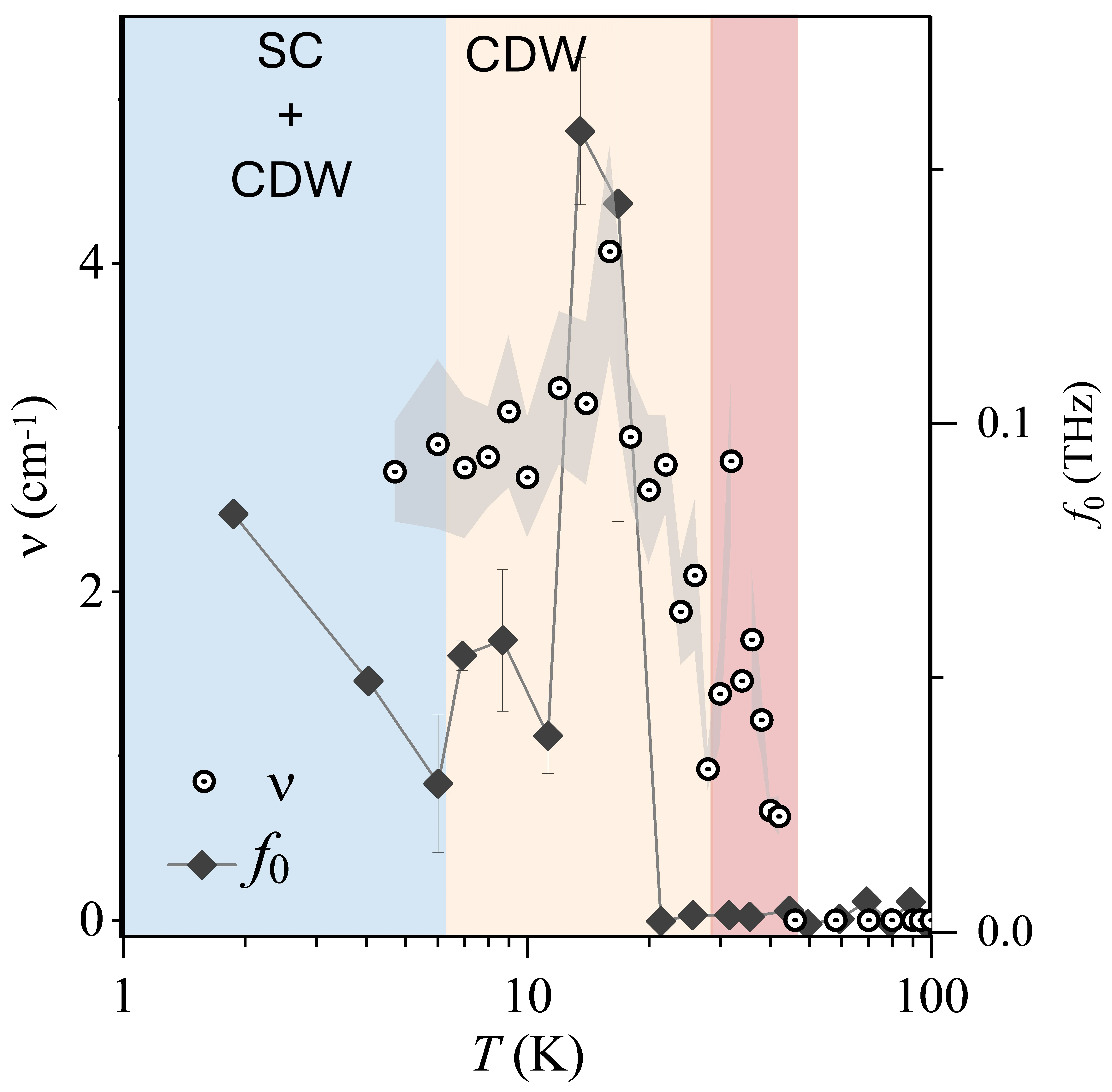
A cooled layered crystal resembles a stack of thin sheets, with electrons wandering between them. At around 17 K, tiny regions appear where electrons line up into a wave, like ripples on water frozen in place. These regions are called charge puddles, and they were previously thought to be static.
Scientists aimed short laser pulses at the crystal and saw that the puddles oscillate slowly — about 0.15 trillion times per second. This oscillation turned out to be tied to the trembling of the crystal's own layers: the layers shift, and the puddles respond like floats on a wave. Such a link between layer motion and the charge wave had not been observed before.
The discovery helps explain how superconductivity and charge density waves coexist in a single material. Perhaps by controlling the puddle oscillations, one could tune the properties of thin layered devices — for example, switches or sensors.
The charge density wave in this crystal does not match the atomic lattice spacing, so it is called incommensurate, like a pattern that doesn't align neatly with graph paper.