Chaos in a Falling Film express
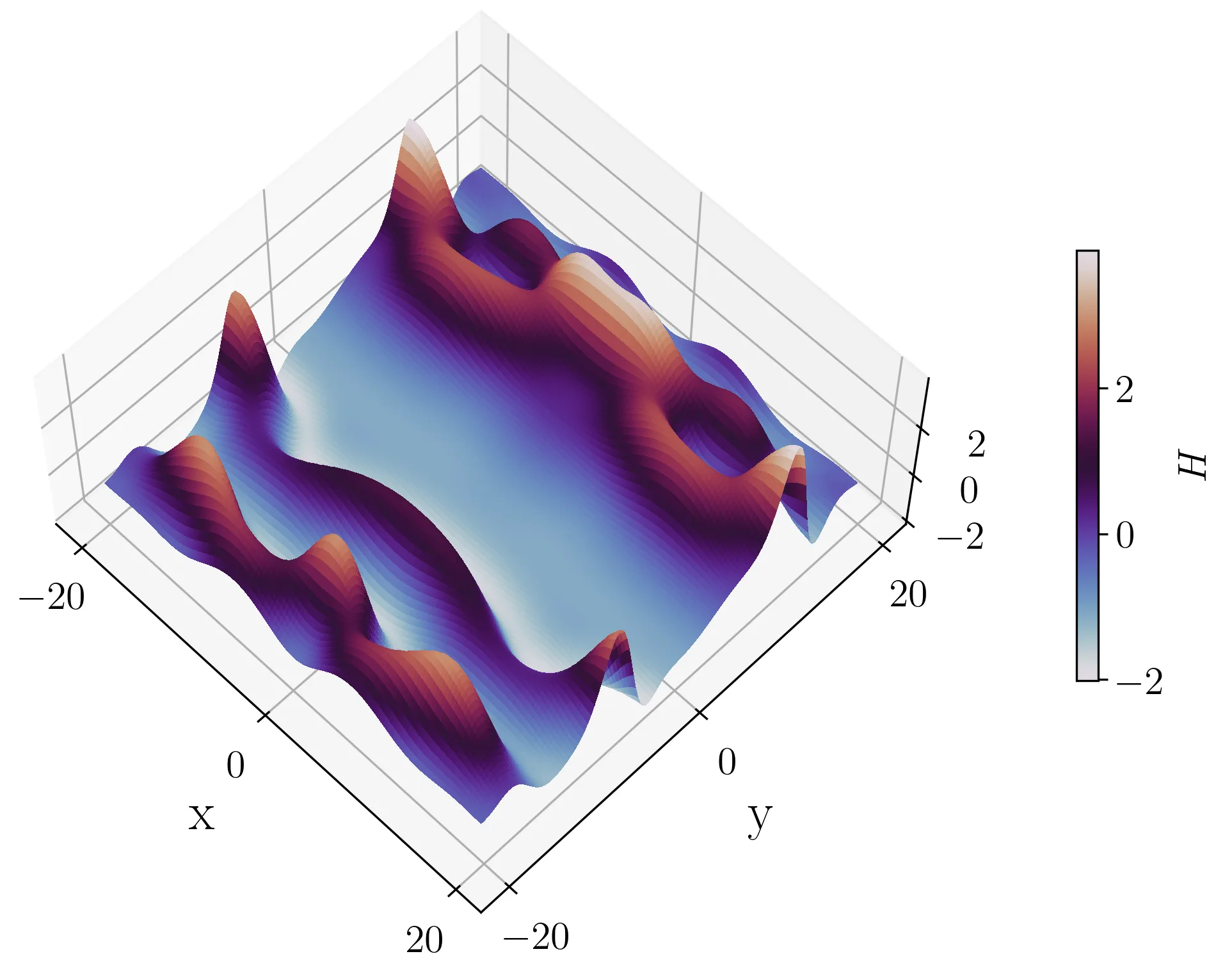
A thin stream of water on a shower glass gathers into winding rivulets that quiver and shift before your eyes. Such a liquid film flowing down a vertical surface is a classic example of chaos in nature: it all flows downward, sure, but the surface lives its own unpredictable life.
Physicists took the equations describing this flow and ran them for a wide range of scenarios — varying the flow width and fluid properties. The result was a map: in some regions, smooth waves run across the surface like folds in a curtain; in others, waves periodically 'burst' into splashes; and in still others, complete disorder reigns. In the chaotic zone, the flow resembles boiling porridge: patterns appear and vanish with no rhythm at all.
It turns out that even in the most turbulent zone, recurring motifs can be discerned. The researchers computed these hidden 'skeletons': standing patterns, traveling waves, and cycles that return to themselves. The chaotic flow repeatedly approaches them, as if remembering a familiar dance, only to break into improvisation again.
This is the first time such precise structures have been identified in the chaos of a falling film. The practical payoff is in understanding how to control flow in industry — from coating applications to surface cooling.
Falling liquid films aren't just for the shower: some types of chemical reactors work this way, with liquid flowing in a thin layer down a wall to improve mixing and heat exchange.